

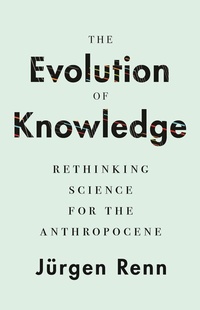
The Evolution of Knowledge
Rethinking Science for the Anthropocene
1st Edition
Published on 10. February 2020
584 pages
978-0-691-18567-5 (ISBN)
Description

A fundamentally new approach to the history of science and technology
This book presents a new way of thinking about the history of science and technology, one that offers a grand narrative of human history in which knowledge serves as a critical factor of cultural evolution. Jürgen Renn examines the role of knowledge in global transformations going back to the dawn of civilization while providing vital perspectives on the complex challenges confronting us today in the Anthropocene-this new geological epoch shaped by humankind.
Renn reframes the history of science and technology within a much broader history of knowledge, analyzing key episodes such as the evolution of writing, the emergence of science in the ancient world, the Scientific Revolution of early modernity, the globalization of knowledge, industrialization, and the profound transformations wrought by modern science. He investigates the evolution of knowledge using an array of disciplines and methods, from cognitive science and experimental psychology to earth science and evolutionary biology. The result is an entirely new framework for understanding structural changes in systems of knowledge-and a bold new approach to the history and philosophy of science.
Written by one of today's preeminent historians of science, The Evolution of Knowledge features discussions of historiographical themes, a glossary of key terms, and practical insights on global issues ranging from climate change to digital capitalism. This incisive book also serves as an invaluable introduction to the history of knowledge.
This book presents a new way of thinking about the history of science and technology, one that offers a grand narrative of human history in which knowledge serves as a critical factor of cultural evolution. Jürgen Renn examines the role of knowledge in global transformations going back to the dawn of civilization while providing vital perspectives on the complex challenges confronting us today in the Anthropocene-this new geological epoch shaped by humankind.
Renn reframes the history of science and technology within a much broader history of knowledge, analyzing key episodes such as the evolution of writing, the emergence of science in the ancient world, the Scientific Revolution of early modernity, the globalization of knowledge, industrialization, and the profound transformations wrought by modern science. He investigates the evolution of knowledge using an array of disciplines and methods, from cognitive science and experimental psychology to earth science and evolutionary biology. The result is an entirely new framework for understanding structural changes in systems of knowledge-and a bold new approach to the history and philosophy of science.
Written by one of today's preeminent historians of science, The Evolution of Knowledge features discussions of historiographical themes, a glossary of key terms, and practical insights on global issues ranging from climate change to digital capitalism. This incisive book also serves as an invaluable introduction to the history of knowledge.
More details
Other editions
Additional editions
Book
05/2022
Princeton University Press
€35.00
Available immediately
Book
01/2020
Princeton University Press
€55.71
Shipment within 10-20 days
Person
Jürgen Renn is a director at the Max Planck Institute for the History of Science in Berlin, where, together with his group, he researches structural changes in systems of knowledge. His books include, with Hanoch Gutfreund, The Formative Years of Relativity: The History and Meaning of Einstein's Princeton Lectures and The Road to Relativity: The History and Meaning of Einstein's "The Foundation of General Relativity" (both Princeton).
Content
- Cover
- Contents
- List of Explanatory Boxes
- The Story of This Book
- Part 1: What Is Science? What Is Knowledge?
- Chapter 1: History of Science in the Anthropocene
- Chapter 2: Elements of a Historical Theory of Human Knowledge
- Part 2: How Knowledge Structures Change
- Chapter 3: The Historical Nature of Abstraction and Representation
- Chapter 4: Structural Changes in Systems of Knowledge
- Chapter 5: External Representations at Work
- Chapter 6: Mental Models at Work
- Chapter 7: The Nature of Scientific Revolutions
- Part 3: How Knowledge Structures Affect Society and Vice Versa
- Chapter 8: The Economy of Knowledge
- Chapter 9: An Economy of Practical Knowledge
- Chapter 10: Knowledge Economies in History
- Part 4: How Knowledge Spreads
- Chapter 11: The Globalization of Knowledge in History
- Chapter 12: The Multiple Origins of the Natural Sciences
- Chapter 13: Epistemic Networks
- Part 5: On What Knowledge Our Future Depends
- Chapter 14: Epistemic Evolution
- Chapter 15: Exodus from the Holocene
- Chapter 16: Knowledge for the Anthropocene
- Chapter 17: Science and the Challenges of Humanity
- Glossary
- Notes
- References
- Index
