

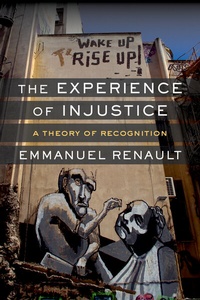
The Experience of Injustice
A Theory of Recognition
1st Edition
Published on 14. January 2019
304 pages
978-0-231-54898-4 (ISBN)
Description

In The Experience of Injustice, the French philosopher Emmanuel Renault opens an important new chapter in critical theory. He brings together political theory, critical social science, and a keen sense of the power of popular movements to offer a forceful vision of social justice. Questioning normative political philosophy's conception of justice, Renault gives an account of injustice as the denial of recognition, placing the experience of social suffering at the heart of contemporary critical theory.
Inspired by Axel Honneth, Renault argues that a radicalized version of Honneth's ethics of recognition can provide a systematic alternative to the liberal-democratic projects of such thinkers as Rawls and Habermas. Renault reformulates Honneth's theory as a framework founded on experiences of injustice. He develops a complex, psychoanalytically rich account of suffering, disaffiliation, and identity loss to explain these experiences as denials of recognition, linking everyday injustice to a robust defense of the politicization of identity in social struggles. Engaging contemporary French and German critical theory alongside interdisciplinary tools from sociology, psychoanalysis, socialist political theory, social-movement theory, and philosophy, Renault articulates the importance of a theory of recognition for the resurgence of social critique.
Inspired by Axel Honneth, Renault argues that a radicalized version of Honneth's ethics of recognition can provide a systematic alternative to the liberal-democratic projects of such thinkers as Rawls and Habermas. Renault reformulates Honneth's theory as a framework founded on experiences of injustice. He develops a complex, psychoanalytically rich account of suffering, disaffiliation, and identity loss to explain these experiences as denials of recognition, linking everyday injustice to a robust defense of the politicization of identity in social struggles. Engaging contemporary French and German critical theory alongside interdisciplinary tools from sociology, psychoanalysis, socialist political theory, social-movement theory, and philosophy, Renault articulates the importance of a theory of recognition for the resurgence of social critique.
All prices
More details
Other editions
Additional editions
Book
02/2019
Columbia University Press
€76.75
Shipment within 10-20 days
Persons
Renault Emmanuel :
Emmanuel Renault (PhD, Philosophy, Burgundy) is Professor of Philosophy at the University of Paris X (Nanterre). He is the author of L'Expérience de l'Injustice: Reconnaissance et Clinique de l'Injustice (La Découverte, 2004, English translation under contract at Columbia), Souffrance Sociales: Sociologie, Psychologie et Politique (La Découverte, 2008), and (with Gerard Dumenil and Michael Lowy) Lire Marx (PUF, 2014), among other titles.Emmanuel Renault is professor of philosophy at University of Paris-Nanterre. His books in English include Social Suffering: Sociology, Psychology, Politics (2017) and The Return of Work in Critical Theory: Self, Society, Politics (Columbia, 2018).
Richard A. Lynch is author of Foucault's Critical Ethics (2016) and translator of Isabelle Thomas-Fogiel's The Death of Philosophy: Reference and Self-Reference in Contemporary Thought (Columbia, 2011).
Emmanuel Renault (PhD, Philosophy, Burgundy) is Professor of Philosophy at the University of Paris X (Nanterre). He is the author of L'Expérience de l'Injustice: Reconnaissance et Clinique de l'Injustice (La Découverte, 2004, English translation under contract at Columbia), Souffrance Sociales: Sociologie, Psychologie et Politique (La Découverte, 2008), and (with Gerard Dumenil and Michael Lowy) Lire Marx (PUF, 2014), among other titles.Emmanuel Renault is professor of philosophy at University of Paris-Nanterre. His books in English include Social Suffering: Sociology, Psychology, Politics (2017) and The Return of Work in Critical Theory: Self, Society, Politics (Columbia, 2018).
Richard A. Lynch is author of Foucault's Critical Ethics (2016) and translator of Isabelle Thomas-Fogiel's The Death of Philosophy: Reference and Self-Reference in Contemporary Thought (Columbia, 2011).
Content
Translator's Note
Preface
Introduction: Political Philosophy and the Clinic of Injustice
Part I: Injustice and the Denial of Recognition
1. Social Movements and Critique of Politics
2. The Aporias of Social Justice
3. The Institutions of Injustice
Part II: The Politics of Identity and Politics in Identity
4. Identity as the Experience of Injustice
5. A Defense of Identity Politics
Part III: Social Suffering
6. Social Critique as a Voice for Suffering
7. Recognition and Psychic Suffering
Conclusion: Critique as a Voice Against Injustice
Notes
Index
Preface
Introduction: Political Philosophy and the Clinic of Injustice
Part I: Injustice and the Denial of Recognition
1. Social Movements and Critique of Politics
2. The Aporias of Social Justice
3. The Institutions of Injustice
Part II: The Politics of Identity and Politics in Identity
4. Identity as the Experience of Injustice
5. A Defense of Identity Politics
Part III: Social Suffering
6. Social Critique as a Voice for Suffering
7. Recognition and Psychic Suffering
Conclusion: Critique as a Voice Against Injustice
Notes
Index

