


The Beginning of the Subtle School of Taoism
An Official Perception of Taoism in the Early T'ang Period
1st Edition
Published in May 2018
VIII, 127 pages
978-3-447-19082-4 (ISBN)
Description

Early in the T'ang Period (8th century) the imperial administration was tuned to support a developing Taoist religious culture. Evidence thereof is the establishment of temples, the officially ordered ordination and installation of Taoist priests, and especially the publication and distribution of Taoist religious literature in the form of an officially sanctioned Canon. The interest the T'ang state took in organizing the canonical representation of the Chinese religions came to be a lasting element of Chinese cultural history.
The Taoist canonical title The Beginning of the Subtle School of Taoism documents some state efforts that preceded the edition of the first T'ang Taoist canon. Large numbers of outstanding secular scholars and eminent Taoist priests, mainly stationed at temples in the capital Ch'ang-an, followed the summons of emperor Hsüan-tsung to study, to work on, and to organize the Taoist scriptures in the imperial library. The canonical title "I-ch'ieh tao-ching yin-i miao-men yu-ch'i" reveals the intention and the scope of these academic efforts.
The present volume studies the encyclopedic source, presents Preface and contents, and also compares other Taoist encyclopedias of the T'ang period in order to describe the official perception of Taoism in the early T'ang period. The assumed excellence and predominant importance of the teachings of the scriptures (ching-chiao) for the official acceptance and appreciation of Taoist culture is shown to overshadow further on the canonical editions that tend to shroud the exorcist-ritual side (fa-chiao) as an independent and yet integral phenomenon of Taoist religion.
More details
Other editions
Additional editions
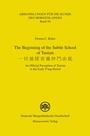
Florian C. Reiter
The Beginning of the Subtle School of Taoism
An Official Perception of Taoism in the Early T'ang Period
Book
12/2014
1st Edition
Harrassowitz Verlag
€39.00
No shipping information available
Content
- Cover
- Title pages
- Table of Contents
- Foreword
- Introduction
- Chapter I Preface to the book The Beginning of the Subtle School of Taoism by Shih Ch´ung-hsüan et al.
- Chapter II Survey and Thoughts on the book: The Beginning of the Subtle School of Taoism
- Chapter III The Beginning of the Subtle School of Taoism
- 1) Illustrating the Workings of Tao (ming tao-hua ? ?)
- 2) Illustrating the Heavenly Worthies (ming t´ien-tsun ? ? ?)
- 3) Illustrating the World of the Law (ming-fa-chieh ? ? ?)
- 4) Illustrating the Residential Quarters (ming chü-ch´u ? ? )
- 5) Illustrating the Initiation of Salvation (ming k´ai-tu ? ?)
- 6) Illustrating the Norms of the Scriptures (ming ching-fa ? ? ?)
- Abbreviations
- Bibliography
- Sources from the Taoist Canon
- Glossary of Primary Sources and Personal Names
