

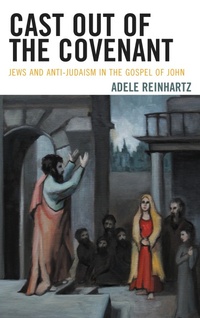
Cast Out of the Covenant
Jews and Anti-Judaism in the Gospel of John
1st Edition
Published on 7. July 2020
248 pages
978-1-9787-8484-0 (ISBN)
Description

The Gospel of John presents its readers, listeners, and interpreters with a serious problem: how can we reconcile the Gospel's exalted spirituality and deep knowledge of Judaism with its portrayal of the Jews as the children of the devil (John 8:44) who persecuted Christ and his followers?
One widespread solution to this problem is the so-called "expulsion hypothesis." According to this view, the Fourth Gospel was addressed to a Jewish group of believers in Christ that had been expelled from the synagogue due to their faith. The anti-Jewish elements express their natural resentment of how they had been treated; the Jewish elements of the Gospel, on the other hand, reflect the Jewishness of this group and also soften the force of the Gospel's anti-Jewish comments.
In Cast out of the Covenant, this book, Adele Reinhartz presents a detailed critique of the expulsion hypothesis on literary and historical grounds. She argues that, far from softening the Gospel's anti-Jewishness, the Gospel's Jewish elements in fact contribute to it. Focusing on the Gospel's persuasive language and intentions, Reinhartz shows that the Gospel's anti-Jewishness is evident not only in the Gospel's hostile comments about the Jews but also in its appropriation of Torah, Temple, and Covenant that were so central to first-century Jewish identity. Through its skillful use of rhetoric, the Gospel attempts to convince its audience that God's favor had turned away from the Jews to the Gentiles; that there is a deep rift between the synagogue and those who confess Christ as Messiah; and that, in the Gospel's view, this rift was initiated in Jesus' own lifetime. The Fourth Gospel, Reinhartz argues, appropriates Jewishness at the same time as it repudiates Jews. In doing so, it also promotes a "parting of the ways" between those who believe that Jesus is the messiah, the Son of God, and those who do not, that is, the Jews. This rhetorical program, she suggests, may have been used to promote outreach or even an organized mission to the Gentiles, following in the footsteps of Paul and his mid-first-century contemporaries.
One widespread solution to this problem is the so-called "expulsion hypothesis." According to this view, the Fourth Gospel was addressed to a Jewish group of believers in Christ that had been expelled from the synagogue due to their faith. The anti-Jewish elements express their natural resentment of how they had been treated; the Jewish elements of the Gospel, on the other hand, reflect the Jewishness of this group and also soften the force of the Gospel's anti-Jewish comments.
In Cast out of the Covenant, this book, Adele Reinhartz presents a detailed critique of the expulsion hypothesis on literary and historical grounds. She argues that, far from softening the Gospel's anti-Jewishness, the Gospel's Jewish elements in fact contribute to it. Focusing on the Gospel's persuasive language and intentions, Reinhartz shows that the Gospel's anti-Jewishness is evident not only in the Gospel's hostile comments about the Jews but also in its appropriation of Torah, Temple, and Covenant that were so central to first-century Jewish identity. Through its skillful use of rhetoric, the Gospel attempts to convince its audience that God's favor had turned away from the Jews to the Gentiles; that there is a deep rift between the synagogue and those who confess Christ as Messiah; and that, in the Gospel's view, this rift was initiated in Jesus' own lifetime. The Fourth Gospel, Reinhartz argues, appropriates Jewishness at the same time as it repudiates Jews. In doing so, it also promotes a "parting of the ways" between those who believe that Jesus is the messiah, the Son of God, and those who do not, that is, the Jews. This rhetorical program, she suggests, may have been used to promote outreach or even an organized mission to the Gentiles, following in the footsteps of Paul and his mid-first-century contemporaries.
More details
Edition
1. Auflage
Language
English
Place of publication
United States
Publishing group
Bloomsbury Publishing Plc
Target group
Professional and scholarly
Illustrations
1 charts;
ISBN-13
978-1-9787-8484-0 (9781978784840)
Copyright in bibliographic data and cover images is held by Nielsen Book Services Limited or by the publishers or by their respective licensors: all rights reserved.
Schweitzer Classification
Other editions
Additional editions

Book
07/2020
Lexington Books/Fortress Academic
€52.80
Shipment within 3-4 weeks
Person
Adele Reinhartz is professor in the Department of Classics and Religious Studies at the University of Ottawa.
Content
Part I: The Rhetoric of Affiliation
Chapter 1: Ask and you will receive: The Rhetoric of Desire and Fulfillment
Chapter 2: Love One Another: The Rhetoric of Transformation
Part II: The Rhetoric of Disaffiliation
Chapter 3: Casting off the Withered Branch: The Rhetoric of Expropriation
Chapter 4: The World has Hated you: The Rhetoric of Repudiation
Chapter 5: Rhetorical Ioudaioi and Real Jews
Part III: Imagining the Rhetorical Situation
Chapter 6: The Jews had already agreed: J.L. Martyn and the Expulsion Theory
Chapter 7: We Wish to See Jesus: John, Alexandra and the Propulsion Theory
Chapter 1: Ask and you will receive: The Rhetoric of Desire and Fulfillment
Chapter 2: Love One Another: The Rhetoric of Transformation
Part II: The Rhetoric of Disaffiliation
Chapter 3: Casting off the Withered Branch: The Rhetoric of Expropriation
Chapter 4: The World has Hated you: The Rhetoric of Repudiation
Chapter 5: Rhetorical Ioudaioi and Real Jews
Part III: Imagining the Rhetorical Situation
Chapter 6: The Jews had already agreed: J.L. Martyn and the Expulsion Theory
Chapter 7: We Wish to See Jesus: John, Alexandra and the Propulsion Theory
