

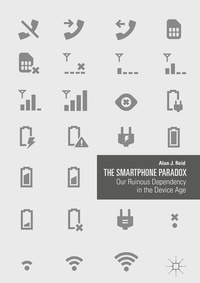
The Smartphone Paradox
Description

The Smartphone Paradox is a critical examination of our everyday mobile technologies and the effects that they have on our thoughts and behaviors. Alan J. Reid presents a comprehensive view of smartphones: the research behind the uses and gratifications of smartphones, the obstacles they present, the opportunities they afford, and how everyone can achieve a healthy, technological balance. It includes interviews with smartphone users from a variety of backgrounds, and translates scholarly research into a conversational tone, making it easy to understand a synthesis of key findings and conclusions from a heavily-researched domain. All in all, through the lens of smartphone dependency, the book makes the argument for digital mindfulness in a device age that threatens our privacy, sociability, attention, and cognitive abilities.
Reviews / Votes
"As smartphone addiction as the next epidemic grows, this book could not be more timely and relevant. The Smartphone Paradox smartly shows how our devices can range from extremely helpful to feeding our latent narcissistic tendencies. Accessible and informative, it is a must read for us all." (Judson Brewer, Associate Professor, Warren Alpert Medical School of Brown University, USA, and author of The Craving Mind: From Cigarettes to Smartphones to Love - Why We Get Hooked and How We Can Break Bad Habits)"Today's most rampant type of love-hate relationship is with our smartphones. We can't live with-or without-them. Alan J. Reid's The Smartphone Paradox offers us an insightful and engaging explanation of why." (Naomi S. Baron, Professor of Linguistics, American University, USA, and author of Words Onscreen: The Fate of Reading in a Digital World and Always On: Language in an Online and Mobile World)
More details
Other editions
Additional editions
Person
Alan J. Reid is Assistant Professor of First-Year Writing and Instructional Technologies at Coastal Carolina University, USA, where he teaches English and New Media courses. He also works in the Center for Research and Reform in Education at Johns Hopkins University, USA as an Evaluation Analyst.
