

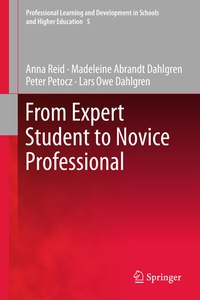
From Expert Student to Novice Professional
Description

Students entering higher education expect their studies to lead them towards some specific form of professional career. But in this age, complex internationalized professions are the main source of work for graduates, so students need to prepare themselves for a future that can be volatile, changeable and challenging. This book shows how students navigate their way through learning and become effective students; it details how to shift the focus of their learning away from the formalism associated with the university situation towards the exigencies of working life. It is in this sense that the book explores how people move from being expert students to novice professionals. This book presents a model of professional learning fashioned out of a decade of research undertaken in countries half a world away from each other-Sweden and Australia. It uses empirical research gathered from students and teachers to show how students negotiate the forms of professional knowledge they encounter as part of their studies and how they integrate their understandings of a future professional world with professional knowledge and learning. It reveals that as students move from seeing themselves as learners, they take on more of a novice professional identity which in turn provides a stronger motivation for their formal studies.
More details
Other editions
Additional editions
Content
From expert student to novice professional chapter one what's happening in higher education? - Chapter two professional learning: how can we understand learning for the professions? - Chapter three professional discourse: how do novice professionals see themselves? - Professional knowledge: what does knowledge mean to novice professionals? - Chapter five professional dispositions: how are professional dispositions developed in higher education? - Chapter six professional identity: how is professional identity developed? - Chapter seven professional pedagogies: what pedagogic approaches can enhance professional chapter eight what's the use of higher education? - References index.
