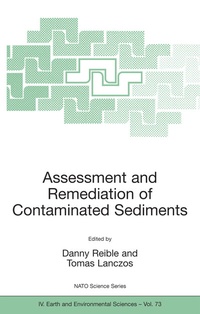
Assessment and Remediation of Contaminated Sediments
Description

Contaminated sediments pose some of the most difficult site remediation issues. Contaminated sediments typically reside in spatially variable and dynamic systems subject to seasonal flow variations and episodic storm events. The volume of sediments that must be managed at particular sites often exceeds one million cubic meters, dwarfing many contaminated soil sites. These sediments are also associated with equally daunting volumes of water and efforts to remove the contamination typically entrains even more water. The environmental security of both NATO and partner countries is at risk due to the pervasive nature of sediment contamination of rivers, lakes and harbors. A NATO Advanced Research Workshop was convened in Bratislava in May 2005 to discuss current approaches to managing contaminated sediments and to identify research necessary to overcome outstanding problems.
In this text, drawn from presentations and discussion of that workshop, current approaches to the assessment and remediation of contaminated sediments will be discussed with the emphasis on in-situ management. Physical, chemical and biological approaches for the assessment and remediation of sediments are all addressed. Developing regulatory and strategic approaches are highlighted with a special emphasis on the potential for biological remediation for the management of contaminated sediments.
More details
Other editions
Additional editions