

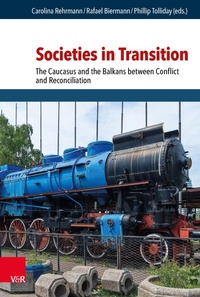
Societies in Transition
The Caucasus and the Balkans between Conflict and Reconciliation
1st Edition
Published on 20. January 2020
351 pages
978-3-647-52206-7 (ISBN)
Description

Since the end of the Cold War, the collapse of the Soviet Union and the dissolution of Yugoslavia, the Mediterranean and Black Sea regions have been faced with multiple upheavals of interethnic violence, bloody secessions and ethnic cleansing. Up to the present, both regions are confronted with unresolved border, minority and security issues, matters of recognition, protracted traumata and claims for justice. After the fall of the iron curtain, simmering ethnic tensions turned into hot wars that created new states, new power-political hierarchies and a heritage of violence. Reaching back to the early 1990s, several international and national transitional justice measures have been applied to face these heritages and lay the foundations for a common future. For the former Yugoslavia, they range from broad criminal trials to a series of restorative justice mechanisms; in the North and South Caucasus they encompass numerous mediation measures and primarily restorative justice efforts. The present volume is concerned with strategies of conflict resolution and prevention subsumed under the concept of reconciliation. It aims at understanding the socio-emotional root causes of political cleavages and daily realities of (post-) conflict societies, especially regarding the impact of competing narratives and unprocessed pasts on exclusive identities and strategic political choices. Applying reconciliation theory, insights from collective memory and transitional justice to a series of selected field studies, it sheds light on the origins of interethnic violence, aims at finding explanations for the fact that many of the above-mentioned conflicts have become intractable and discusses the chances and challenges for transforming interests, emotions, perspectives, roles and identities between and within the respective societies.
Dr. Carolina Rehrmann is PostDoc at the Chair for International Relations at the Institute of Political Science and Executive Manager of the Jena Center for Reconciliation Studies at Friedrich-Schiller-University of Jena.
Dr. Carolina Rehrmann is PostDoc at the Chair for International Relations at the Institute of Political Science and Executive Manager of the Jena Center for Reconciliation Studies at Friedrich-Schiller-University of Jena.
More details
Other editions
Additional editions
Carolina Rehrmann | Rafael Biermann | Phillip Tolliday
Societies in Transition
The Caucasus and the Balkans between Conflict and Reconciliation
Book
01/2020
1st Edition
Vandenhoeck & Ruprecht
€140.00
Shipment within 5-7 days
Persons
Dr. Carolina Rehrmann is PostDoc at the Chair for International Relations at the Institute of Political Science and Executive Manager of the Jena Center for Reconciliation Studies at Friedrich-Schiller-University of Jena.
Content
- Intro
- Title Page
- Copyright
- Body
- Carolina Rehrmann/Rafael Biermann/Phillip Tolliday: Introduction to the present volume
- References
- Carolina Rehrmann: Emotional Reconciliation: Challenges, Prospects, and Inherent Contradictions
- The Stony Path towards Rapprochement: Different Approaches in Response to Differing Social Realities
- Transitional Justice: Coping with Troubled Pasts
- TJ: Irreconcilable Goals, Related Dangers, Adverse Effects
- Transnational Justice as Emotional Reconciliation: The Power of Dialogical Truth, Acknowledgment and Apology
- Case Study: Intra-German Reconciliation
- Conclusion
- References
- Monographs, Anthologies, Journal Articles
- Webpages, Web-Documents, Multimedia
- Pictures
- Phillip Tolliday: Reconciliation: A Negotiation Between Anamnesis and Amnesia
- Conclusion
- References
- Rafael Biermann: The Politics of Reconciliation in Former Yugoslavia - Assessing Progress Across the Region
- Mechanisms of Reconciliation
- Denial and Silences
- Memorials and Commemoration
- Apologies and Reparations
- The International Criminal Tribunal for Yugoslavia and domestic courts
- Conclusions
- References
- Eva-Maria Auch: Conflict, Identity and Reconciliation in the South Caucasus
- Introduction
- Retrospective - Overview of the Conflict Histories
- Georgia
- Azerbaijan
- Armenia
- Summary
- Ways to Conflict Transformation - International Efforts for Compromise
- References
- Jovana Janinovic: The Socialist Heritage of Tito's Yugoslavia: Memory between Disneyfication and Reconciliation
- Introduction
- Reconciliation in the Balkans
- History, Memory and Heritage
- Post-Socialism: Nostalgia, Heritage and Politics of Memory
- Reconciling Memories and Memories of Reconciliation
- Heritage of Socialism - Commodification, Disneyfication or Reconciliation?
- Conclusion
- References
- Ekaterina V. Klimenko: Russia in the Aftermath of the Chechen Conflict: Fostering Tolerance as Reconciliation Strategy
- Theory, Data and Methods
- Russian-Chechen Wars, the "National Question" and the Policy of Fostering Tolerance
- State Programs for Fostering Tolerance: From Discourse to Interpretation of Social Reality
- Instead of a Conclusion: "Fostering Tolerance" as the Soviet Legacy
- References
- Fernando Avakian: Discursive Construction of the Islamic Threat in the Russian Federation in the Early 2000s
- Introduction
- Sources and Methodology
- Brief Theoretical Considerations: Why Can We Speak of an Antiterrorist Discourse?
- Cultural Basis for the New Image of the Enemy of State
- Content and Elements of the Post-1999 Russian Antiterrorist Discourse
- Statements Made by Political and Military Leaders
- The Legal Arsenal against Terrorism and Extremism
- Language of the Media
- The Case of Zara Mourtazalieva: the "Creation" of a Terrorist
- The Antiterrorist Discourse at the Regional Level: Intermingling Political Dissent and Religion in Chechnya
- Conclusion
- References
- Newspapers
- Websites
- Michael Humphrey/Michelle Veljanovska: Between the ICTY and Dayton: Obstacles to Justice, Reconciliation and Peace in Postwar Serbia
- Post Milo?evic Serbia: ICTY Accountability and EU Conditionality
- Victims and Reconciliation
- Regional Reconciliation
- National Reconciliation
- Veterans
- NGO Focus on Veterans
- IDPs and Refugees
- Conclusion
- References
- Mariat Imaeva: Deferring Human Rights: Humanitarian Exhumations as an Alternative Approach to Resolve the Issue of the Missing
- Introduction
- Transitional Justice
- Disappearances in Chechnya
- Impact on the Society
- Not Dead, Not Alive, Alive but Not Living
- The Right to Truth
- Russia within the Council of Europe
- ECtHR as Transitional Justice Tool for Chechnya's Disappeared
- Bazorkina v Russian Federation
- Aslakhanova and Other v Russian Federation
- Implementation of the ECtHR Judgments: Payment of "Just Satisfaction"
- Individual Measures
- Humanitarian Exhumations as a Way Forward
- Cyprus as a Model?
- Conclusion
- References
- Jurisprudence from the ECtHR
- International Legal Instruments
- Despina Angelovska: The Failure of Macedonian Post-Communist Transitional Justice: Purging the Opponents, Lustrating the Dead
- Transitional Justice in Post-Communist Macedonia
- Introduction to Transitional Justice
- Post-communist Transitional Justice and Lustration
- The Macedonian Law on Lustration
- The late Lustration
- Adoption of the Law on Lustration in Macedonia
- Revisions of the Law on Lustration
- The Abrogation of the Law
- The Failure of the Macedonian Lustration: Purging the Opponents, Lustrating the Dead
- The Critiques of the Macedonian Lustration and the Political Instrumentalization of the Law
- Problems with the Temporal and the Personal Scope of Application of the Law
- Reducing the TJ ad absurdum: Lustration of the Dead
- Corrupting Justice and due Process: Deficiencies of the Lustration Commission and Proceedings
- Sparing Key Groups from TJ-Measures: The Non-Lustrated Secret Services
- Late Lustration and the Tampering of the Files from the Secret Service Archives
- Lustration as a Merely Retributive TJ Instrument: The Oblivion of the Victims
- The Abrogation of the Law and its Aftermath: Lustration of the Lustration
- Aborted Lustration
- Lustration on Command and the Mass Illegal Wiretapping Scandal
- Lustration in a Context of Mass Surveillance
- The Claim for Revision of Lustration
- Remedies against Unfair Lustration
- Lustration of the Lustration
- No Justice, No Peace: The Special Public Prosecutor (SJO)
- Conclusion
- References
- Sonja Arsham Kuftinec: Theatrical Facilitation in Post-War Societies: The Case of Bosnia
- Theatrical Facilitation and Conflict Transformation
- Theatre as Testimony and Community-Building
- Theatre as Civic Reanimation
- Theatre as Accusation and Civic Action
- Assessments
- Between-the-Lines: Assessing Effectiveness
- Between Ethnos and Demos: Rovinj
- Navigating ongoing Conflict: Velingrad, Bulgaria
- Conclusion
- References
- Vesna Nikolic-Ristanovic/Sanja Copic: Dealing with Conflicts in a Post-Conflict Society: A Restorative Initiative in Serbia
- Introduction
- Development of the "Third way" Model of Communication
- Theoretical Framework of the "Third Way" Model of Communication
- Testing the "Third Way" Model of Communication in Three Multi-Ethnic Communities in Serbia
- Target Group, Goals and Objectives of the Participatory Seminars
- Methodology and the structure of the seminars
- Workshop 1: Communication About Conflicts, Victimisation and Security
- Workshop 2: Injuries and Needs: Recognising Similarities in Different Experiences
- Workshop 3: Restorative Justice and Conflict Resolution: Testing the Restorative Circle Model
- Conclusion
- References
- About the Editors
- About the Authors
- Index
