

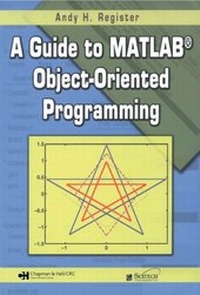
A Guide to MATLAB (R) Object-Oriented Programming
1st Edition
Published on 27. May 2014
384 pages
978-1-61353-125-9 (ISBN)
Description

A Guide to MATLAB (R) Object-Oriented Programming is the first book to deliver broad coverage of the documented and undocumented object-oriented features of MATLAB (R). Unlike the typical approach of other resources, this guide explains why each feature is important, demonstrates how each feature is used, and promotes an understanding of the interactions between features.
Assuming an intermediate level of MATLAB programming knowledge, the book not only concentrates on MATLAB coding techniques but also discusses topics critical to general software development. It introduces fundamentals first before integrating these concepts into example applications. In the first section, the book discusses eight basic functions: constructor, subsref, subsasgn, display, struct, fieldnames, get, and set. Building on the previous section, it explores inheritance topics and presents the Class Wizard, a powerful MATLAB class generation tool. The final section delves into advanced strategies, including containers, static variables, and function fronts.
With more than 20 years of experience designing and implementing object-oriented software, the expert author has developed an accessible and comprehensive book that aids readers in creating effective object-oriented software using MATLAB.
Assuming an intermediate level of MATLAB programming knowledge, the book not only concentrates on MATLAB coding techniques but also discusses topics critical to general software development. It introduces fundamentals first before integrating these concepts into example applications. In the first section, the book discusses eight basic functions: constructor, subsref, subsasgn, display, struct, fieldnames, get, and set. Building on the previous section, it explores inheritance topics and presents the Class Wizard, a powerful MATLAB class generation tool. The final section delves into advanced strategies, including containers, static variables, and function fronts.
With more than 20 years of experience designing and implementing object-oriented software, the expert author has developed an accessible and comprehensive book that aids readers in creating effective object-oriented software using MATLAB.
More details
Series
Language
English
Place of publication
NY
United States
Target group
College/higher education
Professional and scholarly
ISBN-13
978-1-61353-125-9 (9781613531259)
Copyright in bibliographic data and cover images is held by Nielsen Book Services Limited or by the publishers or by their respective licensors: all rights reserved.
Schweitzer Classification
Other editions
Additional editions
Andy H. Register
A Guide to MATLAB Object-Oriented Programming
Book
05/2007
1st Edition
Chapman & Hall/CRC
€124.50
Shipment within 15-20 days
Person
Content
Chapter 1: Introduction
Part 1: Group of Eight
Chapter 2: Meeting MATLAB's Requirements
Chapter 3: Member Variables and Member Functions
Chapter 4: Changing the Rules ... in Appearance Only
Chapter 5: Displaying an Object's State
Chapter 6: fieldnames.m
Chapter 7: struct.m
Chapter 8: get.m, set.m
Chapter 9: Simplify Using get, set, fieldnames, and struct
Chapter 10: Drawing a Shape
Part 2: Building a Hierachy
Chapter 11: Constructor Redux
Chapter 12: Constructing Simple Hierarchies with Inheritance
Chapter 13: Object Arrays with Inheritance
Chapter 14: Child-Class Members
Chapter 15: Constructing Simple Hierarchies with Composition
Chapter 16: General Assignment and Mutator Helper Functions
Chapter 17: Class Wizard
Chapter 18: Class Wizard Versions of the Shape Hierarchy
Part 3: Advanced Strategies
Chapter 19: Composition and a Simple Container Class
Chapter 20: Static Member Data and Singleton Objects
Chapter 21: Pass-by-Reference Emulation
Chapter 22: Dot Functions and Functors
Chapter 23: Protected Member Variables and Functions
Chapter 24: Potpourri for $100
Part 1: Group of Eight
Chapter 2: Meeting MATLAB's Requirements
Chapter 3: Member Variables and Member Functions
Chapter 4: Changing the Rules ... in Appearance Only
Chapter 5: Displaying an Object's State
Chapter 6: fieldnames.m
Chapter 7: struct.m
Chapter 8: get.m, set.m
Chapter 9: Simplify Using get, set, fieldnames, and struct
Chapter 10: Drawing a Shape
Part 2: Building a Hierachy
Chapter 11: Constructor Redux
Chapter 12: Constructing Simple Hierarchies with Inheritance
Chapter 13: Object Arrays with Inheritance
Chapter 14: Child-Class Members
Chapter 15: Constructing Simple Hierarchies with Composition
Chapter 16: General Assignment and Mutator Helper Functions
Chapter 17: Class Wizard
Chapter 18: Class Wizard Versions of the Shape Hierarchy
Part 3: Advanced Strategies
Chapter 19: Composition and a Simple Container Class
Chapter 20: Static Member Data and Singleton Objects
Chapter 21: Pass-by-Reference Emulation
Chapter 22: Dot Functions and Functors
Chapter 23: Protected Member Variables and Functions
Chapter 24: Potpourri for $100
