

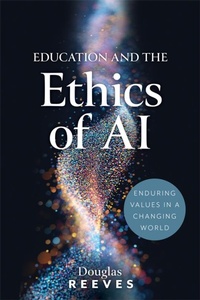
Education and the Ethics of AI
Enduring Values in a Changing World (Your guide to practical, ethical AI use)
1st Edition
Published on 30. December 2025
216 pages
979-8-89374-084-4 (ISBN)
Description

From ethical applications of AI to supporting policies that guide implementation and practice, author Douglas Reeves guides readers through integral considerations. He provides educators with practical steps to seamlessly integrate these technologies, showcasing how generative AI can transform lesson planning, IEP goals, and administrative tasks. Learn how AI's potential can save valuable time and boost educational equity.
K-12 teachers and leaders can use this book to:
- Deepen their understanding of what generative AI is, how it works, and how schools can use it
- Develop policies and guidelines to guide educators' and students' ethical AI usage
- Balance AI-assisted assignments with independent human tasks
- Nurture students' cognitive and emotional development while interacting with AI
- Communicate with parents and educate them on AI's potential in their children's education
Contents:
Introduction: What AI Is and Is Not
Chapter 1: The Uses and Misuses of Technology in Schools
Chapter 2: The Essential Prerequisites for AI in Schools
Chapter 3: The Emotional and Cognitive Context of AI in Schools
Chapter 4: Sample Uses of AI by School Leaders
Chapter 5: Sample Uses of AI by Teachers
Chapter 6: Sample Uses of AI by Students
Chapter 7: Ethical Use of Technology
Chapter 8: Considerations for Governing Boards Shaping AI Policy
Epilogue: What Does Not Change-Enduring Values in a Changing World
Appendix A: Use Case for Special Education-AI to Create an IEP
Appendix B: Use Case for Leaders-AI to Build School Improvement Plans
Appendix C: Use Case for Teachers-AI to Create Lesson Plans and Assessments
Appendix D: Use Case for Students-AI to Inspire Critical Thinking
Appendix E: Use Case for Parents-AI to Support Learning at Home
References and Resources
Index
More details
Other editions
Additional editions
Douglas Reeves
Education and the Ethics of AI
Enduring Values in a Changing World (Your Guide to Practical, Ethical AI Use)
Book
01/2026
Solution Tree
€38.50
Shipment within 10-20 days
Content
- Intro
- Acknowledgments
- Table of Contents
- About the Author
- Introduction
- Chapter 1
- Chapter 2
- Chapter 3
- Chapter 4
- Chapter 5
- Chapter 6
- Chapter 7
- Chapter 8
- Epilogue
- Appendix A
- Appendix B
- Appendix C
- Appendix D
- References and Resources
- Index
