

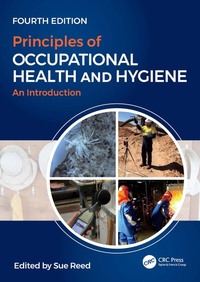
Principles of Occupational Health and Hygiene
An Introduction, Fourth Edition
4th Edition
Published on 29. November 2024
538 pages
978-1-040-17586-6 (ISBN)
Description

Now in its fourth edition, this book allows for early career occupational hygienists and occupational health and safety professionals or students to develop their basic skills and knowledge to anticipate, recognize, evaluate, and control workplace hazards that can result in injury, illness, impairment, or affect the well-being of workers and members of the community. Principles of Occupational Health and Hygiene: An Introduction, Fourth Edition offers a comprehensive overview of occupational health risks and hazardous environments encountered in a range of industries and organizational settings.
This new edition offers information on the current techniques and equipment used in assessing workplace hazards. Methods of assessment are developing at a rapid rate due to the new technologies now available. Featuring new chapters on occupational hygiene statistics and psychosocial hazards and fully updated throughout, leading industry professionals and educators explain how to identify key workplace hazards including chemical agents such as dusts, metals and gases; physical agents such as noise, radiation and extremes of heat and cold; and microbiological agents. The book highlights assessment procedures and processes for identifying exposure levels and explains how to evaluate risk and follow safety guidelines to control and manage these hazards effectively. Highly illustrated, up to date with current Workplace Health and Safety legislation and written in a jargon-free manner, this book will be a bible to any student or professional.
Principles of Occupational Health and Hygiene: An Introduction, Fourth Edition is an essential reference for students, early career Occupational Hygienists professionals and anyone in an Occupational Health and Safety role.
This new edition offers information on the current techniques and equipment used in assessing workplace hazards. Methods of assessment are developing at a rapid rate due to the new technologies now available. Featuring new chapters on occupational hygiene statistics and psychosocial hazards and fully updated throughout, leading industry professionals and educators explain how to identify key workplace hazards including chemical agents such as dusts, metals and gases; physical agents such as noise, radiation and extremes of heat and cold; and microbiological agents. The book highlights assessment procedures and processes for identifying exposure levels and explains how to evaluate risk and follow safety guidelines to control and manage these hazards effectively. Highly illustrated, up to date with current Workplace Health and Safety legislation and written in a jargon-free manner, this book will be a bible to any student or professional.
Principles of Occupational Health and Hygiene: An Introduction, Fourth Edition is an essential reference for students, early career Occupational Hygienists professionals and anyone in an Occupational Health and Safety role.
More details
Edition
4th edition
Language
English
Place of publication
London
United Kingdom
Publishing group
Taylor & Francis Ltd
Target group
College/higher education
Illustrations
63 Tables, black and white; 46 Line drawings, black and white; 136 Halftones, black and white; 182 Illustrations, black and white
File size
47,76 MB
ISBN-13
978-1-040-17586-6 (9781040175866)
Copyright in bibliographic data and cover images is held by Nielsen Book Services Limited or by the publishers or by their respective licensors: all rights reserved.
Schweitzer Classification
Other editions
Additional editions
Book
11/2024
4th Edition
CRC Press
€133.50
Shipment within 10-20 days
Book
11/2024
4th Edition
CRC Press
€59.60
Shipment within 10-20 days
Person
Sue Reed is a Fellow member of the AIOH (FAIOH) and a Certified Occupational Hygienist (COH) (R), a retired CIH and a past President of the Australian Institute of Occupational Hygienists. Sue has a PhD, a Master of Science (Occupational Hygiene), a Master of Engineering Science and Bachelor of Science (Textile Engineering). Sue has over 45 years' experience in occupational hygiene as a consultant, in government roles, and 35 years as an academic. She is a Honorary Associate Professor at Edith Cowan University, Perth, and a director of a small occupational-hygiene consultancy. Sue has published over 50 scientific papers and technical reports on a range of topics including chemical exposure assessment and control, noise, indoor air quality and OHS education.
Content
Contents
Foreword
Preface
Editor biography
Author biographies
Acknowledgements
Abbreviations and definitions
1. The hazardous work environment: the hygiene challenge
Charles Steer, Melanie Windust and Kate Cole, OAM
2.Occupational health, basic toxicology and epidemiology
Martyn Cross and Geza Benke
3.The concept of the exposure standard
Robert Golec and Ian Firth
4.Occupational Hygiene Statistics
Peter Knott and David Lowry
5.Control of workplace health hazards
Kerrie Burton and Kelly Johnstone
6.Industrial ventilation
Elaine Lindars and Anthony Bamford
7. Personal protective equipment
Mark Reggers and Terry Gorman
8.Aerosols
Linda Apthorpe and Jennifer Hines
9.Metals in the workplace
Ian Firth and Ron Capil
10.Gases and vapours
Aleks Todorovic and Michael Logan
11.Biological monitoring of chemical exposure
Greg O'Donnell and Martin Mazereeuw
12.Indoor air quality
Michael Shepherd and Claire Bird
13.Biological hazards
Margaret Davidson, Ryan Kift, Ken Martinez, and Joshua Schaffer
14.Noise and vibration
Beno Groothoff and Jane Whitelaw
15.Radiation-ionising and non-ionising
Geza Benke and Martin Ralph
16.The thermal environment
Ross Di Corleto and Jodie Britton
17.Lighting
SoYoung Lee, Dino Pisaniello and Bruno Piccoli
18.Occupational hygiene tools and sources
Sue Reed, Linda Apthorpe, Adelle Liebenberg and Ian Firth
Index
Foreword
Preface
Editor biography
Author biographies
Acknowledgements
Abbreviations and definitions
1. The hazardous work environment: the hygiene challenge
Charles Steer, Melanie Windust and Kate Cole, OAM
2.Occupational health, basic toxicology and epidemiology
Martyn Cross and Geza Benke
3.The concept of the exposure standard
Robert Golec and Ian Firth
4.Occupational Hygiene Statistics
Peter Knott and David Lowry
5.Control of workplace health hazards
Kerrie Burton and Kelly Johnstone
6.Industrial ventilation
Elaine Lindars and Anthony Bamford
7. Personal protective equipment
Mark Reggers and Terry Gorman
8.Aerosols
Linda Apthorpe and Jennifer Hines
9.Metals in the workplace
Ian Firth and Ron Capil
10.Gases and vapours
Aleks Todorovic and Michael Logan
11.Biological monitoring of chemical exposure
Greg O'Donnell and Martin Mazereeuw
12.Indoor air quality
Michael Shepherd and Claire Bird
13.Biological hazards
Margaret Davidson, Ryan Kift, Ken Martinez, and Joshua Schaffer
14.Noise and vibration
Beno Groothoff and Jane Whitelaw
15.Radiation-ionising and non-ionising
Geza Benke and Martin Ralph
16.The thermal environment
Ross Di Corleto and Jodie Britton
17.Lighting
SoYoung Lee, Dino Pisaniello and Bruno Piccoli
18.Occupational hygiene tools and sources
Sue Reed, Linda Apthorpe, Adelle Liebenberg and Ian Firth
Index
