

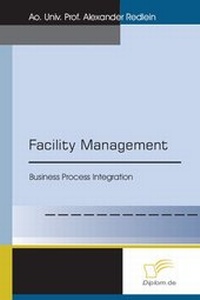
Facility Management
Business Process Integration
1st Edition
Published in August 2004
221 pages
978-3-8428-0707-5 (ISBN)
Description

Integration of processes and supporting IT tools is a key factor for successful Facility Management.
After a review of the present situation of Facility Management the author describes an "integrated" process model for the conception, planning and construction processes of facilities, providing integration into the whole life cycle. The target costing method is presented as a means to grant proper conception, planning and construction in accordance with the needs of the investor, the user and the operator. To be able to provide figures for the target costing methodology, a concept for efficient IT process support during the utilisation phase is developed. This includes two levels: the operative level and the controlling level based on the data of the operative processes. The concept is based on standard reference models of the key FM processes of the utilisation phase and on an analysis of the existing functionality of the relevant IT tools.
A concept for the integration of existing IT tools is presented, that provides the necessary interaction and data exchange to support the newly introduced parts of the workflow. Based on this integration unified objects are defined, combining the distributed information of the FM business objects. This results in a joint FM database structure. The support of the operative processes and the joint data structure enable standardised calculation of benchmarks for controlling purposes. Finally, these benchmarks are the basis for a statistical method that allows the calculation of the utilisation costs in the conception phase.
More details
Other editions
Additional editions
Book
03/2008
1st Edition
Diplomica Verlag
€49.50
Shipment within 7-9 days
Person
Content
1 - Facility Management [Seite 1]
2 - Table of Contents [Seite 3]
3 - Table of Figures [Seite 7]
4 - Abbreviations [Seite 9]
5 - 1. Introduction [Seite 11]
6 - 2. Definition of FM [Seite 15]
6.1 - 2.1. Method [Seite 23]
6.2 - 2.2. Procedure [Seite 25]
6.3 - 2.3. Project Function Tree [Seite 26]
7 - 3. Conception, Planning and Construction Phases [Seite 31]
7.1 - 3.1. Life Cycle of Real Estate Property [Seite 31]
7.1.1 - 3.1.1. Project Development Phase [Seite 31]
7.1.2 - 3.1.2. Utilisation Phase [Seite 32]
7.1.3 - 3.1.3. Vacancy Phase [Seite 33]
7.1.4 - 3.1.4. Redevelopment and Demolition Phase [Seite 34]
7.2 - 3.2. Integration of the Phases of the Life Cycle [Seite 35]
7.3 - 3.3. Role-players in Real Estate Property Management [Seite 39]
7.3.1 - 3.3.1. Proprietor [Seite 39]
7.3.2 - 3.3.2. Operator of Real Estate [Seite 44]
7.3.3 - 3.3.3. User [Seite 46]
7.4 - 3.4. The Roles of the Architect and the Engineering Consultants [Seite 47]
7.5 - 3.5. The Role of the Project Manager [Seite 52]
7.6 - 3.6. Programming [Seite 63]
7.7 - 3.7. Target Costing [Seite 66]
7.8 - 3.8. Organisation [Seite 71]
7.9 - 3.9. Data Structures [Seite 74]
7.9.1 - 3.9.1. Data Filing and Archiving [Seite 75]
7.9.2 - 3.9.2. Workflow / Document Routing [Seite 76]
7.9.3 - 3.9.3. Content / Structure of Documents [Seite 76]
8 - 4. Utilisation Phase [Seite 79]
8.1 - 4.1. Introduction of FM [Seite 79]
8.2 - 4.2. Process Types [Seite 80]
8.3 - 4.3. Practical Example Accounting [Seite 82]
8.3.1 - 4.3.1. Order, Invoice, Booking [Seite 82]
8.3.2 - 4.3.2. Charging FM Costs [Seite 83]
8.4 - 4.4. IT Landscape [Seite 87]
8.4.1 - 4.4.1. Computer Aided Facility Management Systems [Seite 87]
8.4.2 - 4.4.2. Enterprise Resource Planning Systems [Seite 90]
8.4.3 - 4.4.3. Building Automation (BA) Systems [Seite 93]
8.4.4 - 4.4.4. Geographical Information Systems [Seite 93]
8.4.5 - 4.4.5. Other Special Purpose Tools [Seite 94]
8.4.6 - 4.4.6. Tools to provide Basic Data [Seite 94]
8.4.7 - 4.4.7. Process Support and Gap Analysis [Seite 95]
8.5 - 4.5. Concept for Improvement [Seite 96]
8.5.1 - 4.5.1. Problems of the Conventional Process Support [Seite 98]
8.5.2 - 4.5.2. Goals of the Software Solution [Seite 99]
8.5.3 - 4.5.3. Collaborative Development [Seite 101]
8.5.4 - 4.5.4. Process Analysis [Seite 102]
8.5.5 - 4.5.5. Basic Integration Methods [Seite 102]
8.5.6 - 4.5.6. New Concept of Integration - Daemon [Seite 110]
8.5.7 - 4.5.7. Example Implementation [Seite 114]
8.6 - 4.6. Processes and Data Structures [Seite 117]
8.6.1 - 4.6.1. Cost Accounting [Seite 117]
8.6.2 - 4.6.2. Human Resources [Seite 119]
8.6.3 - 4.6.3. Asset Management [Seite 122]
8.6.4 - 4.6.4. (Corporate) Real Estate Management [Seite 126]
8.6.5 - 4.6.5. Maintenance [Seite 132]
8.6.6 - 4.6.6. Building Automation [Seite 136]
8.7 - 4.7. Conclusion [Seite 146]
9 - 5. Benchmarking [Seite 148]
9.1 - 5.1. General Problem [Seite 148]
9.2 - 5.2. Data Structure and Standardisation [Seite 150]
9.2.1 - 5.2.1. Property and Building Related Data [Seite 150]
9.2.2 - 5.2.2. Cost Related Data [Seite 152]
9.2.3 - 5.2.3. Quality Related Data [Seite 155]
9.2.4 - 5.2.4. Other Data [Seite 156]
9.3 - 5.3. Management Information Systems [Seite 156]
9.3.1 - 5.3.1. Data Warehouse Concept [Seite 156]
9.3.2 - 5.3.2. Business Data Warehouse Systems [Seite 159]
9.4 - 5.4. Results of Benchmarking [Seite 161]
10 - 6. Conclusion [Seite 163]
11 - 7. Discussion [Seite 166]
12 - 8. Reference [Seite 169]
13 - Appendix [Seite 180]
2 - Table of Contents [Seite 3]
3 - Table of Figures [Seite 7]
4 - Abbreviations [Seite 9]
5 - 1. Introduction [Seite 11]
6 - 2. Definition of FM [Seite 15]
6.1 - 2.1. Method [Seite 23]
6.2 - 2.2. Procedure [Seite 25]
6.3 - 2.3. Project Function Tree [Seite 26]
7 - 3. Conception, Planning and Construction Phases [Seite 31]
7.1 - 3.1. Life Cycle of Real Estate Property [Seite 31]
7.1.1 - 3.1.1. Project Development Phase [Seite 31]
7.1.2 - 3.1.2. Utilisation Phase [Seite 32]
7.1.3 - 3.1.3. Vacancy Phase [Seite 33]
7.1.4 - 3.1.4. Redevelopment and Demolition Phase [Seite 34]
7.2 - 3.2. Integration of the Phases of the Life Cycle [Seite 35]
7.3 - 3.3. Role-players in Real Estate Property Management [Seite 39]
7.3.1 - 3.3.1. Proprietor [Seite 39]
7.3.2 - 3.3.2. Operator of Real Estate [Seite 44]
7.3.3 - 3.3.3. User [Seite 46]
7.4 - 3.4. The Roles of the Architect and the Engineering Consultants [Seite 47]
7.5 - 3.5. The Role of the Project Manager [Seite 52]
7.6 - 3.6. Programming [Seite 63]
7.7 - 3.7. Target Costing [Seite 66]
7.8 - 3.8. Organisation [Seite 71]
7.9 - 3.9. Data Structures [Seite 74]
7.9.1 - 3.9.1. Data Filing and Archiving [Seite 75]
7.9.2 - 3.9.2. Workflow / Document Routing [Seite 76]
7.9.3 - 3.9.3. Content / Structure of Documents [Seite 76]
8 - 4. Utilisation Phase [Seite 79]
8.1 - 4.1. Introduction of FM [Seite 79]
8.2 - 4.2. Process Types [Seite 80]
8.3 - 4.3. Practical Example Accounting [Seite 82]
8.3.1 - 4.3.1. Order, Invoice, Booking [Seite 82]
8.3.2 - 4.3.2. Charging FM Costs [Seite 83]
8.4 - 4.4. IT Landscape [Seite 87]
8.4.1 - 4.4.1. Computer Aided Facility Management Systems [Seite 87]
8.4.2 - 4.4.2. Enterprise Resource Planning Systems [Seite 90]
8.4.3 - 4.4.3. Building Automation (BA) Systems [Seite 93]
8.4.4 - 4.4.4. Geographical Information Systems [Seite 93]
8.4.5 - 4.4.5. Other Special Purpose Tools [Seite 94]
8.4.6 - 4.4.6. Tools to provide Basic Data [Seite 94]
8.4.7 - 4.4.7. Process Support and Gap Analysis [Seite 95]
8.5 - 4.5. Concept for Improvement [Seite 96]
8.5.1 - 4.5.1. Problems of the Conventional Process Support [Seite 98]
8.5.2 - 4.5.2. Goals of the Software Solution [Seite 99]
8.5.3 - 4.5.3. Collaborative Development [Seite 101]
8.5.4 - 4.5.4. Process Analysis [Seite 102]
8.5.5 - 4.5.5. Basic Integration Methods [Seite 102]
8.5.6 - 4.5.6. New Concept of Integration - Daemon [Seite 110]
8.5.7 - 4.5.7. Example Implementation [Seite 114]
8.6 - 4.6. Processes and Data Structures [Seite 117]
8.6.1 - 4.6.1. Cost Accounting [Seite 117]
8.6.2 - 4.6.2. Human Resources [Seite 119]
8.6.3 - 4.6.3. Asset Management [Seite 122]
8.6.4 - 4.6.4. (Corporate) Real Estate Management [Seite 126]
8.6.5 - 4.6.5. Maintenance [Seite 132]
8.6.6 - 4.6.6. Building Automation [Seite 136]
8.7 - 4.7. Conclusion [Seite 146]
9 - 5. Benchmarking [Seite 148]
9.1 - 5.1. General Problem [Seite 148]
9.2 - 5.2. Data Structure and Standardisation [Seite 150]
9.2.1 - 5.2.1. Property and Building Related Data [Seite 150]
9.2.2 - 5.2.2. Cost Related Data [Seite 152]
9.2.3 - 5.2.3. Quality Related Data [Seite 155]
9.2.4 - 5.2.4. Other Data [Seite 156]
9.3 - 5.3. Management Information Systems [Seite 156]
9.3.1 - 5.3.1. Data Warehouse Concept [Seite 156]
9.3.2 - 5.3.2. Business Data Warehouse Systems [Seite 159]
9.4 - 5.4. Results of Benchmarking [Seite 161]
10 - 6. Conclusion [Seite 163]
11 - 7. Discussion [Seite 166]
12 - 8. Reference [Seite 169]
13 - Appendix [Seite 180]
