

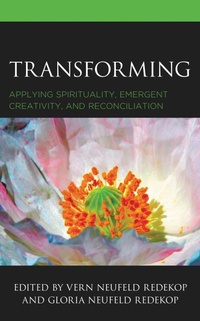
Transforming
Applying Spirituality, Emergent Creativity, and Reconciliation
1st Edition
Published on 15. January 2021
1 pages
978-1-9787-8715-5 (ISBN)
Description

Global crises-from pandemics to climate change-demonstrate the vulnerability of the biosphere and each of us as individuals, calling for responses guided by creative analysis and compassionate reflection. Transforming, building on its companion volume, Awakening, explores actions that create paths of understanding and collaboration as the groundwork for transformative community. The community of scholars in this volume offers perspectives that collectively form a complex tapestry of resources. The volume engages with the complex range of challenges and possibilities across a variety of sectors, and provides an interdisciplinary approach to the prospects for transformative healing of human and non-human communities, and the global environment we inhabit. Spirituality is essential to this, and, as such, the work explores vital dimensions of emerging spiritual concepts, methods, and practices that harbor interfaith potential for genuine reconciliation and communion.
More details
Edition
1. Auflage
Language
English
Place of publication
United States
Publishing group
Bloomsbury Publishing Plc
Target group
Professional and scholarly
Illustrations
18 b/w illustrations; 10 maps; 12 tables;
ISBN-13
978-1-9787-8715-5 (9781978787155)
Copyright in bibliographic data and cover images is held by Nielsen Book Services Limited or by the publishers or by their respective licensors: all rights reserved.
Schweitzer Classification
Other editions
Additional editions
Vern Neufeld Redekop | Gloria Neufeld Redekop
Transforming
Applying Spirituality, Emergent Creativity, and Reconciliation
Book
03/2022
Lexington Books
€56.30
Shipment within 15-20 days
Persons
Vern Neufeld Redekop is professor emeritus of conflict studies at Saint Paul University, Ottawa, Canada. His book From Violence to Blessing has been translated into French and Arabic and has been widely used internationally to promote reconciliation.
Gloria Neufeld Redekop is a researcher and author in spirituality and religious social history. Her publications include Bad Girls and Boys Go to Hell (or Not): Engaging Fundamentalist Evangelicalism and The Work of Their Hands: Mennonite Women's Societies in Canada.
Gloria Neufeld Redekop is a researcher and author in spirituality and religious social history. Her publications include Bad Girls and Boys Go to Hell (or Not): Engaging Fundamentalist Evangelicalism and The Work of Their Hands: Mennonite Women's Societies in Canada.
Content
Acknowledgements
Introduction: Transforming: Inside and Out by Gloria Neufeld Redekop and Vern Neufeld Redekop
Part 1: Violence, Spirituality, and Reconciliation
Chapter 1: Reconciliation as Emergent Creativity by Vern Neufeld Redekop
Chapter 2: The Biology of Emotion: Implications for Self-Development, Spirituality, and Justice by Katherine Peil Kauffman
Chapter 3: Violence, Reconciliation, and the Significance of the Subtle Mystical Dimension in the Light of René Girard's Battling to the End by Petra Steinmair- Pösel
Chapter 4: Coming to Terms with Violence and War: The Experience of Mennonite Women and Children in Russia (1917-1925) by Gloria Neufeld Redekop
Part 2: Reconciliation as Spiritual Praxis
Chapter 5: Relational Ecosystem for Peace (REP): From Division to Deep Connection with Compassionate Listening by Brigitte Gagnon
Chapter 6: Interworldview Dialogue (IWVD): The Emergence of an Applied Theory for Conflict Transformation and Peacebuilding by Patrice C. Brodeur
Chapter 7: The Dénouement of Religious Leader Engagement in the Canadian Armed Forces by S. K. Moore
Chapter 8: RLE from the Balcony: The Domestic Application of Religious Leader Engagement by Karen Hamilton
Chapter 9: Creative Dialogue between Muslim and Western Worlds towards Reconciliation and Addressing Violent Extremism: A Muslim Perspective by Iman Ibrahim
Chapter 10: Arts Literacy and Nonviolent Social Change: Re-envisioning Spirituality through Creative Practice by Lauren Michelle Levesque
Part 3: Indigenous Insights and Challenges for Reconciliation
Chapter 11: Transcending Traditional Justice Claims: Challenges of Indigenous-Settler Reconciliation by Joseph Cleyn
Chapter 12: Warring with Windigo/Wihtiko: Cree and Algonquian Insights into Spirituality, Emergent Creativity and Reconciliation by Cecil Chabot
Chapter 13: Transforming Wihtiko Systems by Catherine Twinn (with thanks to Isaac Twinn)
Chapter 14: Transforming "Wicked" Problems in an Integral Manner: The Case of Fly-In Indigenous Communities by Robert Logie
Chapter 15: Reconciliation in Australia and Lederach's Moral Imagination by Sue-Anne Hess
Part 4: Complexity, Community, and Emergent Development
Chapter 16: Harnessing Principles of Complex Systems for Understanding and Modulating Social Structures by Neil D. Theise with Catherine Twinn, Gloria Neufeld Redekop, and Lissane Yohannes
Chapter 17: Development as Emergent Creativity by Naresh Singh
Chapter 18: Sacred Diplomacy as "The Adjacent Possible Praxis": Transforming Peacebuilding to Meet the Challenges of a Warming Planet by Merle Lefkoff
Conclusion by Oscar Gasana
Index
About the Editors
About the Contributors
Introduction: Transforming: Inside and Out by Gloria Neufeld Redekop and Vern Neufeld Redekop
Part 1: Violence, Spirituality, and Reconciliation
Chapter 1: Reconciliation as Emergent Creativity by Vern Neufeld Redekop
Chapter 2: The Biology of Emotion: Implications for Self-Development, Spirituality, and Justice by Katherine Peil Kauffman
Chapter 3: Violence, Reconciliation, and the Significance of the Subtle Mystical Dimension in the Light of René Girard's Battling to the End by Petra Steinmair- Pösel
Chapter 4: Coming to Terms with Violence and War: The Experience of Mennonite Women and Children in Russia (1917-1925) by Gloria Neufeld Redekop
Part 2: Reconciliation as Spiritual Praxis
Chapter 5: Relational Ecosystem for Peace (REP): From Division to Deep Connection with Compassionate Listening by Brigitte Gagnon
Chapter 6: Interworldview Dialogue (IWVD): The Emergence of an Applied Theory for Conflict Transformation and Peacebuilding by Patrice C. Brodeur
Chapter 7: The Dénouement of Religious Leader Engagement in the Canadian Armed Forces by S. K. Moore
Chapter 8: RLE from the Balcony: The Domestic Application of Religious Leader Engagement by Karen Hamilton
Chapter 9: Creative Dialogue between Muslim and Western Worlds towards Reconciliation and Addressing Violent Extremism: A Muslim Perspective by Iman Ibrahim
Chapter 10: Arts Literacy and Nonviolent Social Change: Re-envisioning Spirituality through Creative Practice by Lauren Michelle Levesque
Part 3: Indigenous Insights and Challenges for Reconciliation
Chapter 11: Transcending Traditional Justice Claims: Challenges of Indigenous-Settler Reconciliation by Joseph Cleyn
Chapter 12: Warring with Windigo/Wihtiko: Cree and Algonquian Insights into Spirituality, Emergent Creativity and Reconciliation by Cecil Chabot
Chapter 13: Transforming Wihtiko Systems by Catherine Twinn (with thanks to Isaac Twinn)
Chapter 14: Transforming "Wicked" Problems in an Integral Manner: The Case of Fly-In Indigenous Communities by Robert Logie
Chapter 15: Reconciliation in Australia and Lederach's Moral Imagination by Sue-Anne Hess
Part 4: Complexity, Community, and Emergent Development
Chapter 16: Harnessing Principles of Complex Systems for Understanding and Modulating Social Structures by Neil D. Theise with Catherine Twinn, Gloria Neufeld Redekop, and Lissane Yohannes
Chapter 17: Development as Emergent Creativity by Naresh Singh
Chapter 18: Sacred Diplomacy as "The Adjacent Possible Praxis": Transforming Peacebuilding to Meet the Challenges of a Warming Planet by Merle Lefkoff
Conclusion by Oscar Gasana
Index
About the Editors
About the Contributors
