

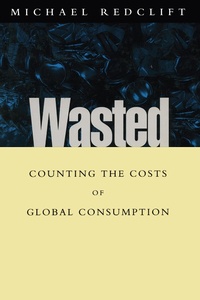
Wasted
Counting the costs of global consumption
1st Edition
Published on 10. September 2020
184 pages
978-1-000-10868-2 (ISBN)
Description

Sustainable development cannot be achieved solely at the international level. Without the creation of more sustainable livelihoods, it will remain a utopian and elusive goal. Yet given the huge differences in economic development and levels of consumption between North and South, how might this be
brought about?
Taking the 1992 Rio Summit as its point of departure, Wasted examines what we now need to know, and what we need to do, to live within sustainable limits. One of the key issues is how we use the environment: converting natural resources into human artifices, commodities and services. In the process of consuming,
we also create sinks. Today, these sinks - the empty back pocket in the global biogeographical system - are no longer empty. The fate of the global environment is indissolubly linked to our consumption: particularly in the energy-profligate North.
To understand and overcome environmental challenges, we need to build the outcomes of our present consumption rates into our future behaviour: to accept sustainable development as a normative goal for societies; one that is bound up with our everyday social practices and actions. In this absorbing book, Michael Redclift argues that the way we understand and think about the environn1ent conditions our responses, and our ability to meet the challenge, and discusses tangible policies for increased sustainability that are grounded in recent research and practice.
MICHAEL Redclift
Is Professor of International Environmental Policy at the Department of Geography, King's College London. He was previously Professor of International Environmental Policy at the University of Keele and before that Professor of Environmental Sociology at Wye College, University of London, and Director of the ESRC Global Environmental Change Programme. He is author and editor of numerous books, including Sustainable Development: Exploring the Contradictions (1987), Social Theory and the Global Environment (1994) and Sustainability: Life Chances and Lifestyles (1999).
Originally published in 1996
brought about?
Taking the 1992 Rio Summit as its point of departure, Wasted examines what we now need to know, and what we need to do, to live within sustainable limits. One of the key issues is how we use the environment: converting natural resources into human artifices, commodities and services. In the process of consuming,
we also create sinks. Today, these sinks - the empty back pocket in the global biogeographical system - are no longer empty. The fate of the global environment is indissolubly linked to our consumption: particularly in the energy-profligate North.
To understand and overcome environmental challenges, we need to build the outcomes of our present consumption rates into our future behaviour: to accept sustainable development as a normative goal for societies; one that is bound up with our everyday social practices and actions. In this absorbing book, Michael Redclift argues that the way we understand and think about the environn1ent conditions our responses, and our ability to meet the challenge, and discusses tangible policies for increased sustainability that are grounded in recent research and practice.
MICHAEL Redclift
Is Professor of International Environmental Policy at the Department of Geography, King's College London. He was previously Professor of International Environmental Policy at the University of Keele and before that Professor of Environmental Sociology at Wye College, University of London, and Director of the ESRC Global Environmental Change Programme. He is author and editor of numerous books, including Sustainable Development: Exploring the Contradictions (1987), Social Theory and the Global Environment (1994) and Sustainability: Life Chances and Lifestyles (1999).
Originally published in 1996
More details
Edition
1. Auflage
Language
English
Place of publication
London
United Kingdom
Publishing group
Taylor & Francis Ltd
Target group
College/higher education
ISBN-13
978-1-000-10868-2 (9781000108682)
Copyright in bibliographic data and cover images is held by Nielsen Book Services Limited or by the publishers or by their respective licensors: all rights reserved.
Schweitzer Classification
Other editions
Person
Michael Redclift
Content
Acknowledgments
List ofFigures
List of Tables
Chapter One: Introduction
Consumption and the Environment
How can we 'Recover Consumption'?
Chapter Two: The Earth Summit
International Environmental Policy: the Road From Stockholm
Counsel of Despair: International Environmental Problems in the 1980s
UNCED: the Road to Rio
The UNCED Deliberations: Conventions and a New Agenda
In the Wake of Rio: International Finance and Political Devolution
Global Environmental Management: a Realist Perspective
From Science to Policy: Environmental Management and the UNCED Process
Making sense of the Environment/Development Debate
Chapter Three: Meeting Environmental Targets
Global Environmental Change
The Laws of Thermodynamics
The Effect of Human Evolution on Natural Systems
Sustainable Development
Sustainability Indicators
Chapter Four: The Global Economy and Consumption
The Hydrocarbon Society and Energy Consumption
The New International Economic Order
Energy Consumption and the Generation of Waste
Recovering Consumption: the Political Economy of Wastes
Chapter Five: Managing Global Resources
European Energy Policy and Global Change
Sustainable Energy Policies for the Brazilian Amazon
Chapter Six: Metabolising Nature
Global Environmental Management
The 'Empty' and 'Full' World System: a Point of Departure
How we Measure Environmental Quality: the Costs of Consumption
Democratic Control of the Environment
The Standard of Living or the Quality of Life?
Global Carbon Budgets
The Social Functions of Sinks
Chapter Seven: Sustainability and Social Commitments
Environmental Discourse and Environmental Management
How we Metabolise Nature
Embodiment and Distanciation
Chapter Eight: Local Environmental Action
Creating Sustainable Employment: LETS Schemes
Beyond Recycling: Recovering our Control over Waste
Farmers' Networks
References
Index
List ofFigures
List of Tables
Chapter One: Introduction
Consumption and the Environment
How can we 'Recover Consumption'?
Chapter Two: The Earth Summit
International Environmental Policy: the Road From Stockholm
Counsel of Despair: International Environmental Problems in the 1980s
UNCED: the Road to Rio
The UNCED Deliberations: Conventions and a New Agenda
In the Wake of Rio: International Finance and Political Devolution
Global Environmental Management: a Realist Perspective
From Science to Policy: Environmental Management and the UNCED Process
Making sense of the Environment/Development Debate
Chapter Three: Meeting Environmental Targets
Global Environmental Change
The Laws of Thermodynamics
The Effect of Human Evolution on Natural Systems
Sustainable Development
Sustainability Indicators
Chapter Four: The Global Economy and Consumption
The Hydrocarbon Society and Energy Consumption
The New International Economic Order
Energy Consumption and the Generation of Waste
Recovering Consumption: the Political Economy of Wastes
Chapter Five: Managing Global Resources
European Energy Policy and Global Change
Sustainable Energy Policies for the Brazilian Amazon
Chapter Six: Metabolising Nature
Global Environmental Management
The 'Empty' and 'Full' World System: a Point of Departure
How we Measure Environmental Quality: the Costs of Consumption
Democratic Control of the Environment
The Standard of Living or the Quality of Life?
Global Carbon Budgets
The Social Functions of Sinks
Chapter Seven: Sustainability and Social Commitments
Environmental Discourse and Environmental Management
How we Metabolise Nature
Embodiment and Distanciation
Chapter Eight: Local Environmental Action
Creating Sustainable Employment: LETS Schemes
Beyond Recycling: Recovering our Control over Waste
Farmers' Networks
References
Index
