

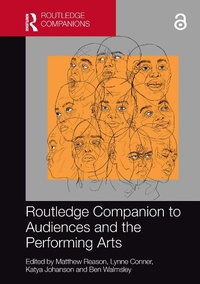
Routledge Companion to Audiences and the Performing Arts
1st Edition
Published on 5. April 2022
580 pages
978-1-000-53796-3 (ISBN)
Description

The Routledge Companion to Audiences and the Performing Arts represents a truly multi-dimensional exploration of the inter-relationships between audiences and performance.
This study considers audiences contextually and historically, through both qualitative and quantitative empirical research, and places them within appropriate philosophical and socio-cultural discourses. Ultimately, the collection marks the point where audiences have become central and essential not just to the act of performance itself but also to theatre, dance, opera, music and performance studies as academic disciplines.
This Companion will be of great interest to academics, researchers and postgraduates, as well as to theatre, dance, opera and music practitioners and performing arts organisations and stakeholders involved in educational activities.
This study considers audiences contextually and historically, through both qualitative and quantitative empirical research, and places them within appropriate philosophical and socio-cultural discourses. Ultimately, the collection marks the point where audiences have become central and essential not just to the act of performance itself but also to theatre, dance, opera, music and performance studies as academic disciplines.
This Companion will be of great interest to academics, researchers and postgraduates, as well as to theatre, dance, opera and music practitioners and performing arts organisations and stakeholders involved in educational activities.
More details
Series
Edition
1. Auflage
Language
English
Place of publication
London
United Kingdom
Publishing group
Taylor & Francis Ltd
Target group
College/higher education
Professional and scholarly
Illustrations
24 Halftones, black and white; 24 Illustrations, black and white
ISBN-13
978-1-000-53796-3 (9781000537963)
Copyright in bibliographic data and cover images is held by Nielsen Book Services Limited or by the publishers or by their respective licensors: all rights reserved.
Schweitzer Classification
Other editions
Additional editions
Matthew Reason | Lynne Conner | Katya Johanson
Routledge Companion to Audiences and the Performing Arts
Book
09/2023
1st Edition
Routledge
€57.50
Shipment within 15-20 days
Matthew Reason | Lynne Conner | Katya Johanson
Routledge Companion to Audiences and the Performing Arts
Book
04/2022
1st Edition
Routledge
€324.30
Shipment within 15-20 days
Persons
Matthew Reason is Professor of Theatre and Performance at York St John University, UK.
Lynne Conner is Chair and Professor at the Department of Theatre at University of North Carolina at Charlotte, USA.
Katya Johanson is Professor of Audience Research at Deakin University, Australia.
Ben Walmsley is Professor in Audience Engagement at University of Leeds, UK.
Lynne Conner is Chair and Professor at the Department of Theatre at University of North Carolina at Charlotte, USA.
Katya Johanson is Professor of Audience Research at Deakin University, Australia.
Ben Walmsley is Professor in Audience Engagement at University of Leeds, UK.
Content
The Paradox of Audiences
Matthew Reason, Lynne Conner, Katya Johanson and Ben Walmsley
Part One: Histories, Theories and Questions of Social Justice
Introduction
Lynne Conner
1. Ellen Dissanayake in Conversation
Ellen Dissanayake and Lynne Conner
2. Histories of Audiencing: On Evidence, Mythology and Nostalgia
Helen Freshwater
3. Disrupting the Audience as Monolith
Lynne Conner
4. Who? Why? and How?: The Contribution of Sociology to the Study of Arts Audiences and Where it Needs Help
Laurie Hanquinet
5. The Future of Audiences and Audiencing
Jennifer Novak Leonard
6. Which Global? Which Local?: Aucitya, Rasa, Development, Ase and other Demands on the Audience
Glenn Odom and Giri Raghunathan
7. Forced Experiences: Shifting Modes of Audience Involvement in Immersive Performances
Doris Kolesch and Theresa Schuetz
Part Two: Policies, Politics and Practices
Introduction
Ben Walmsley
8. Alan Brown in Conversation
Alan Brown and Emma McDowell
9. Are We the Baddies?: Audience Development, Cultural Policy and Ideological Precarity
Steven Hadley
10. At what cost? Working Class Audiences and the Price of Culture
Maria Barrett
11. A 'Universal Design' for Audiences with Disabilities?
Bree Hadley
12. Fans and Fandom in the Performing Arts
Kirsty Sedgman
13. The Role of the Audience in Forum and Interactive Theatre: Perspectives from Bangladesh
Meghna Guhathakurta
14. Audience Engagement and the Production of Efficacious Theatre: Case Studies from Ghana
Awo Mana Asiedu
15. Critical Perspectives on Valuing Culture: Tensions and Disconnections between Research, Policy and Practice
Ben Walmsley and Julian Meyrick
Part Three: Methods, Methodologies and Understanding Audiences
Introduction
Matthew Reason
16. Martin Barker in Conversation
Martin Barker and Matthew Reason
17. Mixing Methods in Audience Research Practice: A multi-method(ological) discussion
Emma McDowell
18. Quantifying the Dance Spectacle in the Audience's Mind: A Methodological Quest for Neuroscience Research
Corinne Jola
19. Continuous and Collective Measures of Real-Time Audience Engagement
L.S. Merritt Millman, Guido Orgs and Daniel Richardson
20. Audience Interaction: Approaches to Researching the Social Dynamics of Live Audiences
Patrick G.T. Healey, Matthew T. Harris and Michael F. Schober
21. Quantitative Measures of Audience Experience
Wing Tung Au, Zhumeng Zuo and Paton Pak Chun Yam
22. The Benefits and Challenges of Large-Scale Qualitative Research
Stephanie Pitts and Sarah Price
23. Creative Methods and Audience Research: Affordances and Radical Potential
Matthew Reason
24. Ethics in Audience Research: By the Book or on the Hop?
Katya Johanson and Hilary Glow
Part Four: Shorts: Adventures in Thinking About Audiences
Introduction
Katya Johanson
25. Affect
Lucy Thornett
26. Agency
Astrid Breel
27. Co-Creation
Michael Pinchbeck and Rachel Baynton
28. Covid-19
Tully Barnett
29. Data
Rishi Coupland
30. Dialogue
Maddy Costa
31. Integrated and Inclusive
Vipavinee Artpradid
32. Labour
Martin Young
33. Language
Michelle Loh
34. Laughter
Natalie Diddams
35. Marginalia
Helen Yung
36. Memory
Elaine Faull
37. One-to-One
Rachel Gomme
38. Pantomime
Robert Marsden
39. Post-Humanity
Fayen D'Evie
40. Post-Show
Diane Ragsdale
41. Rehearsal
Anja Ali Haapala
42. Relaxed
Lauren Hall and Paul Wilshaw
43. Risk
Ella de Burca
44. Sickness
Veronica Rodriguez
45. Thresholds
Stefania Donini
46. Touch
Elena S.V. Flys
Afterword: Covid-19, Audiences, and the Future of the Performing Arts
Matthew Reason, Lynne Conner, Katya Johanson and Ben Walmsley
Matthew Reason, Lynne Conner, Katya Johanson and Ben Walmsley
Part One: Histories, Theories and Questions of Social Justice
Introduction
Lynne Conner
1. Ellen Dissanayake in Conversation
Ellen Dissanayake and Lynne Conner
2. Histories of Audiencing: On Evidence, Mythology and Nostalgia
Helen Freshwater
3. Disrupting the Audience as Monolith
Lynne Conner
4. Who? Why? and How?: The Contribution of Sociology to the Study of Arts Audiences and Where it Needs Help
Laurie Hanquinet
5. The Future of Audiences and Audiencing
Jennifer Novak Leonard
6. Which Global? Which Local?: Aucitya, Rasa, Development, Ase and other Demands on the Audience
Glenn Odom and Giri Raghunathan
7. Forced Experiences: Shifting Modes of Audience Involvement in Immersive Performances
Doris Kolesch and Theresa Schuetz
Part Two: Policies, Politics and Practices
Introduction
Ben Walmsley
8. Alan Brown in Conversation
Alan Brown and Emma McDowell
9. Are We the Baddies?: Audience Development, Cultural Policy and Ideological Precarity
Steven Hadley
10. At what cost? Working Class Audiences and the Price of Culture
Maria Barrett
11. A 'Universal Design' for Audiences with Disabilities?
Bree Hadley
12. Fans and Fandom in the Performing Arts
Kirsty Sedgman
13. The Role of the Audience in Forum and Interactive Theatre: Perspectives from Bangladesh
Meghna Guhathakurta
14. Audience Engagement and the Production of Efficacious Theatre: Case Studies from Ghana
Awo Mana Asiedu
15. Critical Perspectives on Valuing Culture: Tensions and Disconnections between Research, Policy and Practice
Ben Walmsley and Julian Meyrick
Part Three: Methods, Methodologies and Understanding Audiences
Introduction
Matthew Reason
16. Martin Barker in Conversation
Martin Barker and Matthew Reason
17. Mixing Methods in Audience Research Practice: A multi-method(ological) discussion
Emma McDowell
18. Quantifying the Dance Spectacle in the Audience's Mind: A Methodological Quest for Neuroscience Research
Corinne Jola
19. Continuous and Collective Measures of Real-Time Audience Engagement
L.S. Merritt Millman, Guido Orgs and Daniel Richardson
20. Audience Interaction: Approaches to Researching the Social Dynamics of Live Audiences
Patrick G.T. Healey, Matthew T. Harris and Michael F. Schober
21. Quantitative Measures of Audience Experience
Wing Tung Au, Zhumeng Zuo and Paton Pak Chun Yam
22. The Benefits and Challenges of Large-Scale Qualitative Research
Stephanie Pitts and Sarah Price
23. Creative Methods and Audience Research: Affordances and Radical Potential
Matthew Reason
24. Ethics in Audience Research: By the Book or on the Hop?
Katya Johanson and Hilary Glow
Part Four: Shorts: Adventures in Thinking About Audiences
Introduction
Katya Johanson
25. Affect
Lucy Thornett
26. Agency
Astrid Breel
27. Co-Creation
Michael Pinchbeck and Rachel Baynton
28. Covid-19
Tully Barnett
29. Data
Rishi Coupland
30. Dialogue
Maddy Costa
31. Integrated and Inclusive
Vipavinee Artpradid
32. Labour
Martin Young
33. Language
Michelle Loh
34. Laughter
Natalie Diddams
35. Marginalia
Helen Yung
36. Memory
Elaine Faull
37. One-to-One
Rachel Gomme
38. Pantomime
Robert Marsden
39. Post-Humanity
Fayen D'Evie
40. Post-Show
Diane Ragsdale
41. Rehearsal
Anja Ali Haapala
42. Relaxed
Lauren Hall and Paul Wilshaw
43. Risk
Ella de Burca
44. Sickness
Veronica Rodriguez
45. Thresholds
Stefania Donini
46. Touch
Elena S.V. Flys
Afterword: Covid-19, Audiences, and the Future of the Performing Arts
Matthew Reason, Lynne Conner, Katya Johanson and Ben Walmsley
