

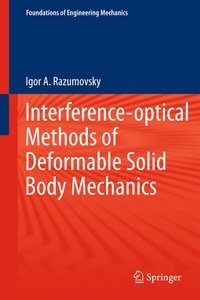
Interference-optical Methods of Solid Mechanics
Description

This reference tutorial contains modern experimental approaches to analysis of strain-stress distribution based on interference-optical methods of registration of strain or displacement fields, including coherent-optical techniques (holographic interferometry, speckle photography, electronic digital speckle interferometry techniques) and photoelastic methods as well as the shadow optical method of caustic.
The book describes the theory, efficient scope of application in the every-day practice and the problems of further development of these techniques. Much attention is paid to new and promising advanced developments in the field of observation and computational methods for study of residual stress, determination of fracture mechanics parameters and material deformation characteristics.
The content corresponds to the course of lectures delivered by the author at the N.E. Bauman Moscow State Technical University.
It is intended for technical university students, research engineers and postgraduate students who are doing analysis of strain-stress state and strength of structural elements.
More details
Other editions
Additional editions
Persons
Content
Introduction.- Photoelasticity.- Coherent-optical methods.- Use of interference-optical methods to solve problems in fracture mechanics.- Experimental methods for residual stress determination.
