

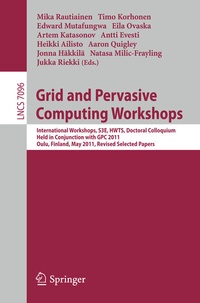
Grid and Pervasive Computing Workshops
International Workshops, S3E, HWTS, Doctoral Colloquium, Held in Conjunction with GPC 2011, Oulu, Finland, May 11-13, 2011. Revised Selected Papers
Published on 10. February 2012
XIV, 182 pages
978-3-642-27916-4 (ISBN)
Description

This book constitutes the carefully refereed post-conference proceedings of two International Workshops: Self-Managing Solutions for Smart Environments, S3E 2011; and the workshop on Health and Well-being Technologies and Services for Elderly, HWTS 2011; as well as a Doctoral Colloquium, held in conjunction with, GPC 2011, in Oulu, Finland, in May 2011. The 19 revised full papers presented together with 1 keynote lecture were carefully revised and selected from 26 submissions and focus on the topics self-managing solutions for smart environments; health and well-being technologies, and services for elderly. The topics of the doctoral colloquium papers had a wide scope and they represented different viewpoints and sub-disciplines inside the ICT field.
More details
Other editions
Additional editions
Mika Rautiainen | Timo Korhonen | Edward Mutafungwa
Grid and Pervasive Computing Workshops
International Workshops, S3E, HWTS, Doctoral Colloquium, Held in Conjunction with GPC 2011, Oulu, Finland, May 11-13, 2011. Revised Selected Papers
Book
01/2012
Springer
€53.49
Shipment within 7-9 days
Content
- Title
- Preface
- Organization
- Table of Contents
- International Workshop on Self-managing Solutions for Smart Environments (S3E 2011)
- Global Understanding Environment: Towards Self-managed Web of Everything
- Smart Solutions for Risk Prevention through Analysis of People Movements
- Introduction
- An Architectural Perspective towards Risks
- Monitoring Persons' Movements
- Methodology for Movement Classification
- The FFxIVFF Transformation
- The Datasets
- Tests and Results
- Movements' Analysis in Risk Management: A Sample Scenario
- Concluding Remarks
- References
- Supporting Situation-Awareness in Smart Spaces
- Introduction
- Background
- Context Ontology for Smart Spaces, CO4SS
- Validation
- Discussions
- Conclusions and Future Work
- References
- A Model for Using Machine Learning in Smart Environments
- Introduction
- Machine Learning
- Smart Environment Projects
- Model
- Detection
- Recognition
- Prediction
- Optimisation
- Interaction of Machine Learning Uses
- Experiment
- Implementation
- Evaluation
- Discussion
- Related Research
- Conclusions
- References
- Flexible Security Deployment in Smart Spaces
- Introduction
- Security Deployment Challenges for Smart Space Platforms
- Credential Management for Heterogeneous Technologies
- Dynamic Devices, Shared Brokers and Multiple Authorities
- Dynamic Permission Assignment
- Security Deployment Solutions for Smart Spaces
- Credential Deployment Architecture
- Run-Time Policy Generation
- Implementation
- DIP Security
- RIBS Security
- Policy Generation Models
- Conclusions
- References
- Using Semantic Transformers to Enable Interoperability between Media Devices in a Ubiquitous Computing Environment
- Introduction
- Related Work
- Semantic Connections
- Semantic Media Ontology
- Semantic Transformers
- Implementation
- Conclusion
- References
- International Workshop on Health and Well-being Technologies and Services for Elderly (HWTS 2011)
- TV-kiosk: An Open and Extensible Platform for the Wellbeing of an Ageing Population
- Introduction
- Problem Statement and Approach
- The Technology
- The Services
- The Field Trial
- Requirement Analysis
- Related Work
- Conclusions and Future Work
- References
- Design of Easy Access Internet Browsing System for Elderly People Based on Android
- Introduction
- Android Operating System
- System Description
- Key Features
- WiFi Settings
- Favorites
- Browser
- Evaluations and Results
- Conclusion and Further Work
- References
- Exploring Pervasive Service Computing Opportunities for Pursuing Successful Ageing
- Introduction
- NCMRR Elderly Disability Model
- Quality of Life Domains and Indicators
- Service Model for the Elderly
- The Framework
- Related Studies
- Conclusions and Future Work
- References
- Alert Calls in Remote Health: Cultural Adaptation and Usability Inspection for China
- Introduction
- COPD in China
- Some Cost Considerations
- Cultural Service Adaptation
- User-Centered Design for Elderly
- Medical Alert Calls
- Medical Alert Call for COPD - Service Functionalities
- Analyzing User-Centric Design
- Transforming the Service from Finland to China
- Conclusions
- References
- Estimating Older People's Physical Functioning with Automated Health Monitoring Technologies at Home: Feature Correlations and Multivariate Analysis
- Introduction
- Methods
- Subjects and Material
- Data Processing
- Results
- Discussion and Conclusions
- References
- Applying MTC and Femtocell Technologies to the Continua Health Reference Architecture
- Introduction
- Continua Reference Architecture
- Continua Device Classes
- Continua Interfaces
- 3GPP Architectural Enhancements
- Machine-Type Communications
- Residential Femtocell Networks
- Adapting MTC and Femtocells for the Continua Framework
- MTC Devices as Personal Health Devices
- MTC Devices as Personal Health Devices
- Femtocells as a Home Gateway for Personal Telehealth Systems
- Conclusions and Future Work
- References
- Developing a Real-Time Process Data Acquisition System for Automatic Process Measurement
- Introduction
- Related Work
- Measurement System
- Bluetooth Communication Technology
- Development Platforms
- Architecture of the Measurement System
- User Interface
- Experimental Results
- Conclusion and Future Work
- References
- Doctoral Colloquium
- Adaptable Context-Aware Micro-architecture
- Introduction
- Challenges in the Smart Space
- Research Problem
- Research Approach
- Research Outcomes
- References
- Ubiquitous Framework for Creating and Evaluating Persuasive Applications and Games
- Introduction
- Related Work
- Work Proposal
- Research Plan
- Conclusions
- References
- Dynamic Data Processing Middleware for Sensor Networks
- Introduction
- Related Work
- PhD Work
- Discussion
- References
- Smart Spaces: A Metacognitive Approach
- Introduction
- Interaction in Smart Spaces
- User-Smart Space Interaction
- Service Interactions in Smart Space
- Improving Interaction in Smart Space
- Metacognitive Approach
- Research Hypothesis
- Related Work
- Discussion
- References
- A Conceptual Framework for Enabling Community-Driven Extensible, Open and Privacy-Preserving Ubiquitous Computing Networks
- Introduction
- The Privacy Problem in Ubiquitous Computing
- Enabling Community-Driven, Extensible, Open and Privacy- Preserving Ubiquitous Computing
- Methodological Approach
- UbiOulu Research
- Conclusion
- References
- Doctoral Colloquium: Integrating Web Content into Mashups on Desktop and Mobile Devices
- Introduction
- Related Work
- Mashup Application Examples
- Mashup Tools
- Mashup Frameworks
- Mashup Security
- Research Objectives and Methodology
- Research Questions
- Research Methodology
- Research Carried Out and Contributions
- Summary
- References
- Lightweight Service-Based Software Architecture
- Introduction
- Related Work
- Proposed Solution
- Methods
- Expected Results
- Conclusion
- References
- Author Index
