

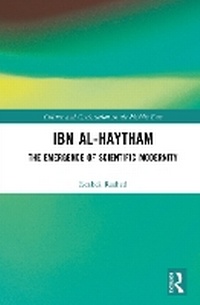
Ibn al-Haytham
The Emergence of Scientific Modernity
Will be published approx. on 25. March 2026
308 pages
E-Book
978-1-040-45928-7 (ISBN)
Description

Ibn al-Haytham: The Emergence of Scientific Modernity offers the first comprehensive monograph on one of the most brilliant figures of the medieval intellectual world.
Spanning his groundbreaking contributions in mathematics, optics, astronomy, and natural philosophy, this book portrays Ibn al-Haytham as he was seen in his own time: a man of universal learning whose methods, sources, and intellectual reputation resonated far beyond his era. Moving beyond the familiar terrain of his Kitab al-Mana?ir (Book of Optics), it places his achievements in a much wider context, examining his lesser-studied writings on geometry, mechanics, and scientific method. Through a systematic analysis of these works, the book demonstrates how Ibn al-Haytham's experimental rigor, mathematical formalism, and critical engagement with earlier Greek and Arabic sources foreshadowed core principles of the European Scientific Revolution. It shows how his insistence on verification through observation and reasoning forged a distinctive approach that inspired thinkers from medieval Cairo to Renaissance Europe.
An essential resource for historians of science, Islamic studies scholars, and anyone interested in the intellectual foundations of modernity, this volume restores Ibn al-Haytham to his rightful place as a pioneering figure in the history of ideas and a bridge between classical learning and the birth of modern science.
Spanning his groundbreaking contributions in mathematics, optics, astronomy, and natural philosophy, this book portrays Ibn al-Haytham as he was seen in his own time: a man of universal learning whose methods, sources, and intellectual reputation resonated far beyond his era. Moving beyond the familiar terrain of his Kitab al-Mana?ir (Book of Optics), it places his achievements in a much wider context, examining his lesser-studied writings on geometry, mechanics, and scientific method. Through a systematic analysis of these works, the book demonstrates how Ibn al-Haytham's experimental rigor, mathematical formalism, and critical engagement with earlier Greek and Arabic sources foreshadowed core principles of the European Scientific Revolution. It shows how his insistence on verification through observation and reasoning forged a distinctive approach that inspired thinkers from medieval Cairo to Renaissance Europe.
An essential resource for historians of science, Islamic studies scholars, and anyone interested in the intellectual foundations of modernity, this volume restores Ibn al-Haytham to his rightful place as a pioneering figure in the history of ideas and a bridge between classical learning and the birth of modern science.
More details
Series
Language
English
Place of publication
London
United Kingdom
Publishing group
Taylor & Francis Ltd
Target group
College/higher education
ISBN-13
978-1-040-45928-7 (9781040459287)
Copyright in bibliographic data and cover images is held by Nielsen Book Services Limited or by the publishers or by their respective licensors: all rights reserved.
Schweitzer Classification
Other editions
Additional editions
Book
approx. 03/2026
1st Edition
Routledge
€191.50
Not yet published
Person
Roshdi Rashed is one of the most eminent authorities on Arabic mathematics and the exact sciences. A historian and philosopher of mathematics and science and a highly celebrated epistemologist, he is currently Emeritus Research Director (distinguished class) at the Centre National de la Recherche Scientifique (CNRS) in Paris, and is the former Director of the Centre for History of Medieval Science and Philosophy at the University of Paris (Denis Diderot, Paris VII). He also holds an Honorary Professorship at the University of Tokyo and an Emeritus Professorship at the University of Mansourah in Egypt.
Translator:
J. V. Field is a historian of science and is a Visiting Research Fellow in the Department of History of Art and Screen Media, Birkbeck, University of London, UK.
Translator:
J. V. Field is a historian of science and is a Visiting Research Fellow in the Department of History of Art and Screen Media, Birkbeck, University of London, UK.
Content
Contents
Foreword
Introduction. Ibn al-Haytham: from basra to cairo.
PART ONE: MATHEMATICS
Chapter I: Quadrature of lunes and of the circle
Chapter II: Finding surface areas and volumes of solids bounded by curves
II. 1: Euclid, Elements X, proposition 1
II. 2: On the measurement of the paraboloid
II. 3: The volume of the sphere
Chapter III: Isoperimetric and isepiphanic figures
Chapter IV: Conic sections: theory and applications. 1
Chapter V: Conic sections: theory and applications. 2.
Conic sections and geometrical constructions
V. 1: The construction of the regular heptagon
V. 2: On the construction of the heptagon in a circle
V. 3: The division of Archimedes' straight line
V. 4: On a solid numerical problem
Chapter VI: Point-to-point transformations and the new geometrical discipline: the knowns
Chapter VII: Number Theory
PART TWO: OPTICS
Chapter VIII: The reform of optics
VIII. 1: Light and vision
VIII. 2: Light and colours
Chapter IX: Catoptrics, anaclastics and dioptrics
IX. 1: Reflection
IX. 2: Refraction
Chapter X: Burning mirrors, anaclastics and dioptrics
X. 1: Burning mirrors in the ninth to the eleventh centuries: From anaclastics to dioptrics
X. 1. 1: Al-Kindi, Ibn Luqa and their successors
X. 1. 2: Ibn Sahl and Ibn al-Haytham
X. 1. 3: The heirs of Ibn al-Haytham's research on anaclastics in Arabic and in Latin
X. 2: Ibn Sahl: The geometrical theory of lenses
X. 3: Ibn al-Haytham and the development of dioptrics
X. 4: The burning sphere and the introduction of algorithmic methods : Kamal al-Din al-Farisi
PART THREE: ASTRONOMY
Chapter XI: Ibn al-Haytham's new astronomy
XI. 1: Ibn al-Haytham's work in astronomy
XI. 2: The Configuration of the motions of each of the seven wandering stars
XI. 2. 1: On the variety of the heights
XI. 2. 2: On the hour lines
XI. 2. 3: On the correction of operations in astronomy
Chapter XII: The structure of The Configuration of the motions
XII. 1: Research on variations
XII. 2: Planetary theory
XII. 2. 1: The apparent motion of the heavenly bodies
XII. 2. 1. 1: The apparent motion of the noon between its rising and its meridian passage
XII. 2. 1. 2: The apparent motion of the sun between its rising and its meridian passage
XII. 2. 1. 3: The apparent motion of each of the five planets between its rising and its meridian passage
XII. 2. 2: The inclination of the wandering stars with respect to the equator
PART FOUR: PHILOSOPHY OF MATHEMATICS
Chapter XIII: Principles and fundamental concepts of mathematics : magnitudes
XIII. 1: The concept of magnitude
XIII. 2: The comparison of magnitudes
XIII. 3: The concept of spatiality: place
XIII. 4: Parallel lines
Chapter XIV: Methods of proof and of discovery
XIV. 1: The analytic art
XIV. 2: Direct demonstration and apagogic demonstration
BIBLIOGRAPHY
INDEX
Foreword
Introduction. Ibn al-Haytham: from basra to cairo.
PART ONE: MATHEMATICS
Chapter I: Quadrature of lunes and of the circle
Chapter II: Finding surface areas and volumes of solids bounded by curves
II. 1: Euclid, Elements X, proposition 1
II. 2: On the measurement of the paraboloid
II. 3: The volume of the sphere
Chapter III: Isoperimetric and isepiphanic figures
Chapter IV: Conic sections: theory and applications. 1
Chapter V: Conic sections: theory and applications. 2.
Conic sections and geometrical constructions
V. 1: The construction of the regular heptagon
V. 2: On the construction of the heptagon in a circle
V. 3: The division of Archimedes' straight line
V. 4: On a solid numerical problem
Chapter VI: Point-to-point transformations and the new geometrical discipline: the knowns
Chapter VII: Number Theory
PART TWO: OPTICS
Chapter VIII: The reform of optics
VIII. 1: Light and vision
VIII. 2: Light and colours
Chapter IX: Catoptrics, anaclastics and dioptrics
IX. 1: Reflection
IX. 2: Refraction
Chapter X: Burning mirrors, anaclastics and dioptrics
X. 1: Burning mirrors in the ninth to the eleventh centuries: From anaclastics to dioptrics
X. 1. 1: Al-Kindi, Ibn Luqa and their successors
X. 1. 2: Ibn Sahl and Ibn al-Haytham
X. 1. 3: The heirs of Ibn al-Haytham's research on anaclastics in Arabic and in Latin
X. 2: Ibn Sahl: The geometrical theory of lenses
X. 3: Ibn al-Haytham and the development of dioptrics
X. 4: The burning sphere and the introduction of algorithmic methods : Kamal al-Din al-Farisi
PART THREE: ASTRONOMY
Chapter XI: Ibn al-Haytham's new astronomy
XI. 1: Ibn al-Haytham's work in astronomy
XI. 2: The Configuration of the motions of each of the seven wandering stars
XI. 2. 1: On the variety of the heights
XI. 2. 2: On the hour lines
XI. 2. 3: On the correction of operations in astronomy
Chapter XII: The structure of The Configuration of the motions
XII. 1: Research on variations
XII. 2: Planetary theory
XII. 2. 1: The apparent motion of the heavenly bodies
XII. 2. 1. 1: The apparent motion of the noon between its rising and its meridian passage
XII. 2. 1. 2: The apparent motion of the sun between its rising and its meridian passage
XII. 2. 1. 3: The apparent motion of each of the five planets between its rising and its meridian passage
XII. 2. 2: The inclination of the wandering stars with respect to the equator
PART FOUR: PHILOSOPHY OF MATHEMATICS
Chapter XIII: Principles and fundamental concepts of mathematics : magnitudes
XIII. 1: The concept of magnitude
XIII. 2: The comparison of magnitudes
XIII. 3: The concept of spatiality: place
XIII. 4: Parallel lines
Chapter XIV: Methods of proof and of discovery
XIV. 1: The analytic art
XIV. 2: Direct demonstration and apagogic demonstration
BIBLIOGRAPHY
INDEX
