

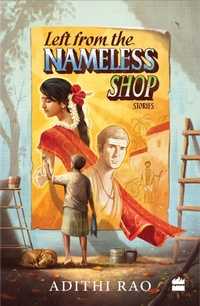
Left from the Nameless Shop
Published on 25. December 2018
328 pages
978-93-5302-326-3 (ISBN)
Description

A boy communes with the gods by talking to a pillar. The 'hibiscus girl' has her head in the clouds and feet gently planted in her husband's home. Two women, married to the same man, find a strange camaraderie binding them together. The whole town gathers to save the friendly neighbourhood shopkeeper's ice cream from spoiling in the heat. Short-tempered Seshadri hides a terrible shame in his outbursts. A grandfather passes on the magic of self-belief to his grandson.Reminiscent of Malgudi Days, Adithi Rao's debut Left from the Nameless Shop is a charming collection of interconnected stories set in the 1980s featuring the residents of Rudrapura, a small, fictitious town in Karnataka. This is a place bubbling with energy and the sense of community -- one you probably lived in and loved while growing up. These are stories of the life you have left behind. One that you hope to return to.
More details
Other editions
Additional editions
Adithi Rao
Left from the Nameless Shop
Book
12/2018
HarperCollins Publishers India
€13.00
Article not available for order
Person
After a degree in Theater from Smith College, Massachusetts, Adithi Rao worked as an assistant director on the award-winning Hindi cult film Satya, and then as a writer / editor on the travel channel of Indya.com. Her short stories have appeared in anthologies and in English textbooks across India. Left from the Nameless Shop (HarperCollins, 2018) is Adithi's first collection for adults. You can find her on www.adithirao.com.Ruchi Shah is a book illustrator / wall artist. She is an alumnus of University of the Arts, London and IDC, IIT Bombay. She received the Charles Wallace Scholarship in 2012 through the British Council. Her works explore places, spaces, materials and stories of everyday life.
