

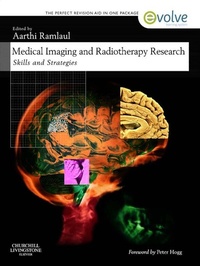
Medical Imaging and Radiotherapy Research
Skills and Strategies
Published on 15. July 2010
312 pages
978-0-7020-4828-9 (ISBN)
Description

All you need to successfully undertake a research project!
This exciting new book provides radiography students and practitioners with the key skills and strategies required to undertake research within medical imaging and radiotherapy. Quantitative and qualitative research methods are covered and guidance given on the entire research process - from literature researching, information management and literature evaluation, through to data collection, data analysis and writing up. Specific instruction is given on the structure and presentation of dissertations, writing articles for publication and on presentation skills for presenting at conferences.
FEATURES
Tailored to meet the specific needs of radiography students plus practitioners undertaking research
Includes practice tips and pitfalls to avoid
Covers how to apply for research funding for larger scale projects
Practical examples throughout clarify the concepts
Accompanying EVOLVE website
EVOLVE website
An accompanying website includes interactive examples of how to use the statistics tests discussed within the text.
Tailored to meet needs of radiography and medical imaging students and practitioners undertaking researchAccompanying website includes 10 examples on how to use descriptive and inferential statistics packages with interactive 10-step exercises and video clips on how to start up the packagesCase examples throughout clarify concepts.
More details
Other editions
Additional editions
Book
07/2010
Churchill Livingstone
€57.13
Shipment within 10-20 days
Content
- Front Cover
- Medical Imaging and Radiotherapy Research
- Copyright Page
- Contents
- Foreword
- Preface
- Acknowledgements
- Contributors
- List of abbreviations and acronyms
- Section 1: Getting started with research
- Chapter 1: History of research
- Chapter points
- Research and radiography
- What is knowledge?
- Social context of research: paradigms and the pursuit of knowledge
- Evidence-based medicine: a systematic approach to knowledge
- Conclusion
- References
- Chapter 2: Finding and formulating a research question
- Chapter points
- Step one: identifying a question
- Step two: is my question feasible?
- Step three: types of questions
- Step four: answering our question
- Further reading
- Chapter 3: Literature searching
- Chapter points
- Why search the literature?
- How wide a literature search do we need to do?
- Literature sources
- Writing a literature search method
- Tips and tactics for doing the literature search
- Problems with literature searches
- Further reading
- Chapter 4: Literature evaluation and critique
- Chapter points
- Introduction
- Hierarchies of evidence
- Examples of different research designs in medical imaging and radiotherapy
- Basic concepts in critical appraisal
- The typical structure of a research paper
- Preliminary steps in a critical appraisal
- Critical evaluation strategies according to design method
- References
- Further reading
- Appendix 4.1 Resources for critical appraisal
- Chapter 5: Reflective practice
- Chapter points
- Research methods and their contribution to course outcomes and professional development
- Reflective practice as a skill
- Critical incident technique as a tool for reflection
- Critical analysis of research
- Reflexivity
- Evidence-based practice
- Conclusions
- Acknowledgement
- References
- Chapter 6: Research governance and ethics
- Chapter points
- A brief history
- Ethical standpoints
- Research governance and ethical review: the formal process
- Aspects to be considered when undertaking research and ethical review
- Areas where problems may arise in relation to applications for ethics and R&D approval
- References
- Section 2: Research planning
- Chapter 7: Planning your research study
- Chapter points
- Introduction
- Orientation of the research
- Research design and methodology
- Data analysis
- Reporting and writing up the research
- References
- Chapter 8: Types of information
- Chapter points
- Introduction
- Quantitative and qualitative information
- Data collection
- Data display
- Receiver operating characteristic (ROC) curves
- References
- Chapter 9: Epidemiological research methods
- Chapter points
- Introduction
- Disease occurrence
- Study designs
- Odds and risk
- Further reading
- Chapter 10: Sampling errors, bias and objectivity
- Chapter points
- Randomness and probability
- Sampling
- Error and bias
- Power calculations
- Reliability and validity
- Further reading
- Web resources
- Chapter 11: Research outcome measures
- Chapter points
- Types of outcome measure
- Using outcome measures in study design
- Confounders
- Common outcome measures in diagnostic imaging and radiotherapy
- References
- Section 3: Health technology assessment
- Chapter 12: Health technology assessment
- Chapter points
- 12.1 Researching diagnostic tests
- Evaluative hierarchy of diagnostic technologies
- Studies of diagnostic test accuracy
- Assessment of reliability
- 12.2 Researching therapies using randomized controlled trials (RCTs)
- Introduction
- Benefits of randomized controlled trials
- Design characteristics of RCTs
- 12.3 Health economic assessment and RCTs
- Calculation of costs
- Treatment effectiveness
- Cost-effectiveness ratio
- 12.4 Systematic reviews and meta-analyses of RCTs
- Types of reviews
- Systematic reviews
- Summary
- References
- Appendix 12.1 Aloe vera articles
- Appendix 12.2 Linear accelerator running costs
- Section 4: Dosimetry and service evaluation
- Chapter 13: Dosimetry
- Chapter points
- Why should we undertake research in radiation dosimetry?
- Topics for radiation dosimetry research
- Devices, quantities and units of measurement in radiation dosimetry
- How can we get an idea of the biological harm caused by ionizing radiations?
- How can effective doses be calculated in practice?
- Dosimetry in computed tomography (CT)
- Some practical issues in radiation dosimetry
- Further reading
- Chapter 14: Quality assurance and clinical audit
- Chapter points
- Introduction
- What is quality?
- What is audit?
- Succeeding in quality assurance and clinical audit
- Reference
- Further reading
- Section 5: Data analysis
- Chapter 15: Quantitative methods and analysis
- Introduction
- Using summary statistics
- Hypothesis testing
- Choosing the correct data analysis test tool
- Common statistical tests
- Correlation and regression
- References
- Further reading
- Chapter 16: Qualitative analysis
- Interviews
- Questionnaires
- Observation
- Case study
- Action research
- Content analysis
- Critical reviews
- References
- Section 6: Writing up and disseminating
- Chapter 17: Dissertations and projects: structure and presentation
- Chapter points
- Introduction
- Structure
- Presentation
- Writing style
- Referencing
- Length
- Pagination, margins and spacing
- Fonts
- Binding
- References
- Chapter 18: Writing for publication and presenting at conferences
- Chapter points
- Introduction
- Writing for publication
- Presenting at a conference
- And finally...
- Further reading
- Chapter 19: Applying for research funding
- Chapter points
- From conception to grant proposal
- Which grant and where to find it?
- Writing a good grant application
- References
- Chapter 20: Good practice tips and pitfalls to avoid when writing up
- Chapter points
- 1. Choose a topic that you are interested in
- 2. Answer the research question
- 3. Time management
- 4. Research supervision
- 5. Pay attention to analysis
- 6. Writing style and presentation
- 7. Spelling and grammar
- 8. Acknowledge the work of others and pay attention to the word count
- 9. Use of equipment
- Glossary
- Index
