

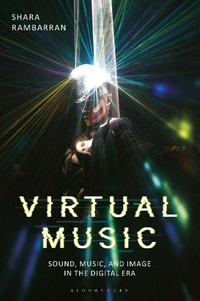
Virtual Music
Sound, Music, and Image in the Digital Era
1st Edition
Published on 8. April 2021
256 pages
978-1-5013-3361-3 (ISBN)
Description

Virtuality has entered our lives making anything we desire possible. We are, as Gorillaz once sang, in an exciting age where 'the digital won't let [us] go...' Technology has revolutionized music, especially in the 21st century where the traditional rules and conventions of music creation, consumption, distribution, promotion, and performance have been erased and substituted with unthinkable and exciting methods in which absolutely anyone can explore, enjoy, and participate in creating and listening to music.
Virtual Music explores the interactive relationship of sound, music, and image, and its users (creators/musicians/performers/audience/consumers). Areas involving the historical, technological, and creative practices of virtual music are surveyed including its connection with creators, musicians, performers, audience, and consumers. Shara Rambarran looks at the fascination and innovations surrounding virtual music, and illustrates key artists (such as Grace Jones, The Weeknd), creators (such as King Tubby, Kraftwerk, MadVillain, Danger Mouse), audiovisuals in video games and performances (such as Cuphead and Gorillaz), audiences, and consumers that contribute in making this musical experience a phenomenon. Whether it is interrogating the (un)realness of performers, modified identities of artists, technological manipulation of the Internet, music industry and music production, or accessible opportunities in creativity, the book offers a fresh understanding of virtual music and appeals to readers who have an interest in this digital revolution.
Virtual Music explores the interactive relationship of sound, music, and image, and its users (creators/musicians/performers/audience/consumers). Areas involving the historical, technological, and creative practices of virtual music are surveyed including its connection with creators, musicians, performers, audience, and consumers. Shara Rambarran looks at the fascination and innovations surrounding virtual music, and illustrates key artists (such as Grace Jones, The Weeknd), creators (such as King Tubby, Kraftwerk, MadVillain, Danger Mouse), audiovisuals in video games and performances (such as Cuphead and Gorillaz), audiences, and consumers that contribute in making this musical experience a phenomenon. Whether it is interrogating the (un)realness of performers, modified identities of artists, technological manipulation of the Internet, music industry and music production, or accessible opportunities in creativity, the book offers a fresh understanding of virtual music and appeals to readers who have an interest in this digital revolution.
Reviews / Votes
Shara Rambarran has been developing an insightful criticism and analysis of digital music over many years, and it is exciting to read this collection of her ideas and arguments. She investigates the meaning of digital virtual music, its manifestation in remixes, video games and experimental transformations of material, and discusses its effect on artistic identity, creators and fans. This book is warmly recommended as a stimulating account of the ways in which music has been shaped by virtuality and digital technology. * Derek B. Scott, Professor of Critical Musicology, University of Leeds, UK, and editor of The Ashgate Research Companion to Popular Musicology * In a concise, accessible, and yet critical and interdisciplinary approach, Shara Rambarran offers an essential inquiry into the historical, theoretical, technological, cultural, aesthetical and ethical aspects of music in the virtual age. This book is essential to anyone interested in the relationships between music, technology and other media. * Serge Lacasse, Professor, Universite Laval, Canada * That wild, divisive moment-when folk and jazz 'went electric'-finds a worthy remix (and one equally explosive, equally epochal) in this vital study. Here, and traced deftly by Rambarran from its prehistories to its global present, music 'went virtual,' upending old paradigms of art, authenticity and authorship. Virtual Music surveys, brilliantly, how tomorrow comes today. * Benjamin Halligan, Director of the Doctoral College, University of Wolverhampton, UK *More details
Edition
1. Auflage
Language
English
Place of publication
New York
United States
Publishing group
Bloomsbury Publishing PLC (Digital)
ISBN-13
978-1-5013-3361-3 (9781501333613)
Copyright in bibliographic data and cover images is held by Nielsen Book Services Limited or by the publishers or by their respective licensors: all rights reserved.
Schweitzer Classification
Other editions
Additional editions
Book
04/2021
Bloomsbury Academic USA
€49.70
Shipment within 15-20 days
Person
Shara Rambarran is Senior Lecturer in Music, Business and Media at the University of Brighton, UK. She is the musicologist for Spotify's award winning music podcast, Decode, co-runs the Art of Record Production conferences, and is an editor on the Journal on the Art of Record Production. Shara is the co-editor of The Oxford Handbook of Music and Virtuality, The Routledge Research Companion to Popular Music Education, and Diva: Feminism and Fierceness from Pop to Hip-Hop (Bloomsbury, 2023). Shara is the author of Virtual Music: Sound, Music, and Image in the Digital Era (Bloomsbury, 2021).
Content
List of Figures
Introduction: The Future of Music has Arrived
1. "Blame it on the Machines": Historical Placings of Digital Virtual Music.
2. "Technology gives you everything immediately...": A Brief Critical Discussion on the Digital Virtual.
3. "We are Musical Makers": The Experimental and Digital Virtual Trademarks of Genre and Style.
4. "Give Life Back to Music": Remixing Music.
5. "The Game has Changed": Video Game Music.
6. "Living in a Fantasy": Performers and Identity.
7. "Showroom Dummies": Live and Simulated Performers, Performances, and Audiences.
8. "Take Control": Creators, Fans, and the Internet.
9. "Digital Witness": Online Communities, Networking, and Virality.
Conclusion: Rewind or After the Future?
Acknowledgments
Notes
Bibliography
Index
Introduction: The Future of Music has Arrived
1. "Blame it on the Machines": Historical Placings of Digital Virtual Music.
2. "Technology gives you everything immediately...": A Brief Critical Discussion on the Digital Virtual.
3. "We are Musical Makers": The Experimental and Digital Virtual Trademarks of Genre and Style.
4. "Give Life Back to Music": Remixing Music.
5. "The Game has Changed": Video Game Music.
6. "Living in a Fantasy": Performers and Identity.
7. "Showroom Dummies": Live and Simulated Performers, Performances, and Audiences.
8. "Take Control": Creators, Fans, and the Internet.
9. "Digital Witness": Online Communities, Networking, and Virality.
Conclusion: Rewind or After the Future?
Acknowledgments
Notes
Bibliography
Index
