


The Book of Not Knowing
Description

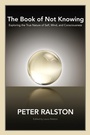
For fans of Eckhart Tolle-a guide to mastering self-awareness through direct experience, not old presumptions or harmful thought patterns Through decades of martial arts and meditation practice, Peter Ralston discovered a curious and paradoxical fact: that true awareness arises from a state of not-knowing. Even the most sincere investigation of self and spirit, he says, is often sabotaged by our tendency to grab too quickly for answers and ideas as we retreat to the safety of the known. This "Hitchhiker's Guide to Awareness" provides helpful guideposts along an experiential journey for those Western minds predisposed to wandering off to old habits, cherished presumptions, and a stubbornly solid sense of self. With ease and clarity, Ralston teaches readers how to become aware of the background patterns that they are usually too busy, stressed, or distracted to notice. The Book of Not Knowing points out the ways people get stuck in their lives and offers readers a way to make fresh choices about every aspect of their lives-from a place of awareness instead of autopilot.
More details
Other editions
Additional editions
Person
In 1975, Peter Ralston founded Cheng Hsin, a dogma-free approach to using direct experience in body/mind training, and two years later opened The Cheng Hsin School of Internal Martial Arts and Center for Ontological Research in Oakland, California. The first non-Asian ever to win the World Championship full-contact martial arts tournament, Ralston is author of Zen Body-Being, Cheng Hsin: Principles of Effortless Power, and other books.
Content
- Intro
- Other Books by this Author
- Title Page
- Table of Contents
- Introduction: Grounded Enlightenment
- Part I - Questioning the Obvious
- Chapter One - A Powerful Openness
- Beginning to Wonder
- Beyond the Self Mind
- Knowing and Not-Knowing
- Self and Being
- Chapter Two - Moving Beyond Belief
- Learning to Not-Know
- Natural Contemplation
- Zen Influence
- Relating Differently to Beliefs
- Creating a New Perspective
- Empty Your Cup
- Chapter Three - The Cultural Matrix
- We Are Culture
- Not-Knowing in Our Culture
- The Self in Our Culture
- The Cost of Our Assumptions
- Your Own Experience of These Consequences
- Chapter Four - An Experience of Not-Knowing
- Learning versus Knowing
- Thinking without a Net
- What Is an Experience?
- What Is an Experience of Not-Knowing?
- What Is an Insight?
- Chapter Five - The Principles of Discovery
- Four Cornerstones of Discovery
- Authentic Experience
- Honesty
- Grounded Openness
- Questioning
- Embracing Paradox
- Part II - Our Self Experience
- Chapter Six - Conceptual Dominance
- Creating a Conceptual World
- What Is a Concept?
- Concepts Dominate Our Perceptions
- There's More to Perception than Meets the Eye
- The Solidification of Concepts
- Challenging Conceptual Dominance
- Chapter Seven - You Don't Have to Rehearse to Be Yourself
- Being Yourself
- The Real and the False
- Masks and Hats
- Superficial Remedies
- Looking for Self in All the Wrong Places
- Chapter Eight - Unknown Origins
- Our "Need to Know" Level of Consciousness
- Mistaking the Uncognized Mind for the Real Self
- The Origins of Your Self
- Part III - In Search of Real Being
- Chapter Nine - What Am I?
- Our Experience of "Being"
- Identifying Ourselves
- Our Conceptual Self Experience
- Chapter Ten - Self and Being
- What Is a Self?
- What Is Being?
- What Is Your Self and What Is Being?
- Chapter Eleven - The Self: Noun or Verb?
- Am I a Noun or a Verb?
- To Noun or to Verb?
- "Doing" versus "Being"
- Part IV - Creating Self
- Chapter Twelve - Inventing Self and World
- The Self-Identity Reinforces Itself
- The Never-Ending Story of Me
- Inventions
- Inventing Personalized Worlds
- Manipulating Circumstances
- Chapter Thirteen - Lost in Translation
- What Is Not and Never Was
- Interpretation Revisited
- Reconstructive Interpretation
- Self as We Know It
- Life in the Loop
- Chapter Fourteen - Creating an Experience of Self
- The Myth of Real Self
- Apples and Oranges
- Believing in Your Self
- Mandatory Misrepresentation
- Living as a False-Self
- The Snowball Effect
- Assembling a Particular Self
- The Way You Are in Particular
- Chapter Fifteen - The Self Principle
- All about You
- Meaning Steers the Self
- Two Domains of Survival: Physical and Conceptual
- Social Survival
- To Be Frank
- Surviving as a Self
- Chapter Sixteen - Survival Is Not Being
- Three Distinctions in Consciousness
- What Is "For-Itself"?
- Beyond Happiness and Suffering: Perceiving Something For-Itself
- For-Itself versus As-Itself
- Experiencing the Truth Is Not the Purpose of Self-Survival
- For-Itself versus As-Itself-an Ontological Overview
- Surviving Isn't Being
- What Does Persist?
- Entertaining the Possibility of Not Surviving
- Part V - Penetrating Experience
- Chapter Seventeen - Recognizing Self-Survival in Your Own Experience
- Getting from Here to There
- What Is Being at Effect?
- Becoming More Conscious of Effects
- Experiencing Something For-Itself
- Changing from Reaction to Experience
- Changing Context Changes Effects
- Chapter Eighteen - Beyond Belief
- A Quick Review of Belief
- Getting Free of Our Need to Believe
- On the Shoulders of Giants
- Using Beliefs as a Map
- Radical Openness
- Eliminating Beliefs
- The Practice of Dispelling Beliefs
- A New Experience in Consciousness
- Chapter Nineteen - Freedom from Assumptions-Part One
- Making Connections
- Emptiness
- Chapter Twenty - Freedom from Assumptions-Part Two
- Self-Doubt
- Feeling Trapped
- Suffering
- Struggle
- Chapter Twenty-One - Contemplation
- Creating a Place to Stand
- Being as Unknown
- Contemplation
- Pre-contemplation
- Contemplating
- Developing a Steady Practice
- Looking Both Ways
- Chapter Twenty-Two - Awakening the Uncognized Mind
- Finding Our Way into the Unconscious
- Contemplating the Uncognized Mind
- The Process of Contemplating Uncognized Mind
- Explaining the Process
- A Sample Bottom-Line Contemplation
- Guidelines for Your Bottom-Line Contemplation
- Five Points of Reference
- Part VI - The Nature of Reality
- Chapter Twenty-Three - The Nature of Emotion
- Fear
- Anger
- Desire
- Pain
- Chapter Twenty-Four - The Nature of Everything
- What Is Everything?
- The Distinction "Distinction"
- Distinctions and Existence
- Chapter Twenty-Five - The Nature of Being
- Meaning Doesn't Mean Anything
- In Search of Absolute Knowledge
- The Possibility of Direct Consciousness
- The Nature of Being
- The Paradox of Being
- Being and Self
- Chapter Twenty-Six - Being and Life
- What Now?
- Life Principles
- Happiness: Don't Want It
- Discipline and Freedom
- The Lava Syndrome
- A Final Word
- Copyright
