

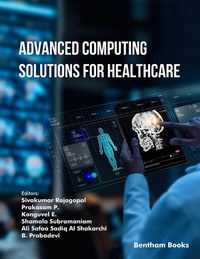
Advanced Computing Solutions for Healthcare
Description

Advanced Computing Solutions for Healthcare explores the transformative integration of advanced computing technologies into healthcare systems, emphasizing innovation in patient care, diagnostics, and health monitoring. Spanning 22 chapters, it covers topics such as artificial intelligence, machine learning, IoT, data science, and wearable technologies. The book bridges theoretical concepts and practical applications, featuring neuromorphic computing, IoT for healthcare, AI-driven diagnostics, 5G in medicine, augmented reality, and mathematical modeling. It highlights real-world case studies and cutting-edge methodologies, including FPGA-based accelerators, deep learning models for disease classification, and assistive technologies for inclusivity.
All prices
More details
Other editions
Additional editions
Content
- Intro
- Title
- Copyright
- End User License Agreement
- Contents
- Foreword I
- Foreword II
- Preface
- List of Contributors
- A Review of Biological Neurons Versus Artificial Neuron Models for Neuromorphic Computing Applications
- Keerthi Nalliboyina1 and Sakthivel Ramachandran1,*
- INTRODUCTION
- BIOLOGICAL NEURON ANATOMY AND HISTOLOGY
- Spiking Neuron Model
- Overview of Neuron Models
- Applications of Spiking Neurons
- COMPARTMENTAL NEURON MODELS
- Applications
- Bio-medical Applications
- Neuromorphic APIs and Libraries
- CONCLUSION AND FUTURE SCOPE
- REFERENCES
- A Review on Data Mining Techniques and Their Applications in Medicine
- Abrar Abu Hamdia1,*
- INTRODUCTION
- MEDICAL DATA
- Clinical Data
- Other Types of Medical Data [1, 2]
- DATA MINING
- Definition and Types
- Descriptive Methods [1, 2, 6]
- Prediction Methods
- Data Mining Methods
- Supervised Learning
- Unsupervised Methods
- Applications of Data Mining in Medicine [1, 2, 6]
- Disease Diagnosis and Prediction
- Personalized Medicine
- Pharmacology and Pharmacovigilance
- Traditional Chinese Medicine (TCM)
- Healthcare System
- Epidemiology
- PRIVACY OF MEDICAL DATA AND FRAUD DETECTION [1]
- LANGUAGE BARRIER [1]
- CONCLUSION
- REFERENCES
- A Comprehensive Study on Data-driven Decision Support System and its Application in Healthcare
- Abhishek Liju Liju1 and Chintan Singh1,*
- INTRODUCTION
- Decision Support System
- Components of the Decision Support System
- Classification of Decision Support Systems
- Characteristics of the Decision Support System
- A DETAILED OVERVIEW OF DD-DSS
- History of DD-DSS
- Features and Benefits of DD-DSS
- Subcategories of the Data-Driven Decision Support System
- Data Warehouses
- OLAP
- Spatial DSS
- EIS
- APPLICATION OF DD-DSS IN HEALTHCARE
- Descriptive Analytics
- Diagnostic Analytics
- Predictive Analytics
- Prescriptive Analytics
- LIMITATIONS
- CONCLUSION
- REFERENCES
- Review on FPGA-based Hardware Accelerators of CNN for Healthcare Applications
- Kurapati Hemalatha1 and Sakthivel Ramachandran1,*
- INTRODUCTION
- CNN ARCHITECTURES FOR OBJECT DETECTION
- AlexNet
- B. LeNet
- ZefNet
- VGG
- GoogleNet
- CNN ACCELERATORS TOWARD HEALTHCARE APPLICATIONS
- CMOS Based Accelerators
- FPGA Based Accelerators
- Memristor Based Accelerators
- PROPOSED CNN ARCHITECTURE
- EVALUATION METRICS
- Precision
- Recall
- Error rate
- Accuracy
- Intersection over union (IOU)
- F1 Score:
- APPLICATIONS AND FUTURE DIRECTIONS
- CONCLUSION
- REFERENCES
- Advancements in Smart Sensor Technology for Enhanced Health Monitoring in Smart Watches
- G. Jeeva1,*, P. Mahalakshmi1 and S. Thenmalar1
- INTRODUCTION
- RELATED WORK
- COMPARATIVE ANALYSIS OF BIOMETRIC SENSORS AND DESIGNS
- CONCLUSION
- REFERENCES
- Data Science and Data Analytics for Healthcare: Transforming Patient Care Through a Design Thinking Approach to Data Science
- M. Kavibharathi1,*, J. Sumitha1 and S. Muthu Vijaya Pandian2
- INTRODUCTION
- DATA SCIENCE IN HEALTHCARE
- Importance of Data in Healthcare
- Ethical Considerations
- DATA COLLECTION AND PRE-PROCESSING
- Data Sources
- Data Quality
- Data Integration
- EXPLORATORY DATA ANALYSIS IN HEALTHCARE
- Descriptive Statistics
- Data Visualization
- PREDICTIVE MODELING IN HEALTHCARE
- Supervised Learning
- Model Evaluation
- CLUSTERING AND UNSUPERVISED LEARNING
- Unsupervised Learning
- Anomaly Detection
- TEXT ANALYTICS AND NLP IN HEALTHCARE
- Clinical Notes
- Sentiment Analysis
- DATA VISUALIZATION AND DASHBOARDS
- Dashboard Design
- Real-time Monitoring
- FUTURE TRENDS IN HEALTHCARE ANALYTICS
- AI Advancements
- Precision Medicine
- Telemedicine
- ETHICAL AND REGULATORY CONSIDERATIONS
- Data Privacy
- Informed Consent
- Regulatory Compliance
- CONCLUSION
- REFERENCES
- The Internet of Things for Healthcare: uses, Particular Cases, and Difficulties
- K.P. Parthiban1, S. Muthu Vijaya Pandian2,*, M. Muthukrishnaveni3 and M. Kavibharathi4
- INTRODUCTION
- IoT and Healthcare
- Applications of IoT in Healthcare
- Selected Cases of Using IoT in Healthcare
- DISCUSSION
- CONCLUSION
- REFERENCES
- The 5G Revolution in Healthcare: Shaping the Future of Medicine
- Natraj N.A.1,*, Prasad J.2, Bhuvaneswari M.3 and Suriya K.4
- INTRODUCTION
- The Core Concepts Behind 5G
- Millimetre Wave (mmWave) Spectrum: The Key to Increasing Transmission Speed
- The capacity multiplier is known as Massive MIMO
- The Reduction of Latency Is a Game-Changer
- The Revolutionary Effects that 5G Will Have on Different Industries
- The Rise of Digital Technology in Healthcare
- Transportation's Quantum Leap
- Productivity Improvements in the Manufacturing Industry
- Reconceptualizing Entertainment
- 5G TECHNOLOGY IN HEALTHCARE
- Telemedicine and Remote Consultations Revolutionized by 5G: Bridging Healthcare Gaps
- Virtual Doctor Visits in High Definition
- Brighter and More Reachable Future for All
- Remote Patient Monitoring Revolutionized by 5G: A Proactive Approach to Healthcare
- Monitoring in Real Time Utilising Wearable Technology
- Early Detection and Preventative Measures: A Proactive Approach
- Improving the Outcomes of Patient Care While Cutting Costs of Healthcare
- Emergency Medical Response using 5G
- 5G Unleashes Augmented and Virtual Reality (AR/VR) in Medical Training
- Immersive Surgical Training using AR and VR in the Healthcare Industry
- Lessons on Anatomy That are Interactive
- Real-Time Cooperation Across Borders
- 5G for Data Intensive Medical Research in Healthcare
- The Benefits of Conducting Medical Studies That Rely Heavily on Data
- Collaboration on a Global Scale and Analysis of Data in Real-time
- Facilitating the Running of Complicated Simulations
- Innovative Steps Towards Advancing Healthcare
- CHALLENGES AND CONSIDERATIONS OF 5G IN HEALTHCARE INDUSTRY
- Network Infrastructure and Accessibility
- The Significance of Network Infrastructure
- The Deployment of Small Cells
- Enhancing Accessibility through Broadened Coverage
- Maximising the Capabilities of 5G Technology
- 5G-Connected Healthcare Security and Privacy Issues
- Critical Safeguard: Encryption
- Controlling Access and Authentication
- Storage Data Encryption
- Regulatory Compliance
- Equitable Access to 5G Technology in Healthcare: Bridging the Divide
- The Healthcare Digital Divide
- Bridging 5G Gaps
- The Way Forward
- THE FUTURE OF 5G IN HEALTHCARE: UNLEASHING THE POWER OF CONVERGENCE
- Real-time Healthcare Delivery via Remote Devices
- Diagnostics and Decision Support Powered by Artificial Intelligence
- Computing in the Periphery for Real-Time Insights
- Individualised Medical Treatment and the Research and Development of New Drugs
- Improvements in Research and Collaborative Efforts
- CONCLUSION
- REFERENCES
- Generative Adversarial Networks in Medical Imaging: Recent Advances and Future Prospects
- Harshit Poddar1 and Sivakumar Rajagopal2,*
- INTRODUCTION
- RECENT DEVELOPMENTS
- CONCLUSION
- FUTURE PROSPECTS
- REFERENCES
- AI Revolutionizing Healthcare: Current State and Future Prospects
- Poornima N.V.1 and Gunavathi C.2,*
- INTRODUCTION
- OPPORTUNITIES
- Diagnostic and Medical Imaging
- Healthcare Administration and Operations
- Specialized Medicine
- Disease Forecasting and Preventive Measures
- Monitoring from a distance and telemedicine
- Natural Language Processing (NLP)
- Integrity and Adherence
- Psychological Health and Well-Being
- Robotics in Operation
- Research and Insights in Healthcare
- Education and Training in Healthcare
- Patient Engagement and Behavior Modification
- Healthcare Abuse Detection
- Pharmaceutical Toxic Event Tracking
- Support for the Aging Society
- Medical Data Security
- Logistics and Inventory Management
- The Hospital Room Triage
- Electronic Health Records (EHRs) with AI Enhancements
- Medical Bots for Preliminary Consultations
- Assessments of Exotic Disorders
- Restoration and Physiological Therapies
- Virtual Medical Assistance
- Treatment for Behavioral Health Issues and Drug Abuse Disorders
- Monitoring for Environmental Health
- Healthcare Equity and Accessibility
- Genomic Modeling and Bioinformatics
- RISKS / DISADVANTAGES
- Patient Harm Brought on By AI Mistakes
- Medical AI Tools being Misused
- Bias in AI and the Maintenance of Existing Injustice
- Lack of Transparency
- Privacy and Security Concerns
- Gaps in Accountability
- Implementation Challenges
- ETHICAL AND SOCIAL CHALLENGES / ISSUES WHEN USING AI
- MORAL AND SOCIAL ISSUES
- TRUSTWORTHY
- FUTURE RESEARCH DIRECTIONS
- CONCLUSION
- Application of Image Processing Methods in the Healthcare Sector
- Chilakalapudi Malathi1 and Sheela Jayachandran1,*
- INTRODUCTION
- Image Formation
- Acquisition
- Digitization
- Image Visualization
- Diagnostic Imaging
- Surgical Planning
- Treatment Monitoring
- Education and Training
- Videoconferencing
- Patient Education
- Innovation and Research
- Less-invasive Operations
- Radiotherapy Treatment
- Dental and Orthopaedic Functions
- Image Analysis
- Disease Treatment
- Tumour Identification and Quantification
- Risk Assessment
- Treatment Planning
- Illness Progress Monitoring
- Pattern Recognition of Achievement
- Quality Control
- Image Registration
- Drug Production
- Quantitative Measurements
- Personalized Medicine
- Machine Learning and AI
- Image management
- Image Capture
- Digitization
- Storage
- Metadata and Indexing
- Access Control
- Image Retrieval
- Viewing and Analysis
- Sharing
- Backup and Redundancy
- Long-Term Success Preservation
- Connectivity with EHR
- AI and Automation
- Safety and Conformity
- Image Enhancement
- Image Production
- Preprocessing
- Deep Learning-Based Enhancement
- Actual-Time Image Augmentation
- Interactive Tools
- Quality Control
- Clinical Translation
- Documentation
- Benefits of Medical Image Processing in Healthcare
- Improved Diagnostic Accuracy
- Objective Measurements
- Treatment Planning
- Reduced Irradiation Lighting
- Telemedicine and Remote Consultation
- Process Productivity
- Disease Monitoring
- Personalized Medicine
- Research Developments
- Data Administration
- Expense-Effective Care
- Patient Education
- The Fundamental Components of Medical Image Processing
- Image Acquisition
- Image Preprocessing
- Image Enhancement
- Image Segmentation
- Feature Extraction
- Image Registration
- Image Evaluation
- 3D Image Reconstruction
- Clinical Decision Support
- Information Preservation and Retrieval
- Telehealth
- Research and Education
- Moral and Security Issues
- Interdisciplinary Collaboration
- Continuous Advancements
- LIVER DISEASE PREDICTION
- Reading the Dataset
- Data Exploration
- Logistic Regression
- Support Vector Machine (SVM)
- The Random Forest
- K-Nearest Neighbours (KNN) Classifier
- CHALLENGES FACED BY IMAGE PROCESSING TECHNOLOGY IN HEALTHCARE
- Data Volume and Collection
- Data Privacy and Security
- Compatibility
- Processing Speed
- Quality Assurance
- Clinical Adoption and Training
- Ethical and Legal Concerns
- Resource Constraints
- Government Conformity
- APPLICATIONS OF IMAGE PROCESSING TECHNIQUES IN HEALTH CARE
- Medical Imaging and Diagnosis
- Disease Detection and Diagnosis
- CONCLUSION
- REFERENCES
- Augmented Reality (AR) and Virtual Reality (VR): A Study on Exploring the Emerging Applications and Future Directions in Healthcare
- Anitej Chander Sood1, Nishant Kumar Singh1, Dhruv Jain1, Mayank Kumar Dubey1 and Iyappan Perumal1,*
- INTRODUCTION
- RELATED WORKS
- EMERGING APPLICATIONS OF AR AND VR IN HEALTHCARE
- Medical Education and Training
- Patient Treatment and Rehabilitation
- Surgical Planning and Visualization
- FUTURE DIRECTIONS AND CHALLENGES
- Integration with Emerging Technologies
- Ethical and Privacy Considerations
- CONCLUSION
- REFERENCES
- Chem-bioinformatics: Computational Alternatives to Clinical Diagnosis, Treatment and Preventative Measures
- Samiha Nuzhat1, Mahtabin Rodela Rozbu1, Christine Thevamirtha1, Maryam Wardeh1, Fatema -Tuz-Zohora1, AKM Moniruzzaman Mollah1, Sweety Angela Kuldeep1 and Mosae Selvakumar Paulraj1,*
- BACKGROUND
- DISEASE DIAGNOSIS
- Pathogen Identification
- Gene Selection
- Pathogenicity of Microbes
- DISEASE TREATMENT
- Drug Designing and Significance of Cheminformatics
- Personalized Treatment
- DISEASE PREVENTION
- Bioinformatics Tools for Disease Prevention
- Disease Trend Analysis to Design Preventative Measures
- Genetic Screening for Disease Prediction
- Predicting Cancer Using Bioinformatics Approach
- ISSUES AND ETHICAL DILEMMAS ASSOCIATED WITH MEDICAL APPLICATIONS OF BIOINFORMATICS
- CONCLUSION
- REFERENCES
- Computer-aided Diagnosis Model for White Blood Cell Leukemia and Myeloma Classification using Deep Convolutional Neural Network
- K. P. Sujith1, P. Vetrivelan1, P. Prakasam2,* and T. R. Sureshkumar2
- INTRODUCTION
- Research Contributions
- MATERIALS AND METHODS
- Dataset
- Preprocessing and Segmentation
- Preprocessing
- Segmentation
- K-means Clustering
- Feature Extraction
- Deep Convolutional Neural Network Classifier
- Evaluation Metrics
- RESULTS
- Simulation Environment
- Experimental Results
- DISCUSSION
- CONCLUDING REMARKS
- REFERENCES
- Empowering Inclusive Communication with the Haptic-Enabled Language to Pulse Device: A Novel Assistive Technology Solution for Communicative Impairments
- Bhawesh Mishra1, Kavita Nampoothri1, Anushka Bukkawar1, Chandrashish Kukrety1 and S. Sundar1,*
- INTRODUCTION
- OBJECTIVES
- LITERATURE REVIEW
- Proposed System
- DESCRIPTION OF THE DEVICE
- Software
- DeepSpeech Model
- Programming Languages
- Hardware
- Raspberry pi
- Other Components
- Working of the Device
- APPLICATIONS
- RESULTS
- CONCLUSION
- ACKNOWLEDGEMENTS
- REFERENCES
- Investigation of Various Transfer Learning Techniques for Classifying Alzheimer's Disease Dataset
- Velswamy Karunakaran1 and Jain Ankur2,*
- INTRODUCTION
- The Various Transfer Learning Techniques
- RESULTS AND DISCUSSIONS
- CONCLUSION
- CONFLICT OF INTEREST
- DATASET AVAILABILITY
- CODES AVAILABILITY
- REFERENCES
- Machine Learning in Women's Health: An Insight into the Role of Machine Learning in Skin, Breast, and Ovarian Cancers and PCOS
- Sweety Angela Kuldeep1, Fatema Khusnoor2, Salma Hashem1, Tasnim Aktar2 and Mosae Selvakumar Paulraj1,*
- INTRODUCTION
- METHODOLOGY
- Random Forest
- Decision Tree
- Support Vector Classifier
- Logistic Regression
- K Nearest Neighbor
- XGBRF
- CatBoost Classifier
- Skin Cancer
- Breast Cancer
- Ovarian Cancer
- PCOS and Cervical Cancer
- SCOPES AND CHALLENGES
- CONCLUSION
- REFERENCES
- An Insight into the Mathematical Modeling of Physiological Systems
- Suvendu Ghosh1, Sonia Mondal2, Partha Sarathi Singha3 and Debosree Ghosh4,*
- INTRODUCTION
- Mechanistic Mathematical Physiological System Models
- Mathematical Modeling of the Reproductive System
- Mathematical Modeling of Developmental Biology
- Mathematical Modeling of the Nervous System
- Mathematical Modeling of the Endocrine System
- Mathematical Modeling of the Digestive System
- CONCLUSION
- ACKNOWLEDGEMENTS
- REFERENCES
- Diverse Disease Prognostication through Machine Learning Models
- M. Vanitha1,* and R. Charanya1
- INTRODUCTION
- Motivation
- Literature Survey
- Gaps identified in the Existing System
- Proposed System
- Implementation
- Data Collection
- Data Analysis and Data Preprocessing
- Prediction of Disease
- Different Algorithms
- Logistic Regression
- KNN
- SVM
- Decision Tree
- Random Forest
- RESULT ANALYSIS
- Performance Analysis Scores for the Disease
- CONCLUSION
- REFERENCES
- Patch Antenna Design for 2.4 GHz for On-Off Body Communication
- J. Joselin Jeya Sheela1, N. Duraichi1, B. Jeyapoornima1 and M. Logeshwaran2,*
- INTRODUCTION
- Related Works
- ANTENNA DESIGN
- RESULTS AND DISCUSSION
- CONCLUSION
- REFERENCES
- Performance Evaluation of Syringe Control Systems: Servo Motors versus Stepper Motors
- S. Sundar1,*, Jaswanth K.1, D. Ravi Teja1 and Vinyas Shetty1
- INTRODUCTION
- Literature Review
- Execution Principle
- Experimental Configuration
- RESULTS
- CONCLUSION
- REFERENCES
- Real-time ECG Analysis and Classification Using Neural Networks in IoT Devices
- Mohamed Osman Zaid K.B.1, Aayush Singh1, Sivaraj Chandrasekaran1 and Sridhar Raj S.1,*
- INTRODUCTION
- Related Works
- Proposed Methodology
- Input
- Signal Pre-processing
- Deep Learning Neural Network
- QRS Detection and Heart Rate Display
- Deployment of the Model to IoT Enterprises
- Data Description
- Implementation and Results Analysis
- LSTM Network
- CNN Network Using Transfer Learning
- Real-time Acquisition Using UBIDOTS
- Pseudo Code
- RESULTS AND DISCUSSIONS
- CONCLUSION
- REFERENCES
- Appendix
- A. DATASETS
- B. PYTHON CODES FOR SNN IN NEUROMORPHIC COMPUTING
- APPENDIX
- Subject Index
PREFACE
Welcome to "Advanced Computing Solutions for Healthcare," a pioneering compilation that navigates the ever-evolving landscape at the intersection of cutting-edge technology and the healthcare sector. In this era of rapid innovation, the dynamic synergy between advanced computing and healthcare has ushered in a new era of possibilities, redefining patient care, research methodologies, and administrative frameworks.
This comprehensive volume, comprising 22 insightful chapters, is a testament to the transformative potential of technology in enhancing healthcare outcomes. From AI-driven diagnostics and predictive analytics to secure data management and telemedicine, our contributors explored a myriad of solutions that stand at the forefront of technological innovation.
As we embark on this journey through the realms of smart systems, personalized healthcare, artificial intelligence, machine learning, and data science, readers will gain a deeper understanding of the challenges and strategies shaping the future of healthcare. This exploration extends to the Internet of Things (IoT), image and signal processing techniques, wireless networks, and sustainable technologies, providing a holistic view of the intricate landscape in which advanced computing converges with healthcare.
Each chapter is a beacon of knowledge that sheds light on topics such as federated learning, neuromorphic systems, and secure, robust, and efficient computing solutions. The culmination of these insights paves the way for a healthier future, emphasizing the critical role of technology in revolutionizing the healthcare industry.
As editors, we are proud to present this indispensable guide, hoping it will inspire researchers, practitioners, and enthusiasts to explore the limitless possibilities that lie at the nexus between advanced computing and healthcare. This volume stimulates further innovation and contributes to the ongoing transformation of healthcare globally.
Chapter 1 delves into neurons, which are electrically sensitive cells vital for cellular communication. It explores neuronal classification, function, anatomy, and histology. This chapter also examines neuron models, including biological and compartmental neuron models. Experts' contributions to neuro-inspired designs and methodologies are highlighted, with a focus on applications in massively parallel systems. The chapter concludes by briefly outlining the imminent applications of neuromorphic computing.
Chapter 2 explores the pivotal role of data mining in the 21st century, propelled by technological strides and a surge in medical data. Essential for clinical decisions and innovation, medical data are harnessed using descriptive and predictive data-mining techniques, unraveling profound insights. By demonstrating significant implementation, data mining enhances diagnosis accuracy, reduces diagnosis time, and minimizes errors. This chapter underscores the transformative potential of data mining, promising advancements in healthcare systems and overall public health.
Chapter 3 explores Data-Driven Decision Support Systems (DD-DSS), vital for managing escalating data volumes. This computerized program, integrating machine learning and statistical analysis, aids informed decision-making in healthcare. By merging expert knowledge and diverse data, this chapter investigates the benefits, features, and real-world applications of DD-DSS through a blend of literature review and case studies.
Chapter 4 explores the rapid growth of deep convolutional neural networks (CNN) in recent years, particularly their application in healthcare through hardware accelerators such as Field Programmable Gate Arrays (FPGAs). Focusing on edge computing and the potential for implementing CNNs in safety-sensitive biomedical applications, this study provides a comprehensive analysis of the challenges in FPGA-based hardware acceleration. This survey offers valuable insights for researchers engaged in artificial intelligence, FPGA-based hardware accelerators, and system design for biomedical applications.
Chapter 5 discusses the revolutionary integration of smart sensors in smartwatches for health monitoring. Recent advancements include biometric sensors, environmental sensors, and activity trackers. This review evaluates the accuracy, reliability, and potential use of machine learning and addresses challenges such as privacy concerns and battery life. This is a valuable resource for researchers and healthcare professionals.
Chapter 6 explores the crucial role of design thinking in integrating data science into health care. It delves into the impact of data quality, integration, and visualization on patient outcomes, predictive modeling, unsupervised learning, and ethical considerations. This chapter envisions a future shaped by AI, precision medicine, and ethical data practices.
Chapter 7 explores the transformative impact of Internet of Things (IoT) integration in healthcare. This underscores how IoT enables real-time patient monitoring, personalized treatment plans, and preventative care through continuous data gathering. While enhancing diagnostic precision and resource utilization, challenges such as data security and interoperability require resolution for IoT in healthcare to reach its full potential. This chapter emphasizes the significant effects of the IoT on healthcare delivery and the importance of a comprehensive strategy for navigating this rapidly evolving landscape.
Chapter 8 delves into the transformative impact of 5G technology on the medical industry by revolutionizing disease diagnosis, treatment, and management. Examining the evolution of wireless networks, this article explores 5G's fundamental features-high speed, low latency, and reliability. It analyzes the synergy of 5G with disruptive technologies, such as AI and IoT in healthcare, emphasizing data security and privacy. The chapter envisions a future in which 5G transforms healthcare delivery, fosters innovation, and enhances user-friendliness, cost-effectiveness, and efficiency.
Chapter 9 explores the transformative potential of Tiny Machine Learning (Tiny ML) in healthcare, marked by low power consumption and compact size. This emphasizes real-time monitoring, early disease identification, personalized treatment plans, and improved medical imaging. While Tiny ML enhances patient outcomes and reduces healthcare costs, challenges such as data privacy, ethics, and regulatory compliance require careful consideration. The future holds promise for widespread adoption, enhanced telemedicine, improved diagnostics, and a patient-centric, efficient healthcare ecosystem, provided that ethical considerations are prioritized for Tiny ML's responsible utilization.
Chapter 10 illuminates the integration of techniques and resources, collectively known as artificial intelligence (AI), in healthcare to elevate patient care and streamline administrative tasks. Its increasing relevance stems from its potential to enhance the efficacy, accuracy, and accessibility of healthcare services. AI's capacity to analyze vast medical data aids decision-making, personalizes treatment, and forecasts disease outbreaks, ultimately improving patient outcomes and healthcare affordability. As its influence has grown, AI has become a transformative force in healthcare.
Chapter 11 explores the crucial role of cutting-edge image processing in medical research. This book comprehensively covers concepts and methodologies, emphasizing the importance of image processing in healthcare for diagnosis, treatment planning, and patient care across various medical fields.
Chapter 12 delves into recent strides in science and technology, uncovering the evolving landscape and prospects of Augmented Reality (AR) and Virtual Reality (VR) in healthcare. Highlighting their potential to transform medical education, patient treatment, and surgical procedures, this chapter provides an overview of the AR and VR principles. It emphasizes their distinct features, operations, strengths, and limitations in healthcare, focusing on medical education, patient treatment, and surgical planning. This work showcases successful applications in medical education, patient interventions, and surgical procedures through case studies, illustrations, and academic examples.
Chapter 13 discusses the widespread use of chembioinformatic tools in modern medical science. These tools play pivotal roles in genomic and proteomic data analysis, gene prediction, genome annotation, and building biological networks. This chapter underscores the clinical applications of chem-bioinformatics, revealing its significance in cancer biomarker identification, personalized therapeutics, and drug design. It explores how bioinformatics tools facilitate the study of host-pathogen interactions, diagnosis of infectious diseases, treatment of metabolic disorders, and point-of-care diagnostics. By manipulating biological datasets, these tools contribute to the control, monitoring, and modification of various clinical processes and offer a comprehensive overview of their applications in the medical sector.
Chapter 14 presents the challenging task of diagnosing white blood cell diseases, such as Leukemia and Myeloma, with an emphasis on restoring the balance of the immune system. This study introduces a Computer-Aided Diagnosis (CAD) model using a Deep Convolutional Neural Network (DCNN) to classify leukocyte types. Employing a Gaussian distribution and k-means clustering for image segmentation, the gray-level covariance matrix method extracts texture features for DCNN training. The proposed model...
