

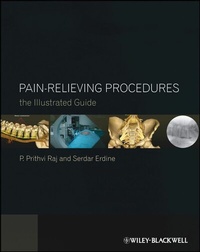
Pain-Relieving Procedures
Description

knowledge.
Multidisciplinary information is required if you intend to
practice pain management at a high level of effectiveness. This
includes anatomy and physiology, pain syndromes, diagnosis and
management, and the correct use of interventional techniques.
Pain-Relieving Procedures: The Illustrated Guide provides
you with a step-by-step guide to interventional techniques
underpinned by a solid multidisciplinary knowledge base. The text
is enhanced by the wide use of illustrations, including amazing
color 3D-CT images that enable you to easily visualize anatomy.
The first part of the book gives the fundamentals you need for
modern pain practice. The second part describes all commonly used
procedures, using a head-to-toe organization.
* The head
* The neck
* The thoracic region
* The thoraco-abdominal region
* The lumbar region
* The pelvic and sacral region
A special chapter covers more advanced techniques such as
continuous analgesia, spinal cord and sacral stimulation,
vertebroplasty and kyphoplasty.
Each procedure is described using a template that includes
anatomy, indications, contraindications, technique and
complications. Helpful hints throughout will help you refine your
practice to achieve better results.
Concise, straightforward, and indispensable, Pain-Relieving
Procedures: The Illustrated Guide provides the most effective
interventional methods for those practicing pain management.
More details
Other editions
Additional editions
Persons
Serdar Erdine MD, FIPP, Istanbul Pain Center, Istanbul, Turkey
Content
Foreword by Professor Dr Maarten van Kleef vii
Foreword by Dr J. C. D. Wells ix
Preface xi
Acknowledgments xiii
Part 1 General Principles 1
1 History of Interventional Pain Medicine 3
2 Principles for Performing Percutaneous Invasive Procedures 9
3 Physical and Psychological Assessment of the Patient with Pain 12
4 Preparing the Patient for Interventional Pain Procedures 18
5 Monitoring the Patient Before During and After the Procedure 25
6 Radiation Safety and Use of Fluoroscopy During Interventional Pain Procedures 28
7 Sedation and Analgesia for Interventional Pain Procedures 40
8 Drugs Used During Interventional Pain Procedures 46
9 Tools and Equipment Used in Interventional Pain Procedures 61
10 Principles and Descriptions of Special Techniques 68
Radiofrequency lesions (contributed by Eric R. Cosman Sr and Eric R. Cosman Jr) 68
Principles of ultrasonography 79
Further reading 90
Part 2 Description of Specific Techniques 93
11 Simple, Frequent Procedures in the Musculoskeletal Region 95
Injections into Upper Extremity Joints 95
Shoulder joint 95
Elbow joint 99
Wrist joint 102
Injections into Lower Extremity Joints 104
Hip joint 104
Knee joint 107
Ankle joint 110
Injections into Myofascial Trigger Points 112
Further reading 128
12 Interventional Pain Procedures in the Head 130
Percutaneous block and lesioning of the trigeminal ganglion 130
Percutaneous maxillary nerve block 142
Percutaneous mandibular nerve block 146
Percutaneous block of the terminal branches of the trigeminal nerve 149
Percutaneous block and lesioning of the sphenopalatine ganglion 154
Percutaneous block and lesioning of the glossopharyngeal nerve 161
Further reading 165
13 Interventional Pain Procedures in the Neck 166
Percutaneous block and lesioning of greater and lesser occipital nerves 166
Percutaneous block and lesioning of third occipital nerve 169
Percutaneous interlaminar block of the cervical epidural space 173
Percutaneous transforaminal block of the cervical epidural space 184
Percutaneous block and lesioning of the cervical facet joint 191
Percutaneous discography of the cervical discs 200
Percutaneous block of the phrenic nerve 205
Percutaneous block and lesioning of the stellate ganglion 207
Further reading 217
14 Interventional Pain Procedures in the Thoracic Region 219
Percutaneous interlaminar block of the thoracic epidural space 219
Percutaneous transforaminal block of the thoracic epidural space 225
Percutaneous block and lesioning of the thoracic facet joint and medial branch 229
Percutaneous thoracic discography 235
Percutaneous block and lesioning of the suprascapular nerve 240
Percutaneous block and lesioning of the thoracic sympathetic chain 244
Percutaneous block of the intercostal nerve 249
Further reading 255
15 Interventional Procedures for Visceral Pain in the Thoraco-Abdominal Region 256
Percutaneous block and lesioning of the splanchnic nerve 256
Percutaneous block and lesioning of the celiac plexus 264
Further reading 272
16 Interventional Pain Procedures in the Lumbar Region 274
Percutaneous interlaminar block of the lumbar epidural space 274
Percutaneous transforaminal block of the lumbar epidural space 283
Percutaneous block and lesioning of the lumbar facet joint and medial branch 293
Percutaneous block and lesioning of the lumbar sympathetic ganglia 302
Percutaneous block and lesioning of the rami communicantes 308
Percutaneous discography and lesioning of the lumbar disc 311
Percutaneous intradiscal procedures 323
Further reading 335
17 Interventional Pain Procedures in the Pelvic and Sacral Regions 337
Percutaneous interlaminar block of the caudal epidural space 337
Percutaneous technique of caudal epidural neuroplasty 344
Epiduroscopy 353
Percutaneous block and lesioning of the sacral nerve 361
Percutaneous block and lesioning of the superior hypogastric plexus 365
Percutaneous block of the impar ganglion 372
Percutaneous block and lesioning of the sacroiliac joint 376
Further reading 383
18 Advanced Techniques 384
Technique of intraspinal continuous analgesia 384
Technique of spinal cord stimulation 401
Technique of sacral nerve root stimulation (contributed by S. Ozyalcin) 413
Vertebroplasty 423
Kyphoplasty 432
Further reading 436
Index 437
1
History of Interventional Pain Medicine
Formative Years
The contemporary era in pain management really began with the discovery of nitrous oxide and its analgesic properties in the late 18th century. This was soon followed by scientific investigation of the anesthetic properties of nitrous oxide and ether on animals, and the use of these substances in human patients. Surgical anesthesia was first publicly demonstrated at Massachusetts General Hospital in 1845 and 1846. The discovery and use of anesthetics changed the perception of pain (Fig. 1.1). In the 1850s Charles Gabriel Pravaz, a French surgeon, and Alexander Wood of Edinburgh independently invented the syringe (Fig. 1.2a,b), which allowed injections of morphine. By the 1860s the efficacy of locally applied opiates, especially morphine, directly to the skin or nerves for pain relief was widely accepted. The effects of pre- and intraoperative administration of morphine to the area of incision or amputation were investigated. When cocaine became available as a local anesthetic, owing to the work of Sigmund Freud and, especially, Karl Koller, this soon resulted in its use as a local anesthetic in diverse procedures (Fig. 1.3a,b).
Figure 1.1 The first surgical anesthesia in Massachusetts General Hospital in 1845.
Figure 1.2 (a) Gabriel Pravaz, courtesy of Wellcome Library, London. (b) Alexander Wood, reproduced with permission from Peter Stubbs (www.edinphoto.org.uk).
Figure 1.3 (a) Sigmund Freud, (b) Karl Koller (courtesy of the Wood Library Museum of Anesthesiology, Park Ridge, IL, USA).
Surgical techniques for pain relief represented another great medical advance during the 19th century. With the advent of antiseptic surgery, procedures became less life threatening, allowing investigation of pain relief techniques involving permanent interruption of afferent pathways. Innovative techniques were developed for treating trigeminal neuralgia, in addition to procedures such as retrogasserian neurectomy and cordotomy, ablation of the sympathetic nervous system, sympathectomy for visceral pain and angina pectoris, and surgical management of neuralgia.
Pain Mechanisms
Little was understood about pain mechanisms at the beginning of the 19th century. Many questions such as how sensibility related to movement, whether separate sensory and motor nerves existed, and whether single nerves could perform different functions were still unanswered. Early researchers tried to explain pain by concentrating on the specialization of functions in different parts of the brain. Animal experiments investigating the function of spinal nerve roots were more successful, significantly contributing to medical knowledge during this period. Investigators such as Claude Bernard, Charles Bell, and Francois Magendie developed innovative experimental procedures that allowed differentiation of sensation from movement and between functions of anterior and posterior spinal nerve roots. A significant impetus to the perception of the nervous system as a system involving the transmission of sensations from the periphery to the center through a system of complex relays was provided by the work of German physiologist and comparative anatomist Johannes Muller (Fig. 1.4).
Figure 1.4 Johannes Muller.
Muller proposed a connection between the anatomic pathway of a fiber and perception of sensation, stimulating further research on specific fibers for pain and nociception. As a result of such work, an entirely new school of physiologic research was founded. Soon nerve structures were identified in the dermis, leading to investigation of dissociation of sensations in that region, such as sensation of touch, pressure, and pain; and the spinal cord was more realistically appraised as a central processor with the ability itself to affect the transmission of sensations. Other noteworthy contributions were made by Waller, who developed a sectioning technique allowing observation of fatty degeneration of a fiber, leading to an awareness of ascending and descending pathways and the origin of nerve fibers.
There were many other pioneers who, through work with patients in pain or self-experimentation, contributed to the general body of medical knowledge: Weir Mitchell's work with neuritis, neuralgia, and causalgia, Henry Head's discovery of two different types of nerve fiber, and Sherrington's notion of an integrated nervous system were major advances establishing a firm foundation for an understanding of pain mechanisms and more effective approaches to treatment (Fig. 1.5).
Figure 1.5 Weir Mitchell. (Courtesy of the Clendening History of Medicine Library, University of Kansas Medical Center.)
We are indebted to Melzack and Wall for perhaps the most significant leap in understanding, the gate control theory. This explanation located both facilitators and inhibitory influences on the cells of the substantia gelatinosa of the spinal cord; with large-diameter, fast-conducting touch fibers suppressing, and smaller-diameter, slower-conducting pain fibers increasing, central output. Because nerve lesions usually involve smaller fibers, they result in over-activity of the substantia gelatinosa. Scar formation at the site of nerve injury causes complications, increasing nerve excitability at the site of the lesion (Fig. 1.6).
Figure 1.6 R. Melzack and P. Wall. (Courtesy of Dr. Ronald Melzack.)
Establishment of Interventional Pain Medicine
Greater understanding of pain mechanisms has resulted in the development of devices offering innovative therapeutic approaches. For instance, dorsal column stimulators were a direct result of the gate control theory. The efficacy of treatment relies on stimulation of low-threshold primary afferent fibers, which causes central inhibition of pain signals. Dorsal column stimulators are now an effective means of treating patients with chronic neuropathic and vascular pain. In addition, peripheral nerve stimulators have been used to manage chronic pain after peripheral nerve injury. Deep brain stimulation is a newer technique, still somewhat uncertain in terms of efficacy of pain relief.
New treatment techniques represent another beneficial byproduct of pain-related research. For instance, the discovery of opioid receptors in the central nervous system provided a rationale for the development of intrathecal and epidural administration of opioids. These now active techniques have resulted in the formation of a new sub-specialty under the umbrella of primary specialists of pain medicine. This sub-specialty has been called interventional pain medicine.
Biotechnology allows drugs targeted towards specific physiological processes to be developed, sometimes designed for compatibility with the body to reduce side effects. Genomics and knowledge of human genetics is having some influence on medicine, as the causative genes of most monogenic disorders have now been identified. In addition, the development of techniques in molecular biology and genetics is influencing medical technology, practice, and decision-making.
Evidence-based medicine is a contemporary movement to establish the most effective algorithms of practice through the use of systematic reviews and meta-analysis. The movement is facilitated by modern global information science, which allows all evidence to be collected and analyzed according to standard protocols, which are then disseminated to healthcare providers. One problem with this "best practice" approach is that it could be seen to stifle novel approaches to treatment. The Cochrane Collaboration leads this movement.
Defining a Pain Specialist
John Bonica was the first anesthesiologist who experienced the difficulties of pain management during his years in the army as he was treating the wounded soldiers from the Pacific. He felt strongly that no one particular physician is capable of looking after a patient with pain. He proposed the first concept of multidisciplinary approach to pain management.
What defines a "pain specialist?" Rollin Gallagher stated, "specialties define themselves [in] many ways: by age group (pediatrics), organ system (cardiology), specific constellation of illnesses or diseases (infectious diseases), type of procedure (surgery), or practice setting (emergency medicine)." Held to this definition, pain management becomes a unique specialty indeed. Although pain management is concerned with the diagnosis, treatment, and rehabilitation of a singular sensory symptom, it is essential that practitioners undertake a multidisciplinary approach to achieve these ends. They must also be well versed in the study of pain and its prevention. Although more than 60% of pain specialists originate from the field of anesthesiology, they can also come from a variety of other disciplines such as interventional radiology, physical therapy, psychiatry, primary care medicine, and neurology. In addition, pain specialists must possess a keen understanding of the variety of conditions and causes associated with pain. This broad range of training and knowledge allows the practitioner to achieve their ultimate goal: the management of a patient's pain. Despite these extensive requirements, pain management remains classified as only a subspecialty of anesthesiology under the...
