

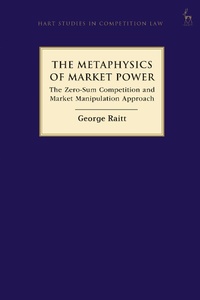
The Metaphysics of Market Power
The Zero-Sum Competition and Market Manipulation Approach
1st Edition
Published on 2. May 2019
328 pages
978-1-5099-2809-5 (ISBN)
Description

Australian competition law has just emerged from a significant period of reform which has seen controversial changes to the legal test to distinguish between normal competitive conduct and conduct that should be condemned. The controversy continues, arguably because the traditional legal conception of market power does not provide a useful standard in real world markets. This important new book offers a radical interpretation of market power, based on the power to manipulate. Seeing it in this way allows for positive and normative standards within which to frame a legal theory of liability for misuse of that power. The book provides suggestions to improve the forensic assessment of conduct that should be condemned as misuse of market power.
More details
Series
Edition
1. Auflage
Language
English
Place of publication
London
United Kingdom
Publishing group
Bloomsbury Publishing PLC
Target group
College/higher education
ISBN-13
978-1-5099-2809-5 (9781509928095)
Copyright in bibliographic data and cover images is held by Nielsen Book Services Limited or by the publishers or by their respective licensors: all rights reserved.
Schweitzer Classification
Other editions
Additional editions
George Raitt
The Metaphysics of Market Power
The Zero-sum Competition and Market Manipulation Approach
Book
12/2020
Hart Publishing
€74.46
Shipment within 15-20 days
George Raitt
The Metaphysics of Market Power
The Zero-sum Competition and Market Manipulation Approach
Book
05/2019
Hart Publishing
€141.13
Shipment within 15-20 days
Person
George Raitt is a Consultant at Piper Alderman, Melbourne and Lecturer at the Faculty of Law, Monash University.
Content
I. The Problem
II. Australia's Reform Process
III. The Proposed Market Manipulation Approach
IV. Implications of the Study beyond the Present Scope
V. The Problematic Role of Efficiency
VI. Differing Views of the World
VII. Economic Models and the Paradigm of Competition
VIII. The Overseas Experience
IX. What Difference Will Market Manipulation Theory Make?
X. Application to the Digital Economy
XI. Outline of the Chapters
XII. Effective Date of Law
PART I
THE THEORETICAL FRAMEWORK
1. Market Power in Economics and Law
I. Introduction
II. Policy Objectives and Concepts of Efficiency
III. Economic Models and the Paradigm of Competition
IV. Market Manipulation Laws in Securities Markets
V. Thought Experiment: Incumbent Response to New Entry
VI. Norms in Zero-Sum Competition
VII. Zero-Sum Competition, Market Manipulation and Efficiency
VIII. Conclusion
2. The Mischief and Australia's Institutional Response
I. Introduction
II. The Continuing Influence of the SCP Approach in Australia
III. Australia's Institutional Division of Functions between Courts and Agencies
IV. Institutional Arrangements in the EU and the US: Court-Centred or Agency-Centred?
V. Conclusion
3. Competition and Efficiency Effects in Europe, North America and Australia
I. Introduction
II. The Current Australian Effects Test Outside Section 46
III. The Harper Review Effects Test and the Role of Efficiency Effects
IV. EU Abuse of Dominance and Defences
V. US Monopolisation and Defences
VI. Efficiency in the Law of Securities Market Manipulation
VII. Adapting Efficiency as a Legal Concept
VIII. Zero-Sum Competition, Market Manipulation and Efficiency
IX. Conclusion
PART II
TESTING MARKET MANIPULATION AND EFFICIENCY APPROACHES
Introduction
4. Refusal to Deal and Margin Squeeze
I. Introduction
II. Queensland Wire: Factual Matrix
III. Gaps in the Factual Matrix
IV. Queensland Wire under Harper Section 46
V. Queensland Wire under Market Manipulation
VI. Melway: Factual Matrix
VII. Melway under Harper Section 46
VIII. Melway under Market Manipulation
IX. Conclusion
5. Predatory Pricing
I. Introduction
II. Boral: Factual Matrix
III. Gaps in the Factual Matrix
IV. Boral under Harper Section 46
V. Boral under Market Manipulation
VI. Conclusion
6. Meeting Competition
I. Introduction
II. Rural Press: Factual Matrix
III. Gaps in the Factual Matrix
IV. Rural Press under Harper Section 46
V. Rural Press under Market Manipulation
VI. Conclusion
7. Raising Rivals' Costs
I. Introduction
II. Cement Australia: Factual Matrix
III. Gaps in the Factual Matrix
IV. Cement Australia under Harper Section 46
V. Cement Australia under Market Manipulation
VI. Conclusion
8. Bundling
I. Introduction
II. Baxter: Factual Matrix
III. Gaps in the Factual Matrix
IV. Baxter under Harper Section 46
V. Baxter under Market Manipulation
VI. The Implications of Pfizer
VII. Conclusion
9. Institutional and Procedural Implications
I. Introduction
II. NT Power
III. The Burden of Proof
IV. Conclusion
PART III
CONCLUSION
10. Findings and Recommendations
I. Introduction
II. The Concept of Market Power
III. Paradigms of Competition and Norms of Conduct
IV. Forensic Assessment of Misuse of Market Power: Conclusions from the Case Studies
V. Implications for Competition Law
II. Australia's Reform Process
III. The Proposed Market Manipulation Approach
IV. Implications of the Study beyond the Present Scope
V. The Problematic Role of Efficiency
VI. Differing Views of the World
VII. Economic Models and the Paradigm of Competition
VIII. The Overseas Experience
IX. What Difference Will Market Manipulation Theory Make?
X. Application to the Digital Economy
XI. Outline of the Chapters
XII. Effective Date of Law
PART I
THE THEORETICAL FRAMEWORK
1. Market Power in Economics and Law
I. Introduction
II. Policy Objectives and Concepts of Efficiency
III. Economic Models and the Paradigm of Competition
IV. Market Manipulation Laws in Securities Markets
V. Thought Experiment: Incumbent Response to New Entry
VI. Norms in Zero-Sum Competition
VII. Zero-Sum Competition, Market Manipulation and Efficiency
VIII. Conclusion
2. The Mischief and Australia's Institutional Response
I. Introduction
II. The Continuing Influence of the SCP Approach in Australia
III. Australia's Institutional Division of Functions between Courts and Agencies
IV. Institutional Arrangements in the EU and the US: Court-Centred or Agency-Centred?
V. Conclusion
3. Competition and Efficiency Effects in Europe, North America and Australia
I. Introduction
II. The Current Australian Effects Test Outside Section 46
III. The Harper Review Effects Test and the Role of Efficiency Effects
IV. EU Abuse of Dominance and Defences
V. US Monopolisation and Defences
VI. Efficiency in the Law of Securities Market Manipulation
VII. Adapting Efficiency as a Legal Concept
VIII. Zero-Sum Competition, Market Manipulation and Efficiency
IX. Conclusion
PART II
TESTING MARKET MANIPULATION AND EFFICIENCY APPROACHES
Introduction
4. Refusal to Deal and Margin Squeeze
I. Introduction
II. Queensland Wire: Factual Matrix
III. Gaps in the Factual Matrix
IV. Queensland Wire under Harper Section 46
V. Queensland Wire under Market Manipulation
VI. Melway: Factual Matrix
VII. Melway under Harper Section 46
VIII. Melway under Market Manipulation
IX. Conclusion
5. Predatory Pricing
I. Introduction
II. Boral: Factual Matrix
III. Gaps in the Factual Matrix
IV. Boral under Harper Section 46
V. Boral under Market Manipulation
VI. Conclusion
6. Meeting Competition
I. Introduction
II. Rural Press: Factual Matrix
III. Gaps in the Factual Matrix
IV. Rural Press under Harper Section 46
V. Rural Press under Market Manipulation
VI. Conclusion
7. Raising Rivals' Costs
I. Introduction
II. Cement Australia: Factual Matrix
III. Gaps in the Factual Matrix
IV. Cement Australia under Harper Section 46
V. Cement Australia under Market Manipulation
VI. Conclusion
8. Bundling
I. Introduction
II. Baxter: Factual Matrix
III. Gaps in the Factual Matrix
IV. Baxter under Harper Section 46
V. Baxter under Market Manipulation
VI. The Implications of Pfizer
VII. Conclusion
9. Institutional and Procedural Implications
I. Introduction
II. NT Power
III. The Burden of Proof
IV. Conclusion
PART III
CONCLUSION
10. Findings and Recommendations
I. Introduction
II. The Concept of Market Power
III. Paradigms of Competition and Norms of Conduct
IV. Forensic Assessment of Misuse of Market Power: Conclusions from the Case Studies
V. Implications for Competition Law
