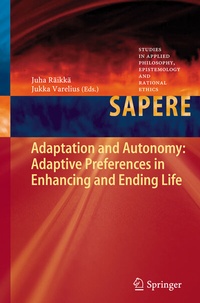
Adaptation and Autonomy: Adaptive Preferences in Enhancing and Ending Life
Description

This volume gathers together previously unpublished articles focusing on the relationship between preference adaptation and autonomy in connection with human enhancement and in the end-of-life context. The value of individual autonomy is a cornerstone of liberal societies. While there are different conceptions of the notion, it is arguable that on any plausible understanding of individual autonomy an autonomous agent needs to take into account the conditions that circumscribe its actions. Yet it has also been suggested that allowing one's options to affect one's preferences threatens autonomy. While this phenomenon has received some attention in other areas of moral philosophy, it has seldom been considered in bioethics. This book combines for the first time the topics of preference adaptation, individual autonomy, and choosing to die or to enhance human capacities in a unique and comprehensive volume, filling an important knowledge gap in the contemporary bioethics literature.
Reviews / Votes
From the reviews:
"This is a collection of previously unpublished essays that consider whether adaptive preferences . undermine the autonomy of an individual in end-of-life decision-making. . It will appeal to those interested in decision-making capacity, autonomy, euthanasia, physician-assisted suicide, acquired disabilities, or human enhancement through biotechnology." (Joseph T. Norris, Doody's Book Reviews, February, 2014)More details
Other editions
Additional editions