

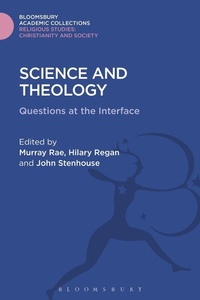
Science and Theology
Questions at the Interface
1st Edition
Published on 6. October 2016
288 pages
978-1-4742-8153-9 (ISBN)
Description

In popular culture, science and theology have often been portrayed as antagonistic. Some writers have described the history of the debate in terms of a surrender by theology, a retreat from the field of engagement: theology has abandoned the public arena, leaving all creation to science, and has opted instead for the safer ground of ethics, morality and personal or private belief.
Science and Theology advocates a constructive dialogue between the two subjects and suggests the topics where they might meet. The essays in this volume were commissioned from leading figures around the world - experts in their own disciplines, but enthusiasts for debate at the science and theology interface. They include Norma Emerton, Owen Gingerich, Nancey Murphy, John Polkinghorne, John Puddefoot and Carver T. Yu. They discuss natural theology, the methodologies of science and theology, and theology in the light of scientific discovery. Their themes cover scientism, divine action in the world, the problem of evil, freedom and determinism, reductionism and humanity, the limits of knowledge, and chaos theory.
Together, these essays offer a significant and positive contribution to one of the most exciting areas of modern thought.
Science and Theology advocates a constructive dialogue between the two subjects and suggests the topics where they might meet. The essays in this volume were commissioned from leading figures around the world - experts in their own disciplines, but enthusiasts for debate at the science and theology interface. They include Norma Emerton, Owen Gingerich, Nancey Murphy, John Polkinghorne, John Puddefoot and Carver T. Yu. They discuss natural theology, the methodologies of science and theology, and theology in the light of scientific discovery. Their themes cover scientism, divine action in the world, the problem of evil, freedom and determinism, reductionism and humanity, the limits of knowledge, and chaos theory.
Together, these essays offer a significant and positive contribution to one of the most exciting areas of modern thought.
More details
Series
Edition
1. Auflage
Language
English
Place of publication
London
United Kingdom
Publishing group
Bloomsbury Publishing PLC
Target group
Professional and scholarly
ISBN-13
978-1-4742-8153-9 (9781474281539)
Copyright in bibliographic data and cover images is held by Nielsen Book Services Limited or by the publishers or by their respective licensors: all rights reserved.
Schweitzer Classification
Other editions
Additional editions
Book
10/2016
Bloomsbury Academic
€152.00
Shipment within 15-20 days

Book
07/1994
T.& T.Clark Ltd
€44.75
Article exhausted; check different version
Persons
Murray Rae is Professor of Theology and Religion at the University of Otago, New Zealand.
Hilary Regan is the Executive Officer of ATF Press in Adelaide, Australia.
John Stenhouse is Associate Professor in the Department of History and Art History and Theory at the University of Otago, New Zealand.
Hilary Regan is the Executive Officer of ATF Press in Adelaide, Australia.
John Stenhouse is Associate Professor in the Department of History and Art History and Theory at the University of Otago, New Zealand.
Content
Preface
Introduction Stephen May
1. Is there a role for natural theology today? Owen Gingerich, Stephen May and Nancey Murphy
2. Arguments for the existence of God from nature and science Norma Emerton, John Stenhouse and John Polkinghorne
3. What has theology to learn from scientific methodology? Nancey Murphy, Grant Gillett and John Puddefoot
4. The relationship of natural order to divine truth and will John Puddefoot, John Honner and Owen Gingerich
5. The principle of relativity as a conceptual tool in theology Carver T. Yu, Lloyd Geering and Norma Emerton
6. Theological notions of creation and divine causality John Polkinghorne, Jack Dodd and Carver T. Yu
Index
Introduction Stephen May
1. Is there a role for natural theology today? Owen Gingerich, Stephen May and Nancey Murphy
2. Arguments for the existence of God from nature and science Norma Emerton, John Stenhouse and John Polkinghorne
3. What has theology to learn from scientific methodology? Nancey Murphy, Grant Gillett and John Puddefoot
4. The relationship of natural order to divine truth and will John Puddefoot, John Honner and Owen Gingerich
5. The principle of relativity as a conceptual tool in theology Carver T. Yu, Lloyd Geering and Norma Emerton
6. Theological notions of creation and divine causality John Polkinghorne, Jack Dodd and Carver T. Yu
Index
