

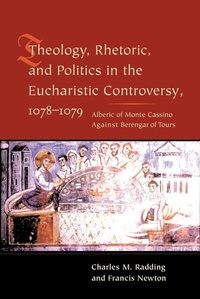
Theology, Rhetoric, and Politics in the Eucharistic Controversy, 1078-1079
1st Edition
Published on 29. October 2015
200 pages
978-0-231-50167-5 (ISBN)
Description

In the concluding stages of the eleventh-century Eucharistic Controversy, which turned on whether, and how, sacramental consecration changed the nature of bread and wine at the altar, Alberic of Monte Cassino composed a small but important treatise. Alberic was the most renowned teacher of rhetoric in his time, and his treatise, buttressed by appeal to the authority of the Church Fathers, was said by contemporaries to have "utterly destroyed" the argument of his opponent, Berengar of Tours, that the bread and wine survived its consecration.
Modern scholars had long believed Alberic's treatise to be lost. This book demonstrates that this crucial document, far from being lost, is an existing identifiable text. By showing conclusively that this work was written by Alberic, Radding and Newton transform our understanding not only of the particulars of the controversy and papal politics but also of the intellectual process by which theological doctrines took shape in mediaeval Church councils. The book includes the full Latin text and the first translation of Alberic's treatise.
Modern scholars had long believed Alberic's treatise to be lost. This book demonstrates that this crucial document, far from being lost, is an existing identifiable text. By showing conclusively that this work was written by Alberic, Radding and Newton transform our understanding not only of the particulars of the controversy and papal politics but also of the intellectual process by which theological doctrines took shape in mediaeval Church councils. The book includes the full Latin text and the first translation of Alberic's treatise.
All prices
More details
Other editions
Additional editions
Charles M. Radding | Francis Newton
Theology, Rhetoric, and Politics in the Eucharistic Controversy, 1078-1079
Book
02/2003
Columbia University Press
€123.80
Shipment within 10-20 days
Charles M. Radding | Francis Newton
Theology, Rhetoric, and Politics in the Eucharistic Controversy, 1078-1079
Book
02/2003
Columbia University Press
€31.00
Shipment within 10-20 days
Persons
Charles M. Radding is a professor of history at Michigan State University.
Francis Newton is a professor of classics at Duke University.
Francis Newton is a professor of classics at Duke University.
Content
Preface
List of Abbreviations
1. Berengar of Tours and the Eucharistic Controversy
Introduction
The Carolingian Background and the Eleventh-Century Debate
Berengar's Theology of the Eucharist
Berengar's Early Critics
The Early Councils
The Aftermath of the Council of 1059: Lanfranc and Guitmund
The Movement Toward Rome
2. Alberdeen Libellus Against Berengar of Tours
The Manuscript
The Rubric and Morin's Attribution to Berengar of Venosa
The Treatise and It's Author
Alberic of Monte Cassino and His "Lost" Treatise
3. Style and Content of the Libellus
Alberic's Literary Work
The Literary Style of the Aberdeen Libellus
The Content of the Libellus
Conclusion
4. Berengar of Tours and the Roman Councils of 1078 and 1079
The Sources
The Council of All Saints, 1078
Alberic and Berengar
Berengar and Alberic at the Lenten Council, 1079
Brief Epilogue: Berengar Remembers
Conclusion
The Text and Translation of the Libellus
Appendix: The Dossier of Unconnected Sententiae Following the Libellus in the Aberdeen Manuscript
Bibliography
Index
List of Abbreviations
1. Berengar of Tours and the Eucharistic Controversy
Introduction
The Carolingian Background and the Eleventh-Century Debate
Berengar's Theology of the Eucharist
Berengar's Early Critics
The Early Councils
The Aftermath of the Council of 1059: Lanfranc and Guitmund
The Movement Toward Rome
2. Alberdeen Libellus Against Berengar of Tours
The Manuscript
The Rubric and Morin's Attribution to Berengar of Venosa
The Treatise and It's Author
Alberic of Monte Cassino and His "Lost" Treatise
3. Style and Content of the Libellus
Alberic's Literary Work
The Literary Style of the Aberdeen Libellus
The Content of the Libellus
Conclusion
4. Berengar of Tours and the Roman Councils of 1078 and 1079
The Sources
The Council of All Saints, 1078
Alberic and Berengar
Berengar and Alberic at the Lenten Council, 1079
Brief Epilogue: Berengar Remembers
Conclusion
The Text and Translation of the Libellus
Appendix: The Dossier of Unconnected Sententiae Following the Libellus in the Aberdeen Manuscript
Bibliography
Index

