


In the Shadow of Catastrophe
German Intellectuals Between Apocalypse and Enlightenment
1st Edition
Published on 28. April 2023
252 pages
978-0-520-92625-7 (ISBN)
Description

These essays by eminent European intellectual and cultural historian Anson Rabinbach address the writings of key figures in twentieth-century German philosophy. Rabinbach explores their ideas in relation to the two world wars and the horrors facing Europe at that time.
Analyzing the work of Benjamin and Bloch, he suggests their indebtedness to the traditions of Jewish messianism. In a discussion of Hugo Ball's little-known Critique of the German Intelligentsia, Rabinbach reveals the curious intellectual career of the Dadaist and antiwar activist turned-nationalist and anti-Semite. His examination of Heidegger's "Letter on Humanism" and Jaspers's The Question of German Guilt illuminates the complex and often obscure political referents of these texts. Turning to Horkheimer and Adorno's Dialectic of Enlightenment, Rabinbach offers an arresting new interpretation of this central text of the critical theory of the Frankfurt School. Subtly and persuasively argued, his book will become an indispensable reference point for all concerned with twentieth-century German history and thought.
This title is part of UC Press's Voices Revived program, which commemorates University of California Press's mission to seek out and cultivate the brightest minds and give them voice, reach, and impact. Drawing on a backlist dating to 1893, Voices Revived makes high-quality, peer-reviewed scholarship accessible once again using print-on-demand technology. This title was originally published in 1997.
These essays by eminent European intellectual and cultural historian Anson Rabinbach address the writings of key figures in twentieth-century German philosophy. Rabinbach explores their ideas in relation to the two world wars and the horrors facing Europe
Analyzing the work of Benjamin and Bloch, he suggests their indebtedness to the traditions of Jewish messianism. In a discussion of Hugo Ball's little-known Critique of the German Intelligentsia, Rabinbach reveals the curious intellectual career of the Dadaist and antiwar activist turned-nationalist and anti-Semite. His examination of Heidegger's "Letter on Humanism" and Jaspers's The Question of German Guilt illuminates the complex and often obscure political referents of these texts. Turning to Horkheimer and Adorno's Dialectic of Enlightenment, Rabinbach offers an arresting new interpretation of this central text of the critical theory of the Frankfurt School. Subtly and persuasively argued, his book will become an indispensable reference point for all concerned with twentieth-century German history and thought.
This title is part of UC Press's Voices Revived program, which commemorates University of California Press's mission to seek out and cultivate the brightest minds and give them voice, reach, and impact. Drawing on a backlist dating to 1893, Voices Revived makes high-quality, peer-reviewed scholarship accessible once again using print-on-demand technology. This title was originally published in 1997.
These essays by eminent European intellectual and cultural historian Anson Rabinbach address the writings of key figures in twentieth-century German philosophy. Rabinbach explores their ideas in relation to the two world wars and the horrors facing Europe
More details
Other editions
Additional editions
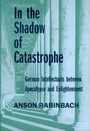
Anson Rabinbach
In the Shadow of Catastrophe
German Intellectuals Between Apocalypse and Enlightenment
Book
01/2001
1st Edition
University of California Press
€35.90
Article not available at the moment
Anson Rabinbach
In the Shadow of Catastrophe
German Intellectuals Between Apocalypse and Enlightenment
Book
12/1997
1st Edition
University of California Press
€37.08
Article exhausted; check different version
Person
Anson Rabinbach is Professor of History at Princeton University. He is author of The Crisis of Austrian Socialism: From Red Vienna to Civil War, 1927-1934 (1983) and The Human Motor: Energy, Fatigue and the Origins of Modernity (California, 1992).
Content
- Intro
- Contents
- Acknowledgments
- Introduction: Apocalypse and Its Shadows
- PART I. WORLD WAR I
- PART II. 1946-1947
- Conclusion
- Notes
- Index
