

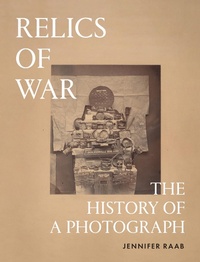
Relics of War
The History of a Photograph
1st Edition
Published on 5. September 2024
224 pages
978-0-691-26350-2 (ISBN)
Description

How a single haunting image tells a story about violence, mourning, and memory
In 1865, Clara Barton traveled to the site of the notorious Confederate prison camp in Andersonville, Georgia, where she endeavored to name the missing and the dead. The future founder of the American Red Cross also collected their relics-whittled spoons, woven reed plates, a piece from the prison's "dead line," a tattered Bible-and brought them back to her Missing Soldiers Office in Washington, DC, presenting them to politicians, journalists, and veterans' families before having them photographed together in an altar-like arrangement. Relics of War reveals how this powerful image, produced by Mathew Brady, opens a window into the volatile relationship between suffering, martyrdom, and justice in the wake of the Civil War.
Jennifer Raab shows how this photograph was a crucial part of Barton's efforts to address the staggering losses of a war in which nearly half of the dead were unnamed and from which bodies were rarely returned home for burial. The Andersonville relics gave form to these absent bodies, offered a sacred site for grief and devotion, mounted an appeal on behalf of the women and children left behind, and testified to the crimes of war. The story of the photograph illuminates how military sacrifice was racialized as political reconciliation began, and how the stories of Black soldiers and communities were silenced.
Richly illustrated, Relics of War vividly demonstrates how one photograph can capture a precarious moment in history, serving as witness, advocate, evidence, and memory.
In 1865, Clara Barton traveled to the site of the notorious Confederate prison camp in Andersonville, Georgia, where she endeavored to name the missing and the dead. The future founder of the American Red Cross also collected their relics-whittled spoons, woven reed plates, a piece from the prison's "dead line," a tattered Bible-and brought them back to her Missing Soldiers Office in Washington, DC, presenting them to politicians, journalists, and veterans' families before having them photographed together in an altar-like arrangement. Relics of War reveals how this powerful image, produced by Mathew Brady, opens a window into the volatile relationship between suffering, martyrdom, and justice in the wake of the Civil War.
Jennifer Raab shows how this photograph was a crucial part of Barton's efforts to address the staggering losses of a war in which nearly half of the dead were unnamed and from which bodies were rarely returned home for burial. The Andersonville relics gave form to these absent bodies, offered a sacred site for grief and devotion, mounted an appeal on behalf of the women and children left behind, and testified to the crimes of war. The story of the photograph illuminates how military sacrifice was racialized as political reconciliation began, and how the stories of Black soldiers and communities were silenced.
Richly illustrated, Relics of War vividly demonstrates how one photograph can capture a precarious moment in history, serving as witness, advocate, evidence, and memory.
More details
Other editions
Additional editions
Book
09/2024
Princeton University Press
€52.50
Shipment within 10-20 days
Person
Jennifer Raab is associate professor of the history of art at Yale University. She is the author of Frederic Church: The Art and Science of Detail.
Content
- Cover
- Contents
- Prologue
- Introduction: Gathering the Dead
- Part I: Naming
- Part II: Collecting
- Part III: Evidence
- Conclusion: Near Andersonville
- Epilogue
- Acknowledgments
- Notes
- Selected Bibliography
- Index
- Illustration Credits
