

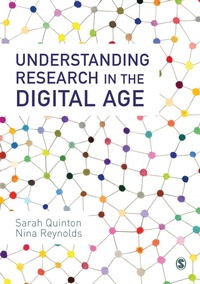
Understanding Research in the Digital Age
1st Edition
Published on 19. February 2018
256 pages
978-1-5264-4831-6 (ISBN)
Description

A guide to understanding digital research from both a conceptual and practical perspective, helping the reader to make sense of the issues, challenges and opportunities of social science research in the digital age.
The book will help the reader to understand how the digital context impacts on social science research and is divided into three main sections:
A Justification & Reconceptualization of Digital Research: The authors explore how far the digital environment is transforming social science research.
Accessing Digital Data: An outline of the characteristics of digital data, temporality issues in digital research and different data sources.
Moving Forward with Digital Research: Examining the practicalities of how to conduct digital research, with examples and suggestions to strengthen the implementation of digital research.
Suitable for Masters and Doctoral students undertaking digital or online research methods courses, as well as anyone doing a research project or dissertation with an online component.
The book will help the reader to understand how the digital context impacts on social science research and is divided into three main sections:
A Justification & Reconceptualization of Digital Research: The authors explore how far the digital environment is transforming social science research.
Accessing Digital Data: An outline of the characteristics of digital data, temporality issues in digital research and different data sources.
Moving Forward with Digital Research: Examining the practicalities of how to conduct digital research, with examples and suggestions to strengthen the implementation of digital research.
Suitable for Masters and Doctoral students undertaking digital or online research methods courses, as well as anyone doing a research project or dissertation with an online component.
Reviews / Votes
If you use digital data, you should read this book! A valuable guide to the big issues, challenges, and opportunities of social science in the digital age, this book emphasizes ethics, expectations, and expertise --and solid critical thinking. I plan to make good use of it in my teaching. -- Robert KozinetsMore details
Edition
First Edition
Language
English
Place of publication
London
United Kingdom
Target group
College/higher education
Product notice
Reflowable
File size
2,82 MB
ISBN-13
978-1-5264-4831-6 (9781526448316)
Copyright in bibliographic data and cover images is held by Nielsen Book Services Limited or by the publishers or by their respective licensors: all rights reserved.
Schweitzer Classification
Other editions
Additional editions
Sarah Quinton | Nina Reynolds
Understanding Research in the Digital Age
Book
03/2018
1st Edition
SAGE Publications Ltd
€168.10
Shipment within 15-20 days
Persons
Sarah Quinton is a researcher fascinated by how digitalisation is changing society and how we as researchers explore that changed society. As an academic Sarah teaches research methods with a particular focus on the breadth and ethical implications of digital research possibilities and she spends much time encouraging her Masters' and PhD students to consider the opportunities and complexities of digital research. Previous writing for Sage includes a text book Postgraduate research in business: a critical guide. Sarah's research centres around how and why digital technologies are shaping the world of consumption, small business strategy, and citizen behaviour. Her work has been published in multiple international journals including Industrial Marketing Management, Journal of Strategic Marketing, Journal of Marketing Management, International Journal of Management Reviews.
Sarah Quinton is Chair of the Research Ethics Committee and a Senior Lecturer in the Marketing Department, Faculty of Business, Oxford Brookes University, UK. Nina Reynolds has a long established research stream that focuses on research methods, starting with her MPhil and PhD research projects. This is reflected in her contribution to both qualifying (Master/Doctoral) and non-qualifying research methods education within and across institutions. She is currently supervising a number of research students that are facing the problems associated with research in the digital age. As well as her methodological research stream, her other research interests currently focus on understanding how consumers might develop or increase their wellbeing through consumption, and how transformative services realise positive outcomes. While this is her first text, her methodological research has been published in a number of journals including Journal of International Business Studies, Journal of Service Research, European Journal of Marketing, International Marketing Review, and the International Journal of Market Research.
Nina Reynolds is a Professor of Marketing at the Faculty of Business and the Marketing Discipline Leader in the School of Management, Operations and Marketing, University of Wollongong, Australia.
Sarah Quinton is Chair of the Research Ethics Committee and a Senior Lecturer in the Marketing Department, Faculty of Business, Oxford Brookes University, UK. Nina Reynolds has a long established research stream that focuses on research methods, starting with her MPhil and PhD research projects. This is reflected in her contribution to both qualifying (Master/Doctoral) and non-qualifying research methods education within and across institutions. She is currently supervising a number of research students that are facing the problems associated with research in the digital age. As well as her methodological research stream, her other research interests currently focus on understanding how consumers might develop or increase their wellbeing through consumption, and how transformative services realise positive outcomes. While this is her first text, her methodological research has been published in a number of journals including Journal of International Business Studies, Journal of Service Research, European Journal of Marketing, International Marketing Review, and the International Journal of Market Research.
Nina Reynolds is a Professor of Marketing at the Faculty of Business and the Marketing Discipline Leader in the School of Management, Operations and Marketing, University of Wollongong, Australia.
Content
Section 1: A Justification & Reconceptualization of Digital Research
Chapter 1: Digital Research as a Phenomenon and a Method
Chapter 2: The Changing Research Landscape
Section 2: Accessing Digital Data
Chapter 3: Characteristics of Digital Data
Chapter 4: Temporality in Digital Research
Chapter 5: Data Sources for Digital Research
Chapter 6: Research Processes and the Human/Technology Interface
Section 3: Moving Forward with Digital Research
Chapter 7: The Practicalities of Doing Digital Research
Chapter 8: Conclusion, The Bigger Picture
Chapter 1: Digital Research as a Phenomenon and a Method
Chapter 2: The Changing Research Landscape
Section 2: Accessing Digital Data
Chapter 3: Characteristics of Digital Data
Chapter 4: Temporality in Digital Research
Chapter 5: Data Sources for Digital Research
Chapter 6: Research Processes and the Human/Technology Interface
Section 3: Moving Forward with Digital Research
Chapter 7: The Practicalities of Doing Digital Research
Chapter 8: Conclusion, The Bigger Picture
