

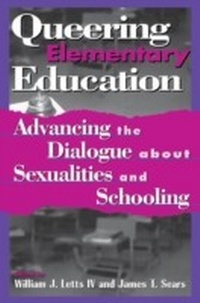
Queering Elementary Education
Advancing the Dialogue About Sexualities and Schooling
Rowman & Littlefield Publishers
1st Edition
Published on 27. October 1999
320 pages
978-1-4616-4161-2 (ISBN)
Description

Queering Elementary Education is not about teaching kids to be gay, lesbian, bisexual, or straight. It's not part of a sinister stratagem in the "gay agenda." Instead, these provocative and thoughtful essays advocate the creation of classrooms that challenge categorical thinking, promote interpersonal intelligence, and foster critical consciousness.
Queer elementary classrooms are those where parents and educators care enough about their children to trust the human capacity for understanding and their educative abilities to foster insight into the human condition. Those who teach queerly refuse to participate in the great sexual sorting machine called schooling where diminutive GI Joes and Barbies become star quarterbacks and prom queens, while the Linuses and Tinky Winkies become wallflowers or human doormats.
Queeering education means bracketing our simplest classroom activities in which we routinely equate sexual identities with sexual acts, privilege the heterosexual condition, and presume sexual destinies. Queer teachers are those who develop curriculum and pedagogy that afford every child dignity rooted in self-worth and esteem for others. In short, queering education happens when we look at schooling upside down and view childhood from the inside out. This groundbreaking volume demands we explore taken-for-granted assumptions about diversity, identities, childhood, and prejudice.
Queer elementary classrooms are those where parents and educators care enough about their children to trust the human capacity for understanding and their educative abilities to foster insight into the human condition. Those who teach queerly refuse to participate in the great sexual sorting machine called schooling where diminutive GI Joes and Barbies become star quarterbacks and prom queens, while the Linuses and Tinky Winkies become wallflowers or human doormats.
Queeering education means bracketing our simplest classroom activities in which we routinely equate sexual identities with sexual acts, privilege the heterosexual condition, and presume sexual destinies. Queer teachers are those who develop curriculum and pedagogy that afford every child dignity rooted in self-worth and esteem for others. In short, queering education happens when we look at schooling upside down and view childhood from the inside out. This groundbreaking volume demands we explore taken-for-granted assumptions about diversity, identities, childhood, and prejudice.
All prices
More details
Series
Edition
1. Auflage
Language
English
Place of publication
New York
United States
Publishing group
Bloomsbury Publishing Plc
ISBN-13
978-1-4616-4161-2 (9781461641612)
Copyright in bibliographic data and cover images is held by Nielsen Book Services Limited or by the publishers or by their respective licensors: all rights reserved.
Schweitzer Classification
Other editions
Additional editions
William J. Letts IV | James T. Sears
Queering Elementary Education
Advancing the Dialogue about Sexualities and Schooling
Book
11/1999
Rowman & Littlefield Publishers
€169.30
Shipment within 10-20 days
William J. Letts IV | James T. Sears
Queering Elementary Education
Advancing the Dialogue about Sexualities and Schooling
Book
10/1999
Rowman & Littlefield Publishers
€63.20
Shipment within 10-20 days
Persons
William J. Letts IV is a lecturer in science education at the Charles Sturt University, Bathurst, Australia.
James T. Sears is an independent scholar. He is currently a visiting professor at the Harvard Graduate School of Education.
James T. Sears is an independent scholar. He is currently a visiting professor at the Harvard Graduate School of Education.
Content
Chapter 1 Foreword
Chapter 2 Mathew's Lullaby
Part 3 Foundational Issues
Chapter 4 Teaching Queerly: Some Elementary Propositions
Chapter 5 Why Discuss Sexuality in Elementary School?
Chapter 6 Pestalozzi, Perversity, and the Pedagogy of Love
Part 7 Children's Social and Sexual Development
Chapter 8 Stonewall in the Housekeeping Area: Gay and Lesbian Issues in the Early Childhood Classroom
Chapter 9 Forbidden Fruit: Black Males' Constructions of Transgressive Sexualities in Middle School
Chapter 10 Reading Queer Asian-American Masculinities and Sexualities in Elementary School
Chapter 11 "My Moving Days": A Child's Negotiation of Multiple Lifeworlds in Relation to Gender, Ethnicity and Sexuality
Chapter 12 What Happens When Kids Grow Up?: The Long-term Impact of an Openly Gay Teacher on Eight Students' Lives
Part 13 Curriculum
Chapter 14 How to Make "Boys" and "Girls" in the Classroom: The Heteronormative Nature of Elementary School Science
Chapter 15 Using Music to Teach Against Homophobia
Chapter 16 Locating a Place for Gay and Lesbian Themes in Elementary Reading, Writing, and Talking
Chapter 17 "It's OK to be Gay:" Interrupting Straight Thinking in the English Classroom
Chapter 18 How Teachers Understand Gay and Lesbian Content in the Elementary Social Studies Curriculum
Part 19 Family
Chapter 20 Children of the Future Age: Lesbian and Gay Parents Talk about School
Chapter 21 Love Makes a Family: Controversy in Two Massachusetts Towns
Chapter 22 Supporting Students/Responding to Gay and Lesbian Parents
Chapter 23 Placing Children First: The Importance of Mutual Presence in the Elementary Classroom
Part 24 Educators and Their Allies
Chapter 25 Activism Within: Working with Tension
Chapter 26 Success Sories of a Fat, Biracial/Black, Jewish, Lesbian Assistant Principal
Chapter 27 Lesbian Mother and Lesbian Educator: An Integrative View of Affirming Sexual Diversity
Chapter 28 When "Queer" and "Teacher" Meet
Chapter 29 Confronting Homophobia in a Multicultural Education Course
Chapter 30 Afterword
Chapter 31 Bibliography of Resources
Chapter 2 Mathew's Lullaby
Part 3 Foundational Issues
Chapter 4 Teaching Queerly: Some Elementary Propositions
Chapter 5 Why Discuss Sexuality in Elementary School?
Chapter 6 Pestalozzi, Perversity, and the Pedagogy of Love
Part 7 Children's Social and Sexual Development
Chapter 8 Stonewall in the Housekeeping Area: Gay and Lesbian Issues in the Early Childhood Classroom
Chapter 9 Forbidden Fruit: Black Males' Constructions of Transgressive Sexualities in Middle School
Chapter 10 Reading Queer Asian-American Masculinities and Sexualities in Elementary School
Chapter 11 "My Moving Days": A Child's Negotiation of Multiple Lifeworlds in Relation to Gender, Ethnicity and Sexuality
Chapter 12 What Happens When Kids Grow Up?: The Long-term Impact of an Openly Gay Teacher on Eight Students' Lives
Part 13 Curriculum
Chapter 14 How to Make "Boys" and "Girls" in the Classroom: The Heteronormative Nature of Elementary School Science
Chapter 15 Using Music to Teach Against Homophobia
Chapter 16 Locating a Place for Gay and Lesbian Themes in Elementary Reading, Writing, and Talking
Chapter 17 "It's OK to be Gay:" Interrupting Straight Thinking in the English Classroom
Chapter 18 How Teachers Understand Gay and Lesbian Content in the Elementary Social Studies Curriculum
Part 19 Family
Chapter 20 Children of the Future Age: Lesbian and Gay Parents Talk about School
Chapter 21 Love Makes a Family: Controversy in Two Massachusetts Towns
Chapter 22 Supporting Students/Responding to Gay and Lesbian Parents
Chapter 23 Placing Children First: The Importance of Mutual Presence in the Elementary Classroom
Part 24 Educators and Their Allies
Chapter 25 Activism Within: Working with Tension
Chapter 26 Success Sories of a Fat, Biracial/Black, Jewish, Lesbian Assistant Principal
Chapter 27 Lesbian Mother and Lesbian Educator: An Integrative View of Affirming Sexual Diversity
Chapter 28 When "Queer" and "Teacher" Meet
Chapter 29 Confronting Homophobia in a Multicultural Education Course
Chapter 30 Afterword
Chapter 31 Bibliography of Resources

