

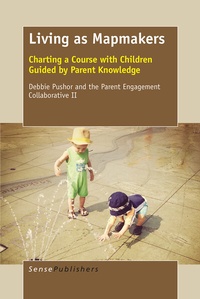
Living as Mapmakers
Description

While teacher knowledge is well-researched and conceptualized, parent knowledge remains largely unstudied. In response, this book details Pushor's conceptualization of parent knowledge, the unique knowledge that arises from the lived experiences of being a parent, knowledge that is relational, bodied and embodied, intuitive, intimate, and uncertain. Drawing from her narrative inquiry into parent knowledge, Pushor shares and unpacks the stories of one participant as a way to provide a close up view of the parent knowledge a First Nations father held and used in living with and educating his children. Twelve teachers and parents then put forward their individual and contextual experiences immersed in explorations and use of parent knowledge, attending to the questions, How can what parents know enhance schooling experiences for children? How can parent knowledge, used alongside teacher knowledge, inform decisions made in schools and enhance curricular programming and outcomes for children?
Using the metaphor of maps . of mapmaking . of living as mapmakers, this book is a storied account of the new practices in which parents and teachers engaged to enable parent knowledge to guide their work with children. It is an honest and vulnerable account of their journeys. The authors puzzle over the complexities and the successes of their work and the resulting impact on children, parents, and teachers. This book is an invitation to educators and parents to consider how to walk alongside one another, using both teacher and parent knowledge, for the benefit of children's learning and wellbeing.
More details
Other editions
Additional editions
Content
Foreword.- Preface.- Acknowledgements.- About the Artwork.- Section 1: Parent Knowledge: A Parent's Map of a Child.- Conceptualizing Parent Knowledge.- Mapping Parent Knowledge.- From Educator to Mother: My Personal Journey.- If Only You Knew My Child the Way I Do: Erica's Story.- Big Dog or Little Dog: Rethinking My Beliefs and Practices as a Parent and Educator.- Section 2: Family Stories as Maps of Knowledge.- Beginning a Journey Together: First Connections with Families.- The Family-School Storytelling Connection.- Connections with All Families.- Walking Alongside Parents: Carson's Story.- Section 3: Choosing a Map of First Nations and Métis Parent Knowledge.- "It Takes a Village to Raise a Child": A First Nations Perspective.- Wicihitowin: Finding My Place Alongside Parents in a Circle of Shared Responsibility.- Section 4: Being Both Guest and Host in Our Mapmaking with Families.- Looking Inward, Looking Outward: Rethinking Practice.- New Canadian Parents as Guest Hosts on School Landscapes: From Theoretical Underpinnings to Practices of Possibility.- Creating a Circular Map.- Section 5: Living in the Space of Transformation.- A Change of Consciousness: The Null Curriculum of Families.- The Map Changes, The Mapmaker Changes.- About the Contributors.
