

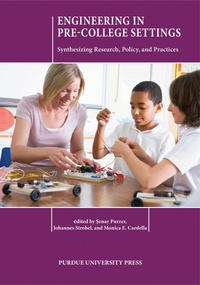
Engineering in Pre-College Settings
Synthesizing Research, Policy, and Practices
Published on 15. November 2014
470 pages
978-1-61249-358-9 (ISBN)
Description

In science, technology, engineering, and mathematics (STEM) education in pre-college, engineering is not the silent "e" anymore. There is an accelerated interest in teaching engineering in all grade levels. Structured engineering programs are emerging in schools as well as in out-of-school settings. Over the last ten years, the number of states in the US including engineering in their K-12 standards has tripled, and this trend will continue to grow with the adoption of the Next Generation Science Standards. The interest in pre-college engineering education stems from three different motivations. First, from a workforce pipeline or pathway perspective, researchers and practitioners are interested in understanding precursors, influential and motivational factors, and the progression of engineering thinking. Second, from a general societal perspective, technological literacy and understanding of the role of engineering and technology is becoming increasingly important for the general populace, and it is more imperative to foster this understanding from a younger age. Third, from a STEM integration and education perspective, engineering processes are used as a context to teach science and math concepts. This book addresses each of these motivations and the diverse means used to engage with them.Designed to be a source of background and inspiration for researchers and practitioners alike, this volume includes contributions on policy, synthesis studies, and research studies to catalyze and inform current efforts to improve pre-college engineering education. The book explores teacher learning and practices, as well as how student learning occurs in both formal settings, such as classrooms, and informal settings, such as homes and museums. This volume also includes chapters on assessing design and creativity.
More details
Other editions
Additional editions

Senay Purzer | Johannes Strobel | Monica E. Cardella
Engineering in Pre-College Settings
Synthesizing Research, Policy, and Practices
Book
03/2024
Purdue University Press
€63.33
Shipment within 3-4 weeks

Senay Purzer | Johannes Strobel | Monica Cardella
Engineering in Pre-College Settings
Synthesizing Research, Policy, and Practices
Book
08/2014
Purdue University Press
€84.38
Article not available at the moment
Persons
Senay Purzer is an assistant professor in the School of Engineering Education and is the director of Assessment Research for the Institute for P-12 Engineering Research and Learning (INSPIRE) at Purdue University. She received an NSF CAREER award in 2012. Her research focuses on assessment of skills, such as engineering design creativity and information literacy.
Content
Foreword, by Greg Pearson
Preface
Part I. Current State of Engineering Education Research and Practice
Chapter 1: The Rising Profile of STE M Literacy Through National Standards and Assessments, by Cary Sneider and Senay Purzer
Chapter 2: K-12 Engineering: The Missing Core Discipline, by Ioannis Miaoulis
Chapter 3: Implementation and Integration of Engineering in K-12 STEM Education, by Tamara J. Moore, Micah S. Stohlmann, Hui-Hui Wang, Kristina M. Tank, Aran W. Glancy, and Gillian H. Roehrig
Chapter 4: Engineering in Elementary Schools, by Cathy P. Lachapelle and Christine M. Cunningham
Chapter 5: Engineering Education in the Middle Grades, by Tirupalavanam G. Ganesh and Christine G. Schnittka
Chapter 6: Designing Engineering Experiences to Engage All Students, by Christine M. Cunningham and Cathy P. Lachapelle
Part II. Research Studies with Teachers and Students
Chapter 7: Embedding Elementary School Science Instruction in Engineering Design Problem Solving, by Kristen Wendell, Amber Kendall, Merredith Portsmore, Christopher G. Wright, Linda Jarvin, and Chris Rogers
Chapter 8: Teachers' Concerns in Implementing Engineering into Elementary Classrooms and the Impact of Teacher Professional Development, by Jeongmin Lee and Johannes Strobel
Chapter 9: Bridges and Barriers to Constructing Conceptual Cohesion Across Modalities and Temporalities: Challenges of STE M Integration in the Pre-College Engineering Classroom, by Candace A. Walkington, Mitchell J. Nathan, Matthew Wolfgram, Martha W. Alibali, and Rachaya Srisurichan
Chapter 10: High School Pre-Engineering Curricula: Assessing Teacher Beliefs, Intended Curriculum, and Enacted Instruction, by Amy C. Prevost, Mitchell J. Nathan, and L. Allen Phelps
Part III. Reviews and Synthesis of Research in Teacher Education
Chapter 11: In-Service Teacher Professional Development in Engineering Education: Early Years, by Heidi A. Diefes-Dux
Chapter 12: High School Teacher Professional Development in Engineering: Research and Practice, by Jenny L. Daugherty and Rodney L. Custer
Chapter 13: Engineering in Pre-Service Teacher Education, by Steve O'Brien, John Karsnitz, Suriza Van Der Sandt, Laura Bottomley, and Elizabeth Parry
Part IV. Assessing Design, Creativity, and Interest in Engineering
Chapter 14: Assessing Design, by Ming-Chien Hsu, Monica E. Cardella, and Senay Purzer
Chapter 15: Creativity Assessment: A Necessary Criterion in K-12 Engineering Education, by Eric L. Mann
Chapter 16: Assessing Engineering Knowledge, Attitudes, and Behaviors for Research and Program Evaluation Purposes, by Monica E. Cardella, Noah Salzman, Senay Purzer, and Johannes Strobel
Part V. Engineering Beyond the Classroom
Chapter 17: Engineering at Home, by Brianna Dorie and Monica E. Cardella
Chapter 18: Engineering Learning in Museums: Current Trends and Future Directions, by Gina N. Svarovsky
Chapter 19: P-12 Robotics Competitions: Building More than Just Robots- Building 21st-Century Thinking Skills, by Anita G. Welch and Douglas Huffman
Chapter 20: Engineering Kids' Lives: The Art of Delivering Messages, by Nancy Linde, Marisa Wolsky, and Tamecia Jones
Part VI. The Future of Pre-College Engineering Education
Chapter 21: Looking Ahead, by Monica E. Cardella, Senay Purzer, and Johannes Strobel
Contributors
Index
Preface
Part I. Current State of Engineering Education Research and Practice
Chapter 1: The Rising Profile of STE M Literacy Through National Standards and Assessments, by Cary Sneider and Senay Purzer
Chapter 2: K-12 Engineering: The Missing Core Discipline, by Ioannis Miaoulis
Chapter 3: Implementation and Integration of Engineering in K-12 STEM Education, by Tamara J. Moore, Micah S. Stohlmann, Hui-Hui Wang, Kristina M. Tank, Aran W. Glancy, and Gillian H. Roehrig
Chapter 4: Engineering in Elementary Schools, by Cathy P. Lachapelle and Christine M. Cunningham
Chapter 5: Engineering Education in the Middle Grades, by Tirupalavanam G. Ganesh and Christine G. Schnittka
Chapter 6: Designing Engineering Experiences to Engage All Students, by Christine M. Cunningham and Cathy P. Lachapelle
Part II. Research Studies with Teachers and Students
Chapter 7: Embedding Elementary School Science Instruction in Engineering Design Problem Solving, by Kristen Wendell, Amber Kendall, Merredith Portsmore, Christopher G. Wright, Linda Jarvin, and Chris Rogers
Chapter 8: Teachers' Concerns in Implementing Engineering into Elementary Classrooms and the Impact of Teacher Professional Development, by Jeongmin Lee and Johannes Strobel
Chapter 9: Bridges and Barriers to Constructing Conceptual Cohesion Across Modalities and Temporalities: Challenges of STE M Integration in the Pre-College Engineering Classroom, by Candace A. Walkington, Mitchell J. Nathan, Matthew Wolfgram, Martha W. Alibali, and Rachaya Srisurichan
Chapter 10: High School Pre-Engineering Curricula: Assessing Teacher Beliefs, Intended Curriculum, and Enacted Instruction, by Amy C. Prevost, Mitchell J. Nathan, and L. Allen Phelps
Part III. Reviews and Synthesis of Research in Teacher Education
Chapter 11: In-Service Teacher Professional Development in Engineering Education: Early Years, by Heidi A. Diefes-Dux
Chapter 12: High School Teacher Professional Development in Engineering: Research and Practice, by Jenny L. Daugherty and Rodney L. Custer
Chapter 13: Engineering in Pre-Service Teacher Education, by Steve O'Brien, John Karsnitz, Suriza Van Der Sandt, Laura Bottomley, and Elizabeth Parry
Part IV. Assessing Design, Creativity, and Interest in Engineering
Chapter 14: Assessing Design, by Ming-Chien Hsu, Monica E. Cardella, and Senay Purzer
Chapter 15: Creativity Assessment: A Necessary Criterion in K-12 Engineering Education, by Eric L. Mann
Chapter 16: Assessing Engineering Knowledge, Attitudes, and Behaviors for Research and Program Evaluation Purposes, by Monica E. Cardella, Noah Salzman, Senay Purzer, and Johannes Strobel
Part V. Engineering Beyond the Classroom
Chapter 17: Engineering at Home, by Brianna Dorie and Monica E. Cardella
Chapter 18: Engineering Learning in Museums: Current Trends and Future Directions, by Gina N. Svarovsky
Chapter 19: P-12 Robotics Competitions: Building More than Just Robots- Building 21st-Century Thinking Skills, by Anita G. Welch and Douglas Huffman
Chapter 20: Engineering Kids' Lives: The Art of Delivering Messages, by Nancy Linde, Marisa Wolsky, and Tamecia Jones
Part VI. The Future of Pre-College Engineering Education
Chapter 21: Looking Ahead, by Monica E. Cardella, Senay Purzer, and Johannes Strobel
Contributors
Index
