

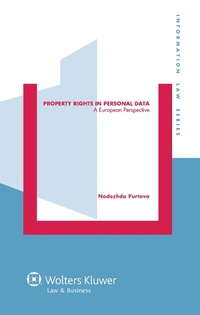
Property Rights in Personal Data
A European Perspective
Published on 25. November 2011
328 pages
978-90-411-5118-6 (ISBN)
Description

Personal data, at least in the European legal lexicon, is not a conventional object of property rights. Yet, regardless of the actual legal circumstances, lively markets in personal data have become a reality. The so-called information industry routinely collects and deals in databases containing personal details of people as both citizens and consumers, and appears to regard this data as its property. Moreover, individuals also treat data pertaining to them as 'their own', and habitually disclose personal data in exchange for money, goods, services, and online 'social' interaction.
This important new book defends the ground-breaking proposal to 'propertise' personal data. 'Propertisation' arguably improves the position of a data subject to exercise control over his/her personal data by creating more effective tools of accountability and monitoring. It can also be used, the author shows, to enforce existing data protection rights as expressed in the EC Data Protection Directive (1995), Council of Europe Convention for the Protection of Human Rights and Fundamental Freedoms (1945) and Convention No. 108 (1981).
This book inquires to what extent the propertisation of personal data is legally possible in Europe, and examines what benefits and limitations would ensue. It provides:
a systematic understanding of the developments and concerns with regard to personal data;
a detailed examination of the main arguments for and against the concept of property in personal data; and
a European perspective on property rights in personal data.
The result is a book full of original insights that breaks new ground in addressing the problems of personal data in the European law of data protection and informational privacy.
This important new book defends the ground-breaking proposal to 'propertise' personal data. 'Propertisation' arguably improves the position of a data subject to exercise control over his/her personal data by creating more effective tools of accountability and monitoring. It can also be used, the author shows, to enforce existing data protection rights as expressed in the EC Data Protection Directive (1995), Council of Europe Convention for the Protection of Human Rights and Fundamental Freedoms (1945) and Convention No. 108 (1981).
This book inquires to what extent the propertisation of personal data is legally possible in Europe, and examines what benefits and limitations would ensue. It provides:
a systematic understanding of the developments and concerns with regard to personal data;
a detailed examination of the main arguments for and against the concept of property in personal data; and
a European perspective on property rights in personal data.
The result is a book full of original insights that breaks new ground in addressing the problems of personal data in the European law of data protection and informational privacy.
More details
Other editions
Additional editions
Book
12/2011
1st Edition
Kluwer Law International
€209.47
Shipment within 10-20 days
Content
- Cover
- Half Title Page
- Editorial Board
- Title Page
- Copyright Page
- Dedication
- Table of Contents
- Preface and Acknowledgements
- Chapter 1 Introduction
- 1. SUBJECT MATTER, RESEARCH QUESTION AND AIM OF THIS STUDY
- 2. PERSPECTIVE OF THIS STUDY
- 2.1. LEGAL PERSPECTIVE
- 2.2. EUROPEAN PERSPECTIVE
- 2.3. PERSPECTIVE OF THE INDIVIDUAL
- 3. THEORETICAL FRAMEWORK
- 3.1. LEGAL PRAGMATISM
- 3.2. EVOLUTIONARY APPROACH TO DATA PROTECTION
- 4. METHOD OF FUNCTIONAL EQUIVALENCE
- 5. THE KEY MESSAGE OF THIS STUDY
- 6. STRUCTURE OF THE ARGUMENT
- Part I Setting the Stage
- Chapter 2 The Personal Data Problem: The Developments Raising Personal Data Related Issues
- 1. INTRODUCTION
- 2. DEVELOPMENTS
- 2.1. GENERAL TECHNOLOGICAL DEVELOPMENTS
- 2.2. PROFILING
- 2.3. INSTITUTIONAL DEVELOPMENTS
- 2.4. MARKET RELATED
- 2.5. SOCIETAL DEVELOPMENTS
- 2.6. THE TRANSFORMATION OF THE STRUCTURE OF THE DATA FLOW
- 2.6.1. Chain Informatisation
- 2.6.2. Cloud Computing
- 2.6.3. Ambient Intelligence
- 2.6.4. The New Structure of Relationships within the Data Flow
- 3. CONCLUSION
- Chapter 3 The Personal Data Problem: Concerns
- 1. INTRODUCTION
- 2. DATA COLLECTION: SECRECY, MISBALANCE OF POWER, FREEDOM, AUTONOMY, ETC.
- 3. ANALYSIS OF DATA: FEAR OF ERRORS, MISREPRESENTATION, DEHUMANISATION, AND PERFECT KNOWLEDGE
- 4. THE IMPLEMENTATION OF DATA: DISCRIMINATION, MANIPULATION, INEQUALITY
- 5. BEYOND ZARSKY'S PARADIGM: A LACK OF TRANSPARENCY AND ACCOUNTABILITY IN THE DATA FLOW
- 6. THE NEED FOR A NEXT GENERATION PERSONAL DATA REGIME
- 7. CONCLUSION
- Chapter 4 Introduction to Property Discourse
- 1. INTRODUCTION: AGREEING ON TERMS
- 2. DISTINGUISHING THE LEGAL PERSPECTIVE ON PROPERTY
- 2.1. THE LAYMAN'S PERSPECTIVE
- 2.2. NORMATIVE PERSPECTIVE
- 2.3. ECONOMIC PERSPECTIVE
- 3. DEFINING THE LEGAL PERSPECTIVE THE MEANING OF PROPERTY IN LAW
- 3.1. THE FLUID NATURE OF PROPERTY IN LAW
- 3.2. THE IDEA OF COMMON EUROPEAN PROPERTY LAW, NEW PROPERTY RIGHTS AND THEIR OBJECTS
- 3.2.1. Civil Law Property
- 3.2.1.1. Revolutionary Origins and Codes as Sources
- 3.2.1.2. Structure and Scope: Unitary Ownership
- 3.2.1.3. The Rigid Application of the Numerus Clausus Principle Resulting in an Exclusive System of Property Rights
- 3.2.2. Property in the Common Law
- 3.2.2.1. Feudal Origins and Sources in Case Law
- 3.2.2.2. Structure and Scope: Fragmented Ownership
- 3.2.2.3. The Flexible Application of the Numerus Clausus Principle and the Resulting Inclusive System of Property Rights
- 3.2.3. In Search of Common Ground: Fragmented Ownership and the Erga Omnes Effect
- 3.2.3.1. (Re)discovered Common Ground
- 3.2.3.2. The Pragmatic Application of Numerus Clausus: The Erga Omnes Effect as the Cause of Propertisation
- 3.2.4. Map of New Property Rights in a Common European Property Discussion
- 3.3. THE MARKET FUNCTION OF PROPERTY: THE REBUTTAL OF ONE OBJECTION TO THE FLEXIBLE APPLICATION OF PROPERTY RIGHTS
- 4. CONCLUSION
- Part II Origins of the Idea of Propertisation
- Chapter 5 Limitations of US Information Privacy Law in Dealing with the Personal Data Problem
- 1. INTRODUCTION
- 2. 'MANTRA OF PRIVACY': CONCEPTUALISATION OF THE PERSONAL DATA PROBLEM IN THE UNITED STATES
- 3. US INFORMATION PRIVACY LAW
- 3.1. LAW OF TORT
- 3.1.1. Intrusion
- 3.1.2. Disclosure
- 3.1.3. False Light
- 3.1.4. Appropriation
- 3.1.5. Tort as a Common Law Institution
- 3.2. CONSTITUTIONAL LAW
- 3.2.1. The Scope of the Constitutional Protection of Information Privacy
- 3.2.2. Substantive Due Process Clause of the Fourteenth Amendment
- 3.2.3. V Amendment
- 3.2.4. IV Amendment
- 3.3. STATUTORY PROTECTION
- 3.3.1. Code of Fair Information Practices
- 3.3.2. Implementation of the Code
- 4. NON-PROPRIETARY TOOLS TO FILL IN THE GAPS
- 4.1. RETOOLING THE SYSTEM OF TORTS
- 4.2. SOLUTION BY REGULATION
- 5. CONCLUSION
- Chapter 6 Correcting Shortcomings of the US Information Privacy Law by Propertisation
- 1. INTRODUCTION
- 2. MAPPING THE US ARGUMENT ON PROPERTISATION OF PERSONAL DATA
- 3. NATURAL RIGHTS AND RHETORICAL JUSTIFICATIONS
- 4. ECONOMIC ARGUMENT FOR PROPERTISATION
- 4.1. INDIVIDUAL PROPERTY AS OPPOSED TO DISCLOSURE
- 4.2. PROPERTY AS OPPOSED TO TORTS
- 4.3. PROPERTY AS AN INSTRUMENT TO CREATE A GENERAL SYSTEM PERSONAL DATA PROTECTION
- 5. THE PROPERTISATION ARGUMENT PERTAINING TO THE SPECIFICITIES OF THE US LEGAL SYSTEM
- 6. SCOPE OF PROPERTY RIGHTS: DEFAULT RULES
- 7. ESTABLISHED AND ADDED CRITICISM OF THE US PROPERTISATION ARGUMENT
- 8. CONCLUSION
- Chapter 7 Review of the European Data Protection Regime
- 1. INTRODUCTION
- 2. THE SYSTEM OF EUROPEAN DATA PROTECTION LAW
- 2.1. SOURCES OF EUROPEAN DATA PROTECTION LAW: THEIR GOALS AND SCOPE OF APPLICATION
- 2.2. CONTENT OF EUROPEAN DATA PROTECTION LAW
- 2.2.1. First Cluster of Rules: Substantive Principles
- 2.2.1.1. Fair and Lawful Processing
- 2.2.1.2. Minimality
- 2.2.1.3. Purpose Limitation
- 2.2.1.4. Information Quality
- 2.2.1.5. Data Subject Participation and Control
- 2.2.1.6. Disclosure Limitation
- 2.2.1.7. Data Security
- 2.2.2. Second Cluster of Rules: The 1995 Directive's System of Implementation of the Substantive Principles
- 2.2.2.1. Participatory Implementation
- 2.2.2.1.1. Rights and Obligations
- 2.2.2.1.2. Co-regulation and Self-control
- 2.2.2.2. Top-Down Implementation: Supervisory Authorities
- 2.3. ANALYSIS OF THE CURRENT EUROPEAN APPROACH TO DATA PROTECTION
- 2.3.1. Adequacy of the Substantive Norms of Data Protection
- 2.3.2. Shortcomings of the Implementation Mechanisms
- 2.3.2.1. Participatory Implementation
- 2.3.2.1.1. Rights and Obligations
- 2.3.2.1.2. Co-regulation and Self-control
- 2.3.2.2. Top-Down Implementation: Overloaded DPAs
- 2.3.3. Other Challenges
- 3. CONCLUSION
- Chapter 8 The Possibility of Propertisation of Personal Data in the EU Legal Order
- 1. INTRODUCTION
- 2. PROPERTISATION SCENARIOS UNDER DIRECTIVE 95/46/EC
- 2.1. THE PROPERTISATION OF PERSONAL DATA WITHIN THE BOUNDARIES SET BY DIRECTIVE 95/46/EC
- 2.1.1. Absolute Exclusion of Propertisation Contrary to the Logic of the Data Protection Evolution
- 2.1.2. The Principle of Individual Control Suggests Propertisation
- 2.1.3. Consent Requirement and Exceptions Thereto
- 2.1.3.1. Consent as a Tool of Control
- 2.1.3.2. Criticisms of and Exceptions to the Consent Rule
- 2.1.4. The Holder of Property Rights
- 2.2. PROPERTISATION OF PERSONAL DATA AS AN ALTERNATIVE TO DIRECTIVE 95/46/EC
- 2.2.1. The Internal Market as a Free Market?
- 2.2.2. A Window in the Directive: No Mandatory Law Clause?
- 2.2.3. Freedom of Contract
- 2.2.4. Power to Negotiate
- 2.2.5. General Contract and Consumer Protection Law Is Sufficient?
- 3. CONCLUSION
- Chapter 9 Human Rights Nature of Data Protection as a Limit on Propertisation
- 1. INTRODUCTION
- 2. 'CONSTITUTIONALISATION' OF DATA PROTECTION RIGHTS IN NATIONAL AND EU LAW
- 3. A STRONG TENDENCY TO INCLUDE DATA PROTECTION RIGHTS INTO THE ARTICLE 8 ECHR RIGHT TO RESPECT FOR PRIVATE LIFE
- 3.1. THE ANALYTICAL FRAMEWORK
- 3.2. ARTICLE 8 (1) ECHR: BEYOND PRIVACY AS THE SECRECY OF INFORMATION
- 3.3. AFFIRMATIVE OBLIGATIONS AND A HORIZONTAL EFFECT OF ARTICLE 8 ECHR
- 3.3.1. Affirmative Obligations in the First Line of Case Law
- 3.3.2. Affirmative Obligations in the Second and Third Lines of Case Law
- 4. WAIVER OF THE DATA PROTECTION RIGHTS: THE LIMITED SCOPE OF PRIVATE LAW SOLUTIONS
- 5. CONCLUSION
- Chapter 10 The Property Rights Solution
- 1. INTRODUCTION
- 2. WHAT PROPERTISATION OFFERS
- 2.1. PROPERTY RIGHTS AS A FRAMEWORK FOR PERSONAL DATA MANAGEMENT
- 2.2. THE ERGA OMNES EFFECT GIVEN TO DATA PROTECTION RIGHTS HOLDS ALL ACTORS ACCOUNTABLE
- 2.3. CO-REGULATION AND SELF-CONTROL
- 2.4. IMPROVED TOP-DOWN IMPLEMENTATION
- 3. LIMITS OF PROPERTISATION: THE NECESSITY OF ADDITIONAL REGULATION
- 4. ADDITIONAL QUALIFICATIONS
- 4.1. HOW DOES THE PROPERTISATION SOLUTION RELATE TO OTHER PROPOSED SOLUTIONS?
- 4.2. WHAT IF A DATA SUBJECT CHANGES HIS MIND ABOUT THE TRANSFER OF A 'LESSER' PROPERTY RIGHT IN HIS DATA?
- 4.3. WOULD PROPERTISATION MAKE DATA PROTECTION EASIER IN PRACTICE?
- 4.4. WHAT ABOUT PERSONAL DATA CREATED BY OTHER PEOPLE?
- 4.5. WOULD THE PROPOSED PROPERTY REGIME VIOLATE FREEDOM OF EXPRESSION?
- 5. CONCLUSION
- Chapter 11 Conclusion
- 1. INTRODUCTION: QUESTIONS
- 2. BACKGROUND
- 2.1. PERSONAL DATA PROBLEM
- 2.2. THE US ORIGINS OF THE IDEA OF PROPERTISATION
- 3. ANSWERS
- 3.1. PROPERTISATION OF PERSONAL DATA, TO A DEGREE, IS LEGALLY POSSIBLE
- 3.1.1. Property in Law Implies Real Rights with Erga Omnes Effect
- 3.1.2. EU Data Protection Law Does Not Exclude Propertisation if Consistent with the Directive
- 3.1.3. Propertisation Is Possible on Condition of Limited Alienability
- 3.2. PROPERTISATION OF PERSONAL DATA IS A SOUND DIRECTION FOR DEVELOPMENT OF THE EUROPEAN DATA PROTECTION
- 3.2.1. The European Data Protection Regime Fails to Channel Modern Data Processing
- 3.2.2. Real Rights Improve the Accountability and Implementation of Data Protection Rules
- 4. CONCLUSION
- Table of Cases
- Bibliography
- Index
- Back Cover
