

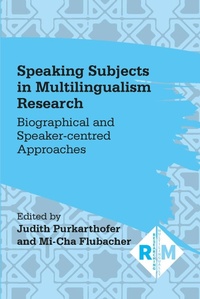
Speaking Subjects in Multilingualism Research
Biographical and Speaker-centred Approaches
Published on 22. July 2022
330 pages
978-1-80041-574-4 (ISBN)
Description

This book discusses salient moments of multilingual encounters and brings together contributions focused on the interplay between language use by individuals and societies, and language-related inequalities or opportunities for speakers. The chapters demonstrate how biographical and speaker-centred approaches can contribute to an understanding of linguistic diversity, how researchers can empirically account for lived experiences of languages, and how such accounts are embedded in a larger discussion on social (in)equality. Together the chapters make a powerful case for the importance of speaker-centred methodologies in multilingual and multilingualism research. The book is a rich source of theoretical and methodological reflections and will thus be a valuable resource for both experienced researchers and students beginning to explore biographical research methods.
Reviews / Votes
This brilliant contribution to language research reframes our understanding of linguistic repertoires, diversity and (in)equality in multilingual societies. Through creative and thought-provoking ideas, it inspires researchers to think differently regarding the creation of knowledge about speakers and their languages. A must-read for anybody interested in speaker-centred approaches to language. * Isabelle LeBlanc, Universite de Moncton, Canada * This volume is both a sophisticated theoretical orientation to language biographical research and a practical methodological guide, encompassing the history and on-going development of this vibrant cross-disciplinary area. Researchers seeking to engage with inequalities, shifting categories, and the socio-political and emotional lives of speakers will find inspiration and guidance. * Haley De Korne, University of Oslo, Norway * As a qualitative methodologist who studies multilingualism, I found the volume's methodological variety enlightening, the theoretical and conceptual lenses enriching, and the examination of minority, Indigenous, deaf, post-apartheid, and post-colonial language users' lived experiences refreshing. * Melissa B Hauber-OEzer, University of Missouri at Columbia, USA, LINGUIST List 34.635 *More details
Series
Language
English
Place of publication
Bristol
United Kingdom
Target group
College/higher education
Product notice
Reflowable
ISBN-13
978-1-80041-574-4 (9781800415744)
Copyright in bibliographic data and cover images is held by Nielsen Book Services Limited or by the publishers or by their respective licensors: all rights reserved.
Schweitzer Classification
Other editions
Additional editions
Judith Purkarthofer | Mi-Cha Flubacher
Speaking Subjects in Multilingualism Research
Biographical and Speaker-centred Approaches
Book
07/2022
Multilingual Matters
€86.00
Shipment within 10-20 days
Persons
Judith Purkarthofer is a Junior Professor in the German Studies Department at the University of Duisburg-Essen, Germany. She holds a PhD from the University of Vienna, Austria, and has completed postdoctoral work at the Center for Multilingualism in Society across the Lifespan of the University of Oslo, Norway, and at Humboldt-University Berlin, Germany. She carries out ethnographic and biographic research in families, schools and kindergartens.
Mi-Cha Flubacher is a Postdoc-University Assistant in the Department of Linguistics, University of Vienna, Austria. She is the author of Language Investment and Employability: The Uneven Distribution of Resources in the Public Employment Service (with Alexandre Duchene and Renata Coray, 2018, Springer) and the editor of Language, Education and Neoliberalism: Critical Studies in Sociolinguistics (with Alfonso Del Percio, 2017, Multilingual Matters).
Mi-Cha Flubacher is a Postdoc-University Assistant in the Department of Linguistics, University of Vienna, Austria. She is the author of Language Investment and Employability: The Uneven Distribution of Resources in the Public Employment Service (with Alexandre Duchene and Renata Coray, 2018, Springer) and the editor of Language, Education and Neoliberalism: Critical Studies in Sociolinguistics (with Alfonso Del Percio, 2017, Multilingual Matters).
Content
Figures and Tables
Contributors
Acknowledgments
Part 1: Introducing Speaking Subjects
Chapter 1. Mi-Cha Flubacher and Judith Purkarthofer: Speaking Subjects in Multilingualism Research: Biographical and Speaker-centred Approaches
Chapter 2. Judith Purkarthofer: And the Subject Speaks to You: Biographical Narratives as Memories and Stories of the Narratable Self
Chapter 3. Tim McNamara: Discourse and the Agency of the Subject in Autobiographical Narratives
Chapter 4. Mi-Cha Flubacher: Ethnography as a Speaker-centred Approach? Methodological Reflections
Part 2: Empirical Insights
Language Portraits as a Starting Ground
Chapter 5. Christine Anthonissen: Profiles of Multilingualism: An Analysis of Language Biographies and Linguistic Repertoires of University Students
Chapter 6. Maartje De Meulder and Annelies Kusters: Experiencing Multimodal Languaging: The Use of Language Portraits with Deaf and Hearing Multilingual Signers
Chapter 7. Ruth Singer: Linguistic Biographies and Language Portraits as Tools for Developing Shared Understandings of Multilingualism with an Indigenous Australian Community
Linguistic Repertoires and Language Learning in Time and Space
Chapter 8. Xolisa Guzula: Children's Use of Their Full Linguistic Repertoire to Establish a Social and Linguistic Third Space for Learning: A Case Study of the Stars of Today Literacy Club
Chapter 9. Simangele Mashazi and Marcelyn Oostendorp: Belonging: The Interplay of Linguistic Repertoires, Bodies and Space in an Educational Context
Chapter 10. Julie Choi: Learning about Multilingual Language Learning Experiences through Language Trajectory Grids
Chapter 11. Andrea Sedlaczek: Using Media Diaries to Study Multilingual Media Repertoires: A Pilot Study with Language Learners in a Rural Community Education Setting
Addressing Trauma
Chapter 12. Julia Sonnleitner: A Past of Flesh and Blood: Chronotopic Agency and Embodiment in Biographic Narrative
Chapter 13. Mastura Raschidy: Freedom is Suffering for a Caged Bird: Biographical Approaches and Psychotraumatology
Chapter 14. Mascha Dabic: Speaking about the Unspeakable: Interpreter-mediated Psychotherapy for Survivors of War and Torture
Part 3: Unsettling and Extending Biographical Research and Speaker-centred Approaches
Chapter 15. Ana Deumert, Zolani Kupe and Nkululeko Mabandla: Ilwiimi Zisulungekile: Reflections on Language, Meaning and Communication
Chapter 16. Juergen Spitzmueller: Ideologies of Communication: The Social Link between Actors, Signs and Practices
Chapter 17. Anne-Christel Zeiter-Grau: Language Issues? On Collecting Language Biographies without Focusing on Language
Chapter 18. Brigitta Busch: A Few Remarks on Working with Auto-Socio-Bio-Ethnography
Index
Contributors
Acknowledgments
Part 1: Introducing Speaking Subjects
Chapter 1. Mi-Cha Flubacher and Judith Purkarthofer: Speaking Subjects in Multilingualism Research: Biographical and Speaker-centred Approaches
Chapter 2. Judith Purkarthofer: And the Subject Speaks to You: Biographical Narratives as Memories and Stories of the Narratable Self
Chapter 3. Tim McNamara: Discourse and the Agency of the Subject in Autobiographical Narratives
Chapter 4. Mi-Cha Flubacher: Ethnography as a Speaker-centred Approach? Methodological Reflections
Part 2: Empirical Insights
Language Portraits as a Starting Ground
Chapter 5. Christine Anthonissen: Profiles of Multilingualism: An Analysis of Language Biographies and Linguistic Repertoires of University Students
Chapter 6. Maartje De Meulder and Annelies Kusters: Experiencing Multimodal Languaging: The Use of Language Portraits with Deaf and Hearing Multilingual Signers
Chapter 7. Ruth Singer: Linguistic Biographies and Language Portraits as Tools for Developing Shared Understandings of Multilingualism with an Indigenous Australian Community
Linguistic Repertoires and Language Learning in Time and Space
Chapter 8. Xolisa Guzula: Children's Use of Their Full Linguistic Repertoire to Establish a Social and Linguistic Third Space for Learning: A Case Study of the Stars of Today Literacy Club
Chapter 9. Simangele Mashazi and Marcelyn Oostendorp: Belonging: The Interplay of Linguistic Repertoires, Bodies and Space in an Educational Context
Chapter 10. Julie Choi: Learning about Multilingual Language Learning Experiences through Language Trajectory Grids
Chapter 11. Andrea Sedlaczek: Using Media Diaries to Study Multilingual Media Repertoires: A Pilot Study with Language Learners in a Rural Community Education Setting
Addressing Trauma
Chapter 12. Julia Sonnleitner: A Past of Flesh and Blood: Chronotopic Agency and Embodiment in Biographic Narrative
Chapter 13. Mastura Raschidy: Freedom is Suffering for a Caged Bird: Biographical Approaches and Psychotraumatology
Chapter 14. Mascha Dabic: Speaking about the Unspeakable: Interpreter-mediated Psychotherapy for Survivors of War and Torture
Part 3: Unsettling and Extending Biographical Research and Speaker-centred Approaches
Chapter 15. Ana Deumert, Zolani Kupe and Nkululeko Mabandla: Ilwiimi Zisulungekile: Reflections on Language, Meaning and Communication
Chapter 16. Juergen Spitzmueller: Ideologies of Communication: The Social Link between Actors, Signs and Practices
Chapter 17. Anne-Christel Zeiter-Grau: Language Issues? On Collecting Language Biographies without Focusing on Language
Chapter 18. Brigitta Busch: A Few Remarks on Working with Auto-Socio-Bio-Ethnography
Index
