

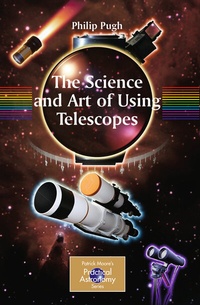
The Science and Art of Using Telescopes
Description

Amateur astronomers have to start somewhere. Most begin by buying a modest astronomical telescope and getting to know the night sky. After a while, many want to move on to the next stage, but this can be problematic. The magazines advertise a mass of commercially-made equipment - some of it very expensive - which can represent a major financial outlay. The trick is to choose the right equipment, and then use it to its fullest extent.
Observing Skills: The Science and Art of using Astronomical Telescopes provides the required information. First, it explains how to get the best from entry-level equipment (that upgrade may not even be needed for a year or two!). Second, it explains how to select equipment that is at the 'next level', and describes how use more advanced telescopes and accessories.
The book is organized according to observational targets, and although it concentrates mainly on visual observing, it concludes with a section on imaging and the equipment currently available - from regular digital cameras, through webcams, to specialized chilled-chip CCD cameras.
Observing Skills: The Science and Art of using Astronomical Telescopes is the perfect follow-up to Moore and Watson: Astronomy with a Budget Telescope and Tonkin: AstroFAQs . It neatly fills the gap between these introductory books and the more advanced books in Springer's Practical Astronomy list.
More details
Other editions
Additional editions
Person
Philip Pugh is a mathematician, a member of the Institute of Technical and Scientific Communicators, and travels the world as a freelance trainer in science and business. He has had his articles published in Sky & Telescope, Astronomy, and Astronomy Now, and is the author/editor of Springer's forthcoming book, Observing the Sun with Coronado TM Telescopes.
