

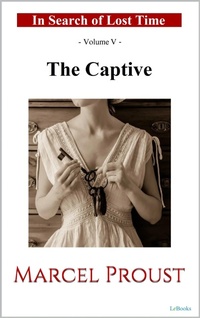
The Captive
Description

The Captive , the fifth volume of Marcel Proust's monumental work In Search of Lost Time, is a profound exploration of love, obsession, and the psychological intricacies of desire. The novel follows the narrator's relationship with Albertine, whom he keeps confined in his Paris apartment in a desperate attempt to possess and control her. Through this dynamic, Proust delves into the themes of jealousy, memory, and the illusions that shape emotional attachment.
Published posthumously, The Captive is marked by its introspective depth and lyrical prose, continuing Proust's investigation into the workings of consciousness and the passage of time. The novel reflects the narrator's inner turmoil, as he oscillates between affection and suspicion, revealing how love can become entangled with fear and domination.
The enduring significance of The Captive lies in its unflinching portrayal of the fragility of human relationships and the limitations of understanding another person's inner world. As part of Proust's larger masterpiece, it offers an intimate and haunting meditation on the nature of possession, loss, and the relentless search for meaning in love.
More details
Person
Marcel Proust was a French novelist, essayist, and critic, widely regarded as one of the most significant literary figures of the 20th century. Born in Auteuil, a suburb of Paris, Proust is best known for his monumental seven-volume novel In Search of Lost Time ( À la recherche du temps perdu), a work that revolutionized the form and scope of the modern novel. Through introspection, memory, and detailed psychological exploration, Proust crafted a richly textured narrative that has influenced generations of writers.
Proust's early writings include essays and short stories published in literary journals, but it was In Search of Lost Time, published between 1913 and 1927, that defined his legacy. The novel explores themes of memory, time, art, love, and identity through the narrator's reflections on his life and the people around him. One of its most famous passages - about the taste of a madeleine dipped in tea - triggers an involuntary memory that opens the door to an exploration of the past, demonstrating Proust's concept of "mémoire involontaire."
Proust's influence on literature is vast. His introspective style and exploration of subjective time prefigured many of the themes that would come to define modernist and postmodernist literature. Writers such as Virginia Woolf, James Joyce, and Samuel Beckett drew inspiration from his techniques and thematic focus. His method of delving into the inner workings of the human mind and his emphasis on sensory experience and memory profoundly altered the structure of the novel.
Beyond literary circles, Proust's insights into human nature, art, and memory continue to resonate with philosophers, psychologists, and artists. His work is often cited as a deep meditation on the passage of time and the persistence of the self amid change.
