

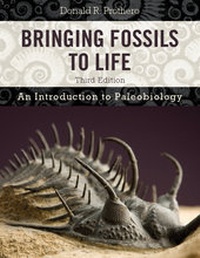
Bringing Fossils to Life
An Introduction to Paleobiology
3rd Edition
Published on 5. November 2013
672 pages
978-0-231-53690-5 (ISBN)
Description

One of the leading textbooks in its field, Bringing Fossils to Life applies paleobiological principles to the fossil record while detailing the evolutionary history of major plant and animal phyla. It incorporates current research from biology, ecology, and population genetics, bridging the gap between purely theoretical paleobiological textbooks and those that describe only invertebrate paleobiology and that emphasize cataloguing live organisms instead of dead objects. For this third edition Donald R. Prothero has revised the art and research throughout, expanding the coverage of invertebrates and adding a discussion of new methodologies and a chapter on the origin and early evolution of life.
All prices
More details
Other editions
Additional editions
Book
11/2013
3rd Edition
Columbia University Press
€207.09
Shipment within 10-20 days
Book
11/2013
3rd Edition
Columbia University Press
€114.08
Shipment within 10-20 days
Person
Donald R. Prothero is one of today's leading scientists and authors in the field of paleontology and evolution. He is a former professor of geology at Occidental College and a lecturer in geobiology at Caltech. He is presently a research associate in the Department of Vertebrate Paleontology at the Los Angeles County Natural History Museum. The author of more than thirty books and 250 scientific papers published in leading scholarly journals, he received his Ph.D. from Columbia University and is a fellow of the Geological Society of America, the Paleontological Society, and the Linnean Society of London. In 1991 he received the award for Outstanding Paleontologist Under the Age of 40 and was awarded the 2013 James Shea Award by the National Association of Geoscience Teachers for outstanding writing and editing in the geosciences.
Content
Preface
To the Student: Why Study Fossils?
PART I: THE FOSSIL RECORD: A WINDOW ON THE PAST
1. The Fossil Record
What is a Fossil? How Does an Organism Become a Fossil? What Factors Affect the Fossilization Potential of an Organism? What Factors are Required for Extraordinary Preservation? How Good is the Fossil Record? Conclusions
2. Variation in Fossils
Theme: Variation; How do Organisms vary during their Lifespans? How do Populations of Organisms Vary? Conclusions
3. Species and Speciation
4. Systematics
Why Systematics? Evolution and Classification; Competing Systematic Philosophies; Molecular Systematics; Codes of Systematic Nomenclature; Conclusions
5. Evolution
The Evolution of Evolution; The "Evolutionary Synthesis" Challenges to the Neo-Darwinian Synthesis; Evolution and the Fossil Record; Conclusions
6. Extinction
7. Functional Morphology
Form and Function; Theoretical Morphology; Functional Hypotheses as Testable Science; Case Studies in Functional Morphology; Conclusions
8. Paleoecology
Ecology and Paleoecology; Ecological Relationships; Environmental Limiting Factors; Direct Paleoecological Evidence; Some Ecological Ideas that have been Applied (and Misapplied) to the Fossil Record; Evolutionary Paleoecology; Conclusions
9. Biogeography
Organisms in Space and Time; Ecological Biogeography; Historical Biogeography; Conclusions
10. Biostratigraphy
Faunal Succession; Biostratigraphic Zonations; Factors controlling Fossil Distributions; Biostratigraphic Sampling; The Time Significance of Biostratigraphic Events; North American Land Mammal "Ages" and Biochronology; Resolution, Precision, and Accuracy; Index Fossils and the Global Biostratigraphic Standard; Conclusions
PART II: LIFE OF THE PAST AND PRESENT
11. Life's Origins and Early Evolution
Concocting the "Primordial Soup" Mud and Mosh Pits, Kitty Litter and Fool's Gold; Life is a Commune; The Earliest Fossils; Cambrian "Explosion" -- or "Short Fuse"?; Why did Life Change So Slowly Before the Cambrian?; Rocks, Hox, and Molecular Clocks.
12. Micropaleontology: Fossil Protistans
Introduction; The Kingdoms of Life; Systematics; Foraminifera; Radiolaria; Diatoms; Coccolithophores
13. Colonial Life: Sponges, Archaeocyathans, and Cnidarians
14. The Lophophorates: Brachiopods and Bryozoans
15. Jointed Limbs: The Arthropods
16. Kingdom of the Seashell: The Molluscs
Introduction; Systematics; Mollusc Origins and Diversification; Gastropods; Bivalves; Cephalopods
17. Spiny Skins: The Echinoderms
18. Dry Bones: Vertebrates and their Relatives
Introduction; The Road to Amphioxus; Getting a Head: The Craniates; Jaws: The Gnathostomes; Fish Bones The Osteichthyans; Lobe Fins: The Sarcopterygians; Four on the Floor: The Tetrapods; Land Eggs: The Amniotes; Feathered Dinosaurs: The Birds; Furry Folk: Synapsids and Mammals
19. Fossilized Behavior: Trace Fossils
20. Traces of Earth's Green Mantle: Paleobotany
Introduction; Plant Taphonomy; The First Photosynthetic Organisms; The Plant Kingdom; Vascular Plants; Tracheophytes; Naked Seeds: The Gymnosperms; Flower Power: The Angiosperm Revolution; Floras through Time
Glossary
Bibliography
Index
To the Student: Why Study Fossils?
PART I: THE FOSSIL RECORD: A WINDOW ON THE PAST
1. The Fossil Record
What is a Fossil? How Does an Organism Become a Fossil? What Factors Affect the Fossilization Potential of an Organism? What Factors are Required for Extraordinary Preservation? How Good is the Fossil Record? Conclusions
2. Variation in Fossils
Theme: Variation; How do Organisms vary during their Lifespans? How do Populations of Organisms Vary? Conclusions
3. Species and Speciation
4. Systematics
Why Systematics? Evolution and Classification; Competing Systematic Philosophies; Molecular Systematics; Codes of Systematic Nomenclature; Conclusions
5. Evolution
The Evolution of Evolution; The "Evolutionary Synthesis" Challenges to the Neo-Darwinian Synthesis; Evolution and the Fossil Record; Conclusions
6. Extinction
7. Functional Morphology
Form and Function; Theoretical Morphology; Functional Hypotheses as Testable Science; Case Studies in Functional Morphology; Conclusions
8. Paleoecology
Ecology and Paleoecology; Ecological Relationships; Environmental Limiting Factors; Direct Paleoecological Evidence; Some Ecological Ideas that have been Applied (and Misapplied) to the Fossil Record; Evolutionary Paleoecology; Conclusions
9. Biogeography
Organisms in Space and Time; Ecological Biogeography; Historical Biogeography; Conclusions
10. Biostratigraphy
Faunal Succession; Biostratigraphic Zonations; Factors controlling Fossil Distributions; Biostratigraphic Sampling; The Time Significance of Biostratigraphic Events; North American Land Mammal "Ages" and Biochronology; Resolution, Precision, and Accuracy; Index Fossils and the Global Biostratigraphic Standard; Conclusions
PART II: LIFE OF THE PAST AND PRESENT
11. Life's Origins and Early Evolution
Concocting the "Primordial Soup" Mud and Mosh Pits, Kitty Litter and Fool's Gold; Life is a Commune; The Earliest Fossils; Cambrian "Explosion" -- or "Short Fuse"?; Why did Life Change So Slowly Before the Cambrian?; Rocks, Hox, and Molecular Clocks.
12. Micropaleontology: Fossil Protistans
Introduction; The Kingdoms of Life; Systematics; Foraminifera; Radiolaria; Diatoms; Coccolithophores
13. Colonial Life: Sponges, Archaeocyathans, and Cnidarians
14. The Lophophorates: Brachiopods and Bryozoans
15. Jointed Limbs: The Arthropods
16. Kingdom of the Seashell: The Molluscs
Introduction; Systematics; Mollusc Origins and Diversification; Gastropods; Bivalves; Cephalopods
17. Spiny Skins: The Echinoderms
18. Dry Bones: Vertebrates and their Relatives
Introduction; The Road to Amphioxus; Getting a Head: The Craniates; Jaws: The Gnathostomes; Fish Bones The Osteichthyans; Lobe Fins: The Sarcopterygians; Four on the Floor: The Tetrapods; Land Eggs: The Amniotes; Feathered Dinosaurs: The Birds; Furry Folk: Synapsids and Mammals
19. Fossilized Behavior: Trace Fossils
20. Traces of Earth's Green Mantle: Paleobotany
Introduction; Plant Taphonomy; The First Photosynthetic Organisms; The Plant Kingdom; Vascular Plants; Tracheophytes; Naked Seeds: The Gymnosperms; Flower Power: The Angiosperm Revolution; Floras through Time
Glossary
Bibliography
Index
