

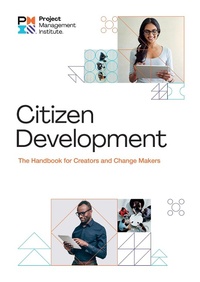
Citizen Development
The Handbook for Creators and Change Makers
Published on 30. January 2021
256 pages
978-1-62825-672-7 (ISBN)
Description

Citizen development allows anyone to build applications without software expertise, significantly faster, and at a fraction of the cost. Unlock the value within your organization. Learn the tools and techniques needed to introduce and scale citizen development. This book brings together the latest thinking on citizen development from industry thought leaders, no-code/low-code vendors, transformation experts, and executives who oversee large technology investments. It guides organizations to deliver citizen development projects, design better apps, scale the operating model, align key stakeholders, and nurture and grow citizen development.
More details
Other editions
Additional editions
Book
01/2021
Project Management Institute
€46.00
Shipment within 10-20 days
Content
- Front Cover
- Title Page
- Copyright
- Half Title
- Foreword
- Contents
- Part 1 | Introducing Citizen Developer Canvas
- Power to the People
- Who Is This Book For?
- What Is a Citizen Developer?
- Citizen Development Canvas
- Benefits of Citizen Development
- Examples of Citizen Development Apps
- Challenges of Bringing Citizen Development Into an Organization
- Part 2 | Project Delivery
- 2.1 Hyper-Agile SDLC
- Overview
- Hyper-Agile SDLC in Practice
- Guidelines for citizen development project delivery
- Application development life cycle
- Choosing the suitable SDLC path
- Transition to support and change management
- 2.2 Ideation 2.0
- Overview
- Ideation 2.0 in Practice
- Guidelines for Ideation 2.0
- A practical approach: Really round robin
- Hackathons and ideathons
- 2.3 Suitability Assessment
- Overview
- Suitability Assessment in Practice
- The suitability assessment
- Part 3 | Capability Development
- 3.1 Business Analysis and Design
- Overview
- Business Analysis and Design in Practice
- Entity definitions
- Entity definition framework case study: Streamline order-to-build process for a custom-built bike
- Process architecture model
- 3.2 Enterprise Risk Requirements
- Overview
- Enterprise Risk Requirements in Practice
- Stakeholders
- Requirements
- 3.3 Application Development
- Overview
- Application Development in Practice
- The data model
- User Interaction Design
- Avoid pitfalls in application development
- Part 4 | Operating Model
- 4.1 Conceptual Design and End State
- Overview
- Operating Model Conceptual Design
- Why is operating model design important?
- The end-state operating model design of organizations that are in an advanced state of citizen development maturity
- 4.2 Supporting Citizen Development
- Overview
- Citizen Development Operating Model Components
- Citizen development competency center
- Citizen development community of practice operating model
- Citizen development hybrid operating model
- Capabilities: Key roles and responsibilities
- Citizen development operating model and the maturity model
- Part 5 | Organization Alignment
- 5.1 Managing the Change
- Overview
- Managing the Change in Practice
- Resistance to change
- 5.2 Creating the Culture
- Overview
- Creating the Culture in Practice
- What do we mean by culture and why is it important?
- The role of culture in growing citizen development
- Nurture and influence culture at the different levels of maturity
- Practical steps to build momentum for citizen development
- Practical steps to develop the citizen developer culture
- 5.3 Transparent Accountability
- Overview
- Transparent Accountability in Practice
- What do we mean by accountability and why is it important?
- Fostering a culture of transparency and accountability
- Commitment-based management
- Tools to manage accountability
- 5.4 IT Governance as an Enabler
- Overview
- IT Governance as an Enabler in Practice
- IT and citizen development
- Creating the alignment
- 5.5 KPIs and Reporting
- Overview
- KPIs and Reporting in Practice
- Measuring citizen development implementations
- Aggregated measures
- Measures enabled by the service catalog
- Measuring the effect on shadow IT
- Measuring citizen development delivery effectiveness
- Measuring competency center effectiveness
- 5.6 Citizen Development Value Tree
- Overview
- Citizen Development Value Tree in Practice
- Lever 1: Time to value
- Lever 2: Revenue
- Lever 3: Cost
- Lever 4: Brand
- Lever 5: Customer
- Lever 6: Employee
- Communicating the value tree in your organization
- Value tree assessment
- Funding approach for citizen development initiatives
- Part 6 | Citizen Development Maturity Model
- Overview of the Maturity Model
- Introduction to the Stages of the Maturity Model
- 6.1 Discovery
- Overview
- How to recognize the discovery stage
- Why is the discovery stage important?
- Discovery Stage in Practice
- Project delivery
- Capability development
- Operating model
- Organization alignment
- Key roles and responsibilities.
- Summary Checklist for the Discovery Stage
- 6.2 Experimentation
- Overview
- How to recognize the experimentation stage
- Why is the experimentation stage important?
- Experimentation Stage in Practice
- Project delivery
- Capability development
- Operating model
- Organization alignment
- Key roles and responsibilities.
- Summary Checklist for the Experimentation Stage
- 6.3 Adoption
- Overview
- How to recognize the adoption stage
- Why is the adoption stage important?
- Adoption Stage in Practice
- Project delivery
- Capability development
- Operating model
- Organization alignment
- Key roles and responsibilities
- Summary Checklist for the Adoption Stage
- 6.4 Scaling
- Overview
- How to recognize the scaling stage
- Why is the scaling stage important?
- Scaling Stage in Practice
- Project delivery
- Capability development
- Operating model
- Organization alignment
- Key roles and responsibilities
- Summary Checklist for the Scaling Stage
- 6.5 Innovating
- Overview
- How to recognize the innovating stage
- Why is the innovating stage important?
- Innovating Stage in Practice
- Project delivery
- Capability development
- Operating model
- Organization alignment
- Key roles and responsibilities
- Summary Checklist for the Innovating Stage
- 6.6 Diagnosing Your Organization's Level of Maturity for Citizen Development
- Overview
- Maturity Assessment in Practice
- Using the outcome
- Aspects to Consider
- When the outcome is inconclusive
- When a single canvas area dominates the charts
- Appendix: Lists of Figures, Tables, and Tools References Contributors and Reviewers Index
- Appendix: Lists of Figures, Tables, and Tools
- References
- Contributors and Reviewers
- Index
- Back Cover
