

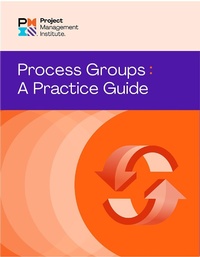
Process Groups: A Practice Guide
Published on 7. November 2022
389 pages
978-1-62825-784-7 (ISBN)
Description

Need help on how to get work done using traditional project management practices? Then, Process Groups: A Practice Guide is the right supplemental guide for you. This important companion to, A Guide to the Project Management Body of Knowledge (PMBOK® Guide), offers useful and practical guidance for a predictive approach to project management practices. This practice guide influences your way of working, ensuring you are equipped with the information you need to succeed in this changing profession. What''s in the guide? You''ll find a process-based project management approach for guiding your projects, aligning methodologies, and evaluating project management capabilities. This guide uses a popular Process Groups model that will help you with: · Initiating · Planning · Executing · Monitoring and Controlling · Closing In addition, you will learn about 49 processes within these five process groups along with inputs, tools and techniques, and outputs associated with those processes. This practice guide shows the processes considered good practices on most projects, most of the time.
More details
Other editions
Additional editions
Book
11/2022
Project Management Institute
€62.00
Shipment within 10-20 days
Content
- Front Cover
- Copyright
- Notice
- Preface
- Table of Contents
- 1. Introduction
- 1.1 Project Management
- 1.1.1 Importance of Project Management
- 1.1.2 Foundational Elements
- 1.2 Projects
- 1.2.1 Projects Drive Change
- 1.2.2 Projects Enable Business Value Creation
- 1.2.3 Contexts for Project Initiation
- 1.3 Programs and Program Management
- 1.4 Portfolios and Portfolio Management
- 1.5 Relationship Among Portfolios, Programs, and Projects
- 1.6 Organizational Project Management (OPM)
- 1.7 Project Components and Considerations
- 1.7.1 Project and Development Life Cycles
- 1.7.2 Project Phase
- 1.7.3 Phase Gate
- 1.7.4 Project Management Processes
- 1.7.5 Project Management Process Groups
- 1.8 Project Management Data and Information
- 1.9 Tailoring
- 1.10 Benefits Management and Business Documents
- 1.11 Project Charter, Project Management Plan, and Project Documents
- 1.12 Project Success Measures
- 2. The Project Environment
- 2.1 Enterprise Environmental Factors
- 2.1.1 EEFs Internal to the Organization
- 2.1.2 EEFs External to the Organization
- 2.2 Organizational Process Assets
- 2.2.1 Plans, Processes, and Documents
- 2.2.2 Organizational Knowledge Repositories
- 2.3 Governance
- 2.3.1 Organizational Governance
- 2.3.2 Project Governance
- 2.4 Management Elements
- 2.5 Organizational Structures
- 2.5.1 Organizational Structure Types
- 2.5.2 Factors in Organizational Structure Selection
- 2.6 Project Management Office
- 3. Role of the Project Manager
- 3.1 The Project Manager's Sphere of Influence
- 3.1.1 The Project
- 3.1.2 The Organization
- 3.1.3 The Industry
- 3.1.4 Project Stakeholders
- 3.2 Project Manager Competences
- 3.2.1 Ways of Working
- 3.2.2 Business Acumen
- 3.2.3 Power Skills
- 3.3 Qualities and Skills of a Leader
- 3.3.1 Leadership Styles
- 3.3.2 Leadership Compared to Management
- 3.3.3 Politics, Power, and Getting Things Done
- 3.3.4 Personality
- 3.4 Performing Integration
- 3.4.1 Performing Integration at the Process Level
- 3.4.2 Integration at the Cognitive Level
- 3.4.3 Integration at the Context Level
- 3.4.4 Integration and Complexity
- 4. Initiating Process Group
- 4.1 Develop Project Charter
- 4.2 Identify Stakeholders
- 5. Planning Process Group
- 5.1 Develop Project Management Plan
- 5.2 Plan Scope Management
- 5.3 Collect Requirements
- 5.4 Define Scope
- 5.5 Create WBS
- 5.6 Plan Schedule Management
- 5.7 Define Activities
- 5.8 Sequence Activities
- 5.9 Estimate Activity Durations
- 5.10 Develop Schedule
- 5.11 Plan Cost Management
- 5.12 Estimate Costs
- 5.13 Determine Budget
- 5.14 Plan Quality Management
- 5.15 Plan Resource Management
- 5.16 Estimate Activity Resources
- 5.17 Plan Communications Management
- 5.18 Plan Risk Management
- 5.19 Identify Risks
- 5.20 Perform Qualitative Risk Analysis
- 5.21 Perform Quantitative Risk Analysis
- 5.22 Plan Risk Responses
- 5.23 Plan Procurement Management
- 5.24 Plan Stakeholder Engagement
- 6. Executing Process Group
- 6.1 Direct and Manage Project Work
- 6.2 Manage Project Knowledge
- 6.3 Manage Quality
- 6.4 Acquire Resources
- 6.5 Develop Team
- 6.6 Manage Team
- 6.7 Manage Communications
- 6.8 Implement Risk Responses
- 6.9 Conduct Procurements
- 6.10 Manage Stakeholder Engagement
- 7. Monitoring and Controlling Process Group
- 7.1 Monitor and Control Project Work
- 7.2 Perform Integrated Change Control
- 7.3 Validate Scope
- 7.4 Control Scope
- 7.5 Control Schedule
- 7.6 Control Costs
- 7.7 Control Quality
- 7.8 Control Resources
- 7.9 Monitor Communications
- 7.10 Monitor Risks
- 7.11 Control Procurements
- 7.12 Monitor Stakeholder Engagement
- 8. Closing Process Group
- 8.1 Close Project or Phase
- 9. Inputs and Outputs
- 10. Tools and Techniques
- References
- Appendix X1: Contributors and Reviewers of Process Groups: A Practice Guide
- X1.1 Reviewers
- X1.2 PMI Staff
- Glossary
- 1. Inclusions and Exclusions
- 2. Common Acronyms
- 3. Definitions
- Index
