

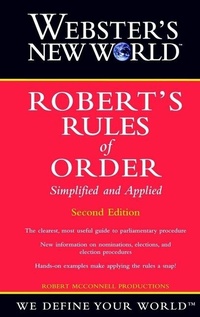
Webster's New World Robert's Rules of Order Simplified and Applied, 2nd Edition
Second Edition
Published on 1. February 2004
432 pages
978-0-544-18874-7 (ISBN)
Description

This is the clearest, most useful guide to parliamentary procedure, now with new information on effective and reliable procedures for nominations, elections, ballots, balloting, and ballot counting.
More details
Other editions
Additional editions
Robert McConnell Productions
Webster's New World Robert's Rules of Order Simplified and Applied
Book
08/2001
2nd Edition
Hungry Minds Inc,U.S.
€11.90
Article exhausted; check different version
Content
- Intro
- About the Author
- Contents
- Title
- Copyright
- Preface
- Introduction
- Part I: Meetings and Organizations
- Chapter 1: The Basics
- Structure of an Organization
- Applying Democratic Principles to Organizations
- Defining Parliamentary Procedure
- Importance of Parliamentary Procedures
- Basic Principles of Parliamentary Procedure
- Chapter 2: The Order of a Business Meeting
- Planning and Using Agendas
- Quorum
- A Business Meeting in Action
- Chapter 3: Presenting Business to the Assembly
- Basic Steps in Presenting a Motion
- Making a Main Motion
- Discussing a Motion
- Taking the Vote
- Completing the Action on the Motion
- Important Points to Remember Before Making a Motion
- Resolutions
- Chapter 4: Debating the Motion
- Rules of Debate
- Limitations on Debate
- Debatable Motions and Undebatable Motions
- Chapter 5: Voting
- Procedure for Taking a Vote
- The Majority Rules
- A Two-Thirds Vote
- A Three-Fourths Vote
- The Tie Vote
- Ways the Vote can be Taken
- Doubting the Result of the Vote
- Other Voting Procedures
- Frequently Asked Questions About Voting
- Part II: Motions Simplified
- Chapter 6: Motions
- Classes of Motions
- Previous Notice of Motions
- The Ranking of Motions
- Chapter 7: Using Subsidiary Motions to Help Adopt a Main Motion
- Voting on Amendments to the Main Motion
- Legitimate Uses of the Motion Lay on the Table
- Chapter 8: Using Privileged Motions
- Chapter 9: Using Incidental Motions
- Requests and Inquiries
- Chapter 10: Using Motions That Bring a Question Again Before the Assembly
- Part III: Membership
- Chapter 11: Officers
- Elected Officers
- The President
- The Vice President
- The Secretary
- The Treasurer
- Boards
- Passing the Torch
- Chapter 12: Nominations and Elections
- Nominations
- Motions Relating to Nominations
- Undemocratic Practices in the Nomination and Election Process
- Elections
- Motions Concerning Elections
- Counting and Recording the Ballots by Tellers' Committee
- Other Points About Elections
- Election Irregularities
- Taking a Recount
- Chapter 13: Committees
- The Role of a Committee
- Standing Committees
- Special Committees
- Appointment of the Committee Chairman
- Chapter 14: The Role of the Member
- Membership Involvement
- Duties of the Members
- A Special Responsibility for Members
- Chapter 15: Discipline
- The Unruly Member at Meetings
- Penalties
- Some Final Thoughts
- Part IV: Meetings and Strategies
- Chapter 16: Meetings
- The Basics
- Formal Meetings
- Informal Meetings
- Electronic Meetings
- Meeting Management
- Meeting Strategies
- Chapter 17: Strategies for Individual Motions Illustrated
- Object to a Motion's Consideration
- Subsidiary Motions
- Privileged Motions
- Incidental Motions
- Motions that Bring a Question Again Before the Assembly
- Other Helpful Motions
- Chapter 18: Most Frequently Asked Questions
- Voting
- The Secretary and Minutes
- The President
- Nominations and Elections
- Other Officers
- Ex Officio Officers and Members
- Quorum
- Meetings
- Motions
- Part V: Governing Documents
- Chapter 19: Various Types of Governing Documents
- The Corporate Charter
- Constitution and Bylaws
- Rules of Order
- Standing Rules
- Chapter 20: Bylaws
- Composition of Bylaws
- Revising the Bylaws
- Amending the Bylaws
- Helpful Motions for Bylaw Revision and Amendment
- Sample Bylaws
- Part VI: Appendices
- Appendix A: Correct Parliamentary Terminology
- Appendix B: Meeting Script
- Appendix C: Sample Minutes
- Appendix D: Steps in Making a Motion
- Appendix E: Ranking of Motions
- Appendix F: A History
- Appendix G: Who Was Henry Robert?
- Appendix H: National Organizations
- Appendix I: Motions That Take a Majority Vote
- Appendix J: Motions That Take a Two-Thirds Vote
- Index
- Advertisement
