

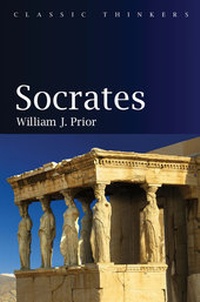
Socrates
1st Edition
Published on 15. November 2019
240 pages
978-1-5095-2975-9 (ISBN)
Description

Socrates is one the most important thinkers in western philosophy, yet he remains enigmatic, having left behind no works of his own. Instead, his thought is understood primarily through the work of his followers, particularly Plato. Yet Plato's dialogues can offer conflicting portraits of Socrates. On the one hand, he is portrayed as "barren of wisdom": he has questions but no answers. On the other, he appears to be "fertile": he has important things to say about those questions. Can he be both?
Although Plato's works focus on Socrates' questions, not his answers, a careful reading can reveal many of Socrates' likely views. In this accessible introduction, William Prior assesses Socrates the man, his famous trial, and the nature of his philosophy. He explores Socrates' intellectualism, conception of the good life, his religious views and his thoughts concerning justice. All the way through, Prior reflects on Socrates' distinctive method of asking questions, and the enormous influence he has had on philosophy to this day.
More details
Other editions
Content
- Cover
- Series page
- Title page
- Copyright page
- Dedication
- Contents
- Preface
- Acknowledgments
- 1: Socrates' Times and Trial
- Socrates the Man: His Life and Times
- The Intellectual Revolution of the Fifth Century
- Socrates' Trial
- Why was Socrates Tried?
- Was Socrates Guilty?
- The Death Penalty
- The Trial: Conclusion
- Socrates the Man: Conclusion
- 2: Socratic Method
- The "Socratic Problem"
- The Nature of Socrates' Philosophy
- Socratic vs. Platonic Philosophy
- Socratic Dialogues
- The Socratic Elenchus
- The Apology and the Elenctic Dialogues
- Elenchus in the Apology
- Why Pursue Philosophy?
- The Logic of the Elenchus
- Elenchus in the Sophist
- The Structure of the Elenctic Dialogue: The Charmides
- Two Questions about the Elenchus
- Elenchus in the Meno
- The Doctrine of Recollection
- The Examination of the Slave
- The Apology vs. the Meno
- Two Faces of Socrates in the Elenctic Dialogues
- Recollection and the Elenctic Dialogues
- 3: Knowledge and Ignorance
- Socrates' Profession of Ignorance
- The Nature of Knowledge
- Definition
- The "Priority of Definition" Principle
- Belief and Perplexity
- Socrates as Midwife
- The "Barren" Socrates
- The "Fertile" Socrates
- The Ironic Solution: Thrasymachus
- The Ironic Solution: Alcibiades
- 4: Piety
- The Euthyphro
- The Setting of the Dialogue
- Euthyphro
- Euthyphro's Case and its Justification
- What Socrates wants from Euthyphro: Forms
- Euthyphro's Attempts to Define Piety. Their Refutation
- Euthyphro's Perplexity
- Socrates' Constructive Contribution
- The Conclusion of the Dialogue
- Why do Euthyphro and Socrates Disagree?
- Is Progress toward a Definition of Piety made in the Dialogue?
- The Euthyphro and other Elenctic Dialogues
- 5: Virtue
- The Laches: What is Courage?
- The Laches: Virtue is Knowledge
- The Protagoras: Protagoras' Conception of Virtue
- Socrates' Conception of Virtue: Virtue is Knowledge
- Hedonism and the Strength of Knowledge
- The Argument with the Many: Moral Weakness vs. Cognitive Error
- Hedonism and Moral Weakness
- Virtue as Practical Wisdom
- The Meno
- What is Virtue?
- Definition and Form
- Meno's Perplexity and Paradox
- Recollection
- The Hypothesis that Virtue is Knowledge
- Objection: Where are the Teachers?
- Reply: Virtue as Right Opinion
- Conclusion
- 6: Happiness
- Virtue and Happiness
- The Problem: What Knowledge Produces Happiness?
- The Problem of the Crito
- The Crito as an Atypical Elenctic Dialogue
- Socrates' Response to Crito
- Virtue and Happiness: The Gorgias
- Socrates and Gorgias on Rhetoric
- Socrates and Polus
- The Refutation of Polus
- Critique of the Argument against Polus
- Callicles
- Conventional vs. Natural Justice
- Callicles' Critique of Philosophy
- Socrates' Response to Callicles: Who is the Superior Person?
- Callicles' Hedonism
- Socratic Self-Control
- Rhetoric vs. Philosophy
- Socrates' Defense of the Self-Controlled Life
- The Myth of the After-Life
- Is Callicles Refuted?
- Conclusion: The Crito and Gorgias vs. the Protagoras
- 7: The State
- The Speech of the Laws
- The Crito and Civil Disobedience
- The Social Contract
- Socrates' Response to the Speech of the Laws
- Why Treat Others Justly?
- Socrates as Critic of Athenian Democracy
- Socrates' Political Views
- The Moral Expert
- The Ruling Art in Republic I
- Thrasymachus
- Socrates' Defense of the Just Ruler
- Critique of Socrates' Arguments
- Conclusion
- 8: From Socrates to Plato
- The Apology vs. the Republic
- Method
- Metaphysics: the Theory of "Separate" Forms
- Metaphysics: Being and Becoming
- Metaphysics: The Form of the Good
- Epistemology
- Psychology
- Moral Theory
- Political Theory
- Conclusion
- 9: Socrates' Legacy
- Xenophon's Socrates
- The Reception of Socrates in the Ancient World
- The Christian Reception of Socrates
- Socrates from the Middle Ages to the Enlightenment
- The Nineteenth Century
- Hegel
- Kierkegaard: Socrates as an Individual
- Nietzsche
- The Twentieth Century
- Karl Popper's Socrates
- I. F. Stone's Socrates
- Notes
- Preface
- 1 Socrates' Times and Trial
- 2 Socratic Method
- 3 Knowledge and Ignorance
- 4 Piety
- 5 Virtue
- 6 Happiness
- 7 The State
- 8 From Socrates to Plato
- 9 Socrates' Legacy
- Bibliography
- Ancient Sources
- Modern Sources
- Recommended Reading
- General historical background
- On Socrates' Athens
- On Athenian law
- On Socratic piety
- On definition and Forms
- On reverence
- On the Gorgias
- On Socratic perplexity
- On ancient philosophy as a way of life
- On Socratic moral psychology
- On the Republic
- On the death of Socrates, with special emphasis on its treatment through history
- Index
- EULA
