

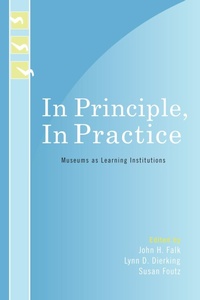
In Principle, In Practice
Museums as Learning Institutions
AltaMira Press
1st Edition
Published on 4. May 2007
338 pages
979-8-7651-8815-6 (ISBN)
Description

The science museum field has made tremendous advances in understanding museum learning, but little has been done to consolidate and synethesize these findings to encourage widespread improvements in practice. By clearly presenting the most current knowledge of museum learning, In Principle, In Practice aims to promote effective programs and exhibitions, identify promising approaches for future research, and develop strategies for implementing and sustaining connections between research and practice in the museum community.
More details
Series
Edition
1. Auflage
Language
English
Place of publication
CA
United States
ISBN-13
979-8-7651-8815-6 (9798765188156)
Copyright in bibliographic data and cover images is held by Nielsen Book Services Limited or by the publishers or by their respective licensors: all rights reserved.
Schweitzer Classification
Other editions
Additional editions
John H. Falk | Lynn D. Dierking | Susan Foutz
In Principle, In Practice
Museums as Learning Institutions
Book
05/2007
AltaMira Press
€155.50
Shipment within 15-20 days
Persons
John H. Falk Sea Grant Professor of Free-Choice Learning at Oregon State University. Lynn D. Dierking is professor of science and mathematics at Oregon State University. Susan Foutz is a research associate at the Institute for Learning Innovation in Annapolis, Maryland.
Content
1 Foreword
2 Preface
3 Part I: How People Learn in Museums
4 1. Towards an Improved Understanding of Learning from Museums: Filmmaking as Metaphor
5 2. Family Learning in Museums: Perspectives on a Decade of Research
6 3. Students, Teachers and Museums: Toward an Intertwined Learning Circle
7 4. Exhibit Design in Science Museums: Dealing with a Constructivist Dilemma
8 5. Research on Learning from Museums
9 Part II: Engaging Audiences in Meaningful Learning
10 6. Envisioning the Customized Museum: An Agenda to Guide Reflective Practice and Research
11 7. Museums and Cultural Understanding
12 8. Raising the Relevancy Bar at Aquariums and Science Centers
13 9. Challenging Convention and Communicating Controversy: Learning Through Issues-Based Museum Exhibitions
14 Part III: Fostering a Learning-Centered Culture in our Institutions
15 10. New Ways of Doing Business
16 11. Optimizing Learning Opportunities in Museums: The Role of Organizational Culture
17 12. Fostering Effective Free-Choice Learning Institutions: Integrating Theory, Research, Practice and Policymaking
18 13. Meaningful Collaboration
19 Part IV: Investigating Museum Learning in the Next Ten Years
20 14. Understanding the Long-Term Impacts of Museum Experiences
21 15. Investigating Socially Mediated Learning
22 16. Research in Museums: Coping With Complexity
23 17. An Emerging Research Framework for Studying Free-Choice Learning and Schools
2 Preface
3 Part I: How People Learn in Museums
4 1. Towards an Improved Understanding of Learning from Museums: Filmmaking as Metaphor
5 2. Family Learning in Museums: Perspectives on a Decade of Research
6 3. Students, Teachers and Museums: Toward an Intertwined Learning Circle
7 4. Exhibit Design in Science Museums: Dealing with a Constructivist Dilemma
8 5. Research on Learning from Museums
9 Part II: Engaging Audiences in Meaningful Learning
10 6. Envisioning the Customized Museum: An Agenda to Guide Reflective Practice and Research
11 7. Museums and Cultural Understanding
12 8. Raising the Relevancy Bar at Aquariums and Science Centers
13 9. Challenging Convention and Communicating Controversy: Learning Through Issues-Based Museum Exhibitions
14 Part III: Fostering a Learning-Centered Culture in our Institutions
15 10. New Ways of Doing Business
16 11. Optimizing Learning Opportunities in Museums: The Role of Organizational Culture
17 12. Fostering Effective Free-Choice Learning Institutions: Integrating Theory, Research, Practice and Policymaking
18 13. Meaningful Collaboration
19 Part IV: Investigating Museum Learning in the Next Ten Years
20 14. Understanding the Long-Term Impacts of Museum Experiences
21 15. Investigating Socially Mediated Learning
22 16. Research in Museums: Coping With Complexity
23 17. An Emerging Research Framework for Studying Free-Choice Learning and Schools
