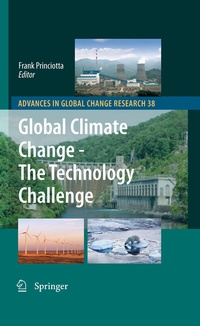
Global Climate Change - The Technology Challenge
Description

In order to avoid the potentially catastrophic impacts of global warming, the current 3% CO2 global emission growth rate must be transformed to a 1 to 3% declining rate, as soon as possible. This will require a rapid and radical transformation of the world's energy production and end use systems. The current generation of energy technologies are not capable of achieving the level of mitigation required. Next generations of renewable, low carbon generation and end use technologies will be needed.
This book quantifies the mitigation challenge. It then considers the status of key technologies needed to protect the planet from serious climate change impact. Current and emerging technologies are characterized for their mitigation potential, status of development and potential environmental impacts. Power generation, mobile sources, industrial and building sectors are evaluated in detail. The importance and unique challenges for rapidly developing countries, such as China and India are discussed. Current global research and development efforts for key technologies are discussed. It is concluded that it will be necessary to substantially upgrade and accelerate the current worldwide RDD&D effort on both emerging energy technologies and those enabling technologies needed to improve mitigation effectiveness and economics. It will also be necessary to carefully evaluate the potential environmental characteristics of next generation technologies to avoid unacceptable health and ecological impacts.
Finally, given the monumental technological challenge associated with transforming the world's energy system, geoengineering options are evaluated, since if successfully deployed, they have the potential to allow more time for the necessary energy system transformation.
'This book on Climate Change not only gives a clear picture of the problem but suggests many of the pitfalls in solving it and recommends strongly, a research programto fill the gaps in our knowledge. It is a most useful reference book for all aspects of the problem.' William D. Ruckelshaus, Madrona Venture Group/Evergreen Venture
Reviews / Votes
From the reviews:
"This book addresses the challenges associated with mitigation of carbon dioxide emissions from combustion of fossil fuels, and reviews and evaluates the various technologies to reduce emissions and stabilize carbon dioxide concentrations. . There are many good references at the end of most chapters. Summing Up: Recommended. Upper-division undergraduate through professionals; general readers." (L. E. Erickson, Choice, Vol. 49 (4), December, 2011)More details
Other editions
Additional editions