

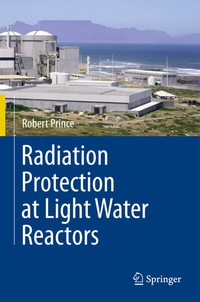
Radiation Protection at Light Water Reactors
Description

This book is aimed at Health Physicists wishing to gain a better understanding of the principles and practices associated with a light water reactor (LWR) radiation protection program. The role of key program elements is presented in sufficient detail to assist practicing radiation protection professionals in improving and strengthening their current program. Details related to daily operation and discipline areas vital to maintaining an effective LWR radiation protection program are presented. Programmatic areas and functions important in preventing, responding to, and minimizing radiological incidents and the importance of performing effective incident evaluations and investigations are described. Elements that are integral in ensuring continuous program improvements are emphasized throughout the text.
Reviews / Votes
From the reviews:
"A comprehensive book on practical radiation protection at light water reactors written at the operational health physics level. . it does an outstanding job of covering the many aspects and considerations for the reactor health physicist. . appropriate for an undergraduate-level reactor health physics course, a dedicated training course for technicians and health physicists at LWRs, or persons entering the regulatory or inspection fields. . the author has a pleasing writing style and has produced a text that is easy and enjoyable to read." (Ken Veinot, Radiation Protection Dosimetry, Vol. 157 (1), November, 2013)
"Written for those individuals who wish to gain an understanding of radiation projection aspects associated with the operation and maintenance of commercial light water reactors in operation today. This text will definitely accomplish the stated purpose. . an excellent addition to available literature in that it provides detailed information on many aspects of the radiation protection program for power reactors. This information is current, the problems addressed are real, and the suggestions are based on actual solutions used in existing radiation protection programs." (Dennis Quinn, Health Physics, Vol. 104 (1), January, 2013)
More details
Other editions
Additional editions
Person
Robert Prince has been employed in the health physics profession since the mid 1970s. He holds a Bachelor of Science degree in Radiological Health Sciences from the University of Lowell and a Master's of Science in Nuclear Engineering from the University of Florida. He started his career in the light water reactor radiation protection field at the now decommissioned Maine Yankee nuclear power plant. He has gone on to serve as the Radiation Protection Manager at several nuclear power plant facilities both in the USA and abroad.
Content
Appendix A. ALI's and DAC's.-
Appendix B. Dose Conversion Factors.-
Appendix C. Problems.-
Appendix D. Problem Solutions.-
Appendix E. Radiation Dose Rates and Activity Conversion Factors.-
Appendix F. Radiological Controls for Steam Generator Work Activities.- Index.
