

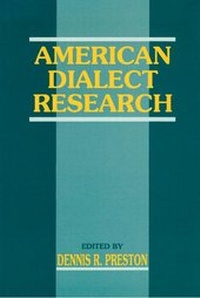
American Dialect Research
Celebrating the 100th anniversary of the American Dialect Society, 1889-1989
1st Edition
Published on 7. June 1993
XIV, 464 pages
978-90-272-7390-1 (ISBN)
Description

Containing all new material and published for the American Dialect Society's centennial celebration (1889-1989), this volume bings together in one place, as no previously published work has, current approaches to the general problems of language distribution and variation. The several chapters offer accounts of how questions are formulated and how data are collected, stored, and intepreted in the various research traditions of dialectology and sociolinguistics, particularly as they have been carried out by researchers associated with the American Dialect Society.
More specifically, this book takes trips to the scholar's laboratory. How is this work done? What pitfalls in fieldwork, processing, and interpretation have been encountered and how have they been overcome? What techniques have been used to get at the facts and underlying explanations of language variety? What does recent work suggest about the most rewarding areas and methods for future investigation?
More specifically, this book takes trips to the scholar's laboratory. How is this work done? What pitfalls in fieldwork, processing, and interpretation have been encountered and how have they been overcome? What techniques have been used to get at the facts and underlying explanations of language variety? What does recent work suggest about the most rewarding areas and methods for future investigation?
More details
Other editions
Additional editions
Dennis R. Preston
American Dialect Research
Celebrating the 100th anniversary of the American Dialect Society, 1889-1989
Book
06/1993
John Benjamins Publishing Co
€137.80
Shipment within 10-15 days
Person
Content
- AMERICAN DIALECT RESEARCH
- Title page
- Copyright page
- Acknowledgments
- Table of contents
- Figures and Tables
- Preface
- I. Area Studies
- II. Community Studies
- III. Group Studies
- IV. Special Topics
- References
- I. Area Studies
- The Historical and Cultural Interpretation of Dialect
- References
- An Approach to Linguistic Geography
- The Tape/Text
- The Fiche/Text
- The Disk/Text
- The Book/Text
- Note
- References
- Area Lexicon: The Making of DARE
- Notes
- Some Applications of Mathematical and Statistical Models in Dialect Geography
- Defining Dialect Areas as 'Fuzzy Sets'
- Characterizing Regional Interaction with Gravity Models
- Relating Linguistic and Social Variables through Multivariate Analysis
- Conclusion
- References
- Sociolinguistic Dialectology
- 1. Emphases
- 2. Questions
- 3. Issues
- Notes
- References
- II. Community Studies
- Adapting dialectology: The conduct of community language studies
- 1.0. Introduction
- 2.0. Questionnaires and worksheets
- 2.1. Language attitude surveys
- 2.2. Grammaticality judgments
- 3.0. The observer's paradox
- 4.0. Experimental development
- 5.0. Social and demographic relevance
- 6.0. Conclusion
- Notes
- References
- Identifying and Interpreting Variables
- Introduction
- The Linguistic Variable
- The Social Variable
- The First Stage: Identifying Potential Variables
- The Extraction Process
- Manipulating Linguistic Variables
- Note
- References
- The quantitative analysis of linguistic variation
- 1. Quantitative methods and dialect research
- 2. Three steps in quantitative analysis
- 3. Data collection: Sampling and reliability.
- 4. Approaches to reduction and display.
- 5. Approaches to interpretation.
- 6. Variable rule analysis
- References
- III. Group Studies
- Variationtheory and language contact:
- 1.0. Introduction
- 2.0. Variation Theory
- 3.0. Concepts in Language Contact
- 4.0. Methods
- 5.0. Data Manipulation
- 6.0. Discussion
- Notes
- References
- A Perspective on African-American English
- 1.0. Introduction
- 2.0. Why Divergence is Controversial
- 3.0. An Approach to BE
- 4.0. Results
- 5.0. Conclusion
- Notes
- References
- Professional Varieties: The Case of Language and Law
- A Personal Preface
- Language Varies -- But So What?
- Studying the Consequences of Language Variation in Legal Contexts
- The Nature of Legal Language
- Getting Started
- More Recent Concerns
- Law and Language Studies More Generally
- Special Issues in the Study of Law and Language
- Other Professional Contexts
- Notes
- References
- IV. Special Topics
- Folk Dialectology
- 1. Draw a Map
- 2. Area Ratings
- 3. Area differences
- 4. Area identification
- 5. Interviews
- 6. Conclusion
- Notes
- References
- The Patterning of Variation in Performance
- 1. Introduction
- 2. Investigating Warao performance
- 3. Genre and variation
- 4. The metapragmatic encompassment of genre
- 5 Conclusion: poetics and the dynamic character of language
- Notes
- References
- Appendix: Resources for Research
- Index of Dialects by Archive Number
