

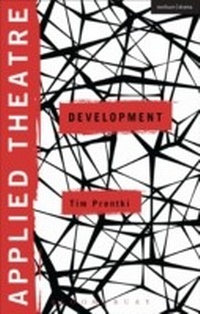
Applied Theatre: Development
1st Edition
Published on 26. February 2015
304 pages
978-1-4725-0518-7 (ISBN)
Description

At once both guide book and provocation, this is an indispensable companion for students and practitioners of applied theatre. It addresses all key aspects: principles, origins, politics and aesthetics in a concise and accessible style designed to appeal both to those who have recently discovered this sub-discipline and to experienced practitioners and academics.
Part 1 is divided into two chapters. The first introduces the sub-discipline of Theatre for Development, covering its origins, principles and history, and providing an overview of theatre for development in Western contexts as well as in Africa, Asia, the Indian Subcontinent and Latin America. The second focuses upon theoretical and philosophical issues confronting the discipline and its relationship to contemporary politics, as well as considering its future role.
Part 2 consists of seven chapters contributed by leading figures and current practitioners from around the world and covering a diverse range of themes, methodologies and aesthetic approaches. One chapter offers a series of case studies concerned with sexual health education and HIV prevention, drawn from practitioners working in Vietnam, Papua New Guinea, Southern Africa, and China. Other chapters include studies of intercultural theatre in the Peruvian Amazon; a programme of applied theatre conducted in schools in Canterbury, New Zealand, following the 2010 earthquake; an attempt to reinvigorate a community theatre group in South Brazil; and an exchange between a Guatemalan arts collective and a Dutch youth theatre company, besides others.
Part 1 is divided into two chapters. The first introduces the sub-discipline of Theatre for Development, covering its origins, principles and history, and providing an overview of theatre for development in Western contexts as well as in Africa, Asia, the Indian Subcontinent and Latin America. The second focuses upon theoretical and philosophical issues confronting the discipline and its relationship to contemporary politics, as well as considering its future role.
Part 2 consists of seven chapters contributed by leading figures and current practitioners from around the world and covering a diverse range of themes, methodologies and aesthetic approaches. One chapter offers a series of case studies concerned with sexual health education and HIV prevention, drawn from practitioners working in Vietnam, Papua New Guinea, Southern Africa, and China. Other chapters include studies of intercultural theatre in the Peruvian Amazon; a programme of applied theatre conducted in schools in Canterbury, New Zealand, following the 2010 earthquake; an attempt to reinvigorate a community theatre group in South Brazil; and an exchange between a Guatemalan arts collective and a Dutch youth theatre company, besides others.
More details
Series
Edition
1. Auflage
Language
English
Place of publication
London
United Kingdom
Publishing group
Bloomsbury Publishing PLC
Target group
Professional and scholarly
College/higher education
Illustrations
8 bw illus
ISBN-13
978-1-4725-0518-7 (9781472505187)
Copyright in bibliographic data and cover images is held by Nielsen Book Services Limited or by the publishers or by their respective licensors: all rights reserved.
Schweitzer Classification
Other editions
Additional editions
Book
02/2015
Methuen Drama
€41.00
Shipment within 15-20 days
Persons
Tim Prentki is Professor of Theatre for Development at the University of Winchester, UK, where he ran the MA in Theatre and Media as Development for many years. He is co-editor of The Applied Theatre Reader and author of The Fool in European Theatre. He writes regularly on Theatre for Development for academic journals throughout the world and is a member of the editorial board of Research in Drama Education.
Content
Introduction
Chapter One: History and Origins of Theatre for Development
Chapter Two: Fool's Play or Juggling with Neoliberalism
Chapter Three: Capacity Building Theatre (and Vice Versa) (John O'Toole with Au Yi-Man, Andrea Baldwin, Helen Cahill and Kennedy Chinyowa)
Chapter Four: Isolation in Community Theatre (Marcia Pompeo with Dimitri Camorlinga)
Chapter Five: The Game of Identities: Intercultural Theatre in the Peruvian Amazon (Rodrigo Benza)
Chapter Six: Imizamo Yethu - 'our efforts' to Engage through Theatre (Veronica Baxter)
Chapter Seven: Theatre in Crisis: Moments of Beauty in Applied Theatre (Peter O'Connor)
Chapter Eight: Exploring Theatre as Pedagogy for 'Developing Citizens' in an English Primary School (Alison Lloyd Williams)
Chapter Nine: The Ludic Box: Playful Alternatives from Guatemala for the World (Doryan Bedoya and Eugene van Erven)
Afterword: What Next for Theatre for Development?
Notes
Index
Chapter One: History and Origins of Theatre for Development
Chapter Two: Fool's Play or Juggling with Neoliberalism
Chapter Three: Capacity Building Theatre (and Vice Versa) (John O'Toole with Au Yi-Man, Andrea Baldwin, Helen Cahill and Kennedy Chinyowa)
Chapter Four: Isolation in Community Theatre (Marcia Pompeo with Dimitri Camorlinga)
Chapter Five: The Game of Identities: Intercultural Theatre in the Peruvian Amazon (Rodrigo Benza)
Chapter Six: Imizamo Yethu - 'our efforts' to Engage through Theatre (Veronica Baxter)
Chapter Seven: Theatre in Crisis: Moments of Beauty in Applied Theatre (Peter O'Connor)
Chapter Eight: Exploring Theatre as Pedagogy for 'Developing Citizens' in an English Primary School (Alison Lloyd Williams)
Chapter Nine: The Ludic Box: Playful Alternatives from Guatemala for the World (Doryan Bedoya and Eugene van Erven)
Afterword: What Next for Theatre for Development?
Notes
Index
