

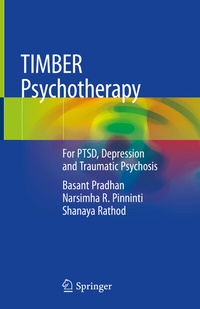
TIMBER Psychotherapy
Description

TIMBER psychotherapy is a novel, translational and biomarker informed, mindfulness-based cognitive behavioral therapy approach that addresses some of the current treatment gaps for PTSD, depression and traumatic psychosis. This treatment manual offers practitioners and patients alike a step-by-step guide to TIMBER (acronym for Trauma Interventions using Mindfulness Based Extinction and Reconsolidation of memories) psychotherapy, and has been divided into four parts: Understanding Complex Trauma and Traumatic Psychosis; Methodology and Application; Training Professionals; and Policy Implications & Future Research Directions. In addition to a strong rationale and evidence base for the TIMBER approach, the book also provides case examples accompanied by videos (available separately). Its special features include reproducible client handouts, assessment tools, and a list of resources for training to use TIMBER.
More details
Other editions
Additional editions
Persons
Basant Pradhan, MD works in the Cooper University Health System, Camden, New Jersey as an Associate Professor of Psychiatry and Pediatrics where he also serves as the Interim Chief of Psychiatry and the founding medical director of the neuro-modulation interventions and disorder specific Yoga and Mindfulness Based Cognitive Therapy (Y-MBCT) programs. In his pre-medical career, he was a Yogi/monk in a monastery in India. In addition to extensive training in psychiatry and psychotherapies, he has trained in clinical neurology, clinical psychology and cognitive neurosciences which greatly inspires him to combine psychotherapy with the brain science and spirituality for diagnostic and treatment purposes. His clinical and research work since 2001 has focused on the development and application of the standardized Yoga and meditation modules as standalone treatments and also in combination with medications and neuro-modulation interventions (TMS, Ketamine, ECT) for many chronic and often difficult-to-treat neuropsychiatric conditions such as treatment resistant depression, PTSD, psychosis, addictive disorders, and also cognitive disorders such as dyslexia and Huntington's disease. His research has advanced the understanding about neurobiology and therapeutics of the neuropsychiatric disorders and also is aimed at clarifying the pros and cons of psychiatric medications for the young. Pradhan has been awarded with the Institutional Bronze Medal from the Prime Minister of India and has been listed in the registry of the Marquis: Who's Who in America. His research has received grant awards from organization like the National Institute on Aging (NIA/NIH), the Brain and Behavior Research Foundation (NARSAD) and the Huntington Study Group, USA. He has lectured at national and international events and published his research widely. Also, he has served the executive council of many reputed organizations such as the Group for the Advancement of Psychiatry (GAP) and the National Caucus on Integrative Psychiatry .
Narsimha R. Pinninti, MD is a professor of psychiatry at Rowan, School of Osteopathic Medicine in New Jersey, and also medical director of CCBHC, Oaks integrated care in NJ. Dr. Pinninti works at the interface of research and clinical practice and focuses on adapting cognitive behavior therapy and Yoga mindfulness based cognitive therapy (YMBCT) interventions in real-world clinical situations. He provides psychiatric services including CBT and YMBCT for individuals from different ethnic back- grounds in assertive community treatment team and day hospitalization programs. He is the course director for CBT training for psychiatric residents and has trained assertive community team and case managers in CBT. He has authored a number of papers in peer-reviewed journals, book chapters, and books. He has been an invited speaker nationally and internationally.
Shanaya Rathod, MD is a consultant psychiatrist and director of research at the Southern health NHS Foundation Trust in the UK. She is a visiting Professor to the University of Portsmouth and the mental health clinical lead for Wessex Academic Health Sciences Network and Wessex Clinical Research Network. She is a trustee of an international charity,The Centre for Applied Research and Evaluation International Foundation. She has been a fellow of the National Institute for Health and Care Excellence, UK. She has a particular interest in developing effective care pathways for mental health conditions to improve patient outcomes and experience and the cultural and religious aspects of psychopathology of mental illness. She has received grants to explore these areas. She has authored a number of papers in peer-reviewed journals, book chapters, and books. She has been an invited speaker nationally and internationally and has been a recipient of national and international awards.
Content
Part-I: Understanding Complex Trauma and Traumatic Psychosis: Complex traumatic memories and spectrum of their manifestation.- Traumatic experiences and memories.- TIMBER as a novel psychotherapy for PTSD, traumatic psychosis and related conditions.- Part-II: Methodology and Applications of TIMBER: Notes on the Assessment Tools used in TIMBER.- The Nuts and Bolts of TIMBER Psychotherapy & Case Based Illustrations,.- Part-III: Training the Professionals, Policy Implications, Directions for Future Research and Concluding Statements: Cultural considerations in application of TIMBER.- Therapist training on TIMBER and policy implications.- Adapting TIMBER to clients in specific settings.- Concluding Remarks & Resources.
