


Forced Endings in Psychotherapy and Psychoanalysis
Attachment and loss in retirement
Published on 25. September 2015
260 pages
978-1-317-51001-7 (ISBN)
Description

Forced Endings in Psychotherapy and Psychoanalysis: Attachment and Loss in Retirement explores the ambivalence the therapist may feel about letting go of a professional role which has sustained them. Anne Power explores the process of closing a private practice, from the first ethical decision-making, through to the last day when the door of the therapy room shuts. She draws on the personal accounts of retired therapists and others who had to impose an ending on clients due to illness, in order to move house, to take maternity leave or a sabbatical.
A forced ending is an intrusion of the clinician's own needs into the therapeutic space. Anne Power shows how this might compromise the work but may also be an opportunity for deeper engagement. Drawing on attachment theory to understand how the therapeutic couple cope with an imposed separation, Power includes interviews with therapists who took a temporary break to demonstrate the commonality of challenges faced by those who need to impose an ending on clients.
Forced Endings in Psychotherapy and Psychoanalysis opens up an area which has been considered taboo in the profession so that future cohorts can benefit from the reflections and insights of this earlier generation. It will support clinicians making this transition and aims to support ethical practice so that clients are not exposed to unnecessary risks of the sudden termination of a long treatment. This book will be essential reading for practicing psychotherapists and psychoanalysts, and to undergraduate and post-graduate students in clinical psychology, psychiatry and social work
A forced ending is an intrusion of the clinician's own needs into the therapeutic space. Anne Power shows how this might compromise the work but may also be an opportunity for deeper engagement. Drawing on attachment theory to understand how the therapeutic couple cope with an imposed separation, Power includes interviews with therapists who took a temporary break to demonstrate the commonality of challenges faced by those who need to impose an ending on clients.
Forced Endings in Psychotherapy and Psychoanalysis opens up an area which has been considered taboo in the profession so that future cohorts can benefit from the reflections and insights of this earlier generation. It will support clinicians making this transition and aims to support ethical practice so that clients are not exposed to unnecessary risks of the sudden termination of a long treatment. This book will be essential reading for practicing psychotherapists and psychoanalysts, and to undergraduate and post-graduate students in clinical psychology, psychiatry and social work
Reviews / Votes
"In a long term therapy the retirement of the therapist, be it from age, illness, sabbatical, maternity or relocation, is a challenge to both patient and therapist. This book shows how thirteen therapists met that challenge. The author makes good use of attachment theory which provides a fascinating and appropriate over-arching framework for her analysis." - Colin Murray Parkes"A work of tremendous originality, Anne Power's new book tackles the vital but hitherto much neglected subject of retirement with the depth of a great investigator and with the breadth of creative thinker. Drawing upon extensive primary research and sensitive clinical understanding, the author allows us all - whether old or young - to engage with key questions about endings and mortality with admirable sensitivity and compassion. This volume fills a huge gap in the mental health literature by examining not only the vicissitudes of retirement but, also, the heaving subject of endings more generally - whether traumatic or ordinary - in such a useful way." - Professor Brett Kahr, Senior Clinical Research Fellow in Psychotherapy and Mental Health at the Centre for Child Mental Health in London; Honorary Visiting Professor in the School of Arts at the University of Roehampton; and Consultant in Psychology to The Bowlby Centre
"This book is timely and thought-provoking. It grasps the nettle of therapists' retirement dilemmas firmly and skilfully. I found it very compelling reading, both because of its immediate relevance to therapists and supervisors today, and because the stories it traces in the retirees own words are so rich and engaging. This book is a masterpiece of qualitative research, drawing on thirteen in-depth interviews, as well as a broad range of additional sources. Anne Power poses and explores a multitude of questions about when, how, why and with what support and with what in mind can therapists tackle the issue of ending their working life. I was deeply moved, sobered, intrigued and inspired."- Roz Carroll, MA Cantab, UKCP reg psychotherapist, trainer on the MInster Centre MA in Integrative Psychotherapy
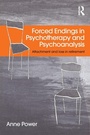
"This is a wonderfully well written, sensitive and important book which examines, though interviews with therapists, the issues and challenges involved in the processes of retirement, ending and loss in a profession that has tended to avoid consideration of this significant aspect of life. An essential read for therapists of all ages in relation to their personal and professional journeys." - Dr Christine Driver, SAP and FPC Training Analyst, Supervisor, Director of Training, WPF Therapy "The displaced, spindly-legged chairs on the front cover of this book hint of a retirement filled with bleakness and isolation. I was glad, therefore, that Anne Power also explores forced ending as an opportunity rather than just a loss...I would definitely recommend this book to therapists or supervisors who are negotiating such endings." - Yvonne Farley, relationship and psychosexual therapist, Therapy Today
"In a long term therapy the retirement of the therapist, be it from age, illness, sabbatical, maternity or relocation, is a challenge to both patient and therapist. This book shows how thirteen therapists met that challenge. The author makes good use of attachment theory which provides a fascinating and appropriate over-arching framework for her analysis." - Colin Murray Parkes
"A work of tremendous originality, Anne Power's new book tackles the vital but hitherto much neglected subject of retirement with the depth of a great investigator and with the breadth of creative thinker. Drawing upon extensive primary research and sensitive clinical understanding, the author allows us all - whether old or young - to engage with key questions about endings and mortality with admirable sensitivity and compassion. This volume fills a huge gap in the mental health literature by examining not only the vicissitudes of retirement but, also, the heaving subject of endings more generally - whether traumatic or ordinary - in such a useful way." - Professor Brett Kahr, Senior Clinical Research Fellow in Psychotherapy and Mental Health at the Centre for Child Mental Health in London; Honorary Visiting Professor in the School of Arts at the University of Roehampton; and Consultant in Psychology to The Bowlby Centre
"This book is timely and thought-provoking. It grasps the nettle of therapists' retirement dilemmas firmly and skilfully. I found it very compelling reading, both because of its immediate relevance to therapists and supervisors today, and because the stories it traces in the retirees own words are so rich and engaging. This book is a masterpiece of qualitative research, drawing on thirteen in-depth interviews, as well as a broad range of additional sources. Anne Power poses and explores a multitude of questions about when, how, why and with what support and with what in mind can therapists tackle the issue of ending their working life. I was deeply moved, sobered, intrigued and inspired."- Roz Carroll, MA Cantab, UKCP reg psychotherapist, trainer on the MInster Centre MA in Integrative Psychotherapy
"This is a wonderfully well written, sensitive and important book which examines, though interviews with therapists, the issues and challenges involved in the processes of retirement, ending and loss in a profession that has tended to avoid consideration of this significant aspect of life. An essential read for therapists of all ages in relation to their personal and professional journeys." - Dr Christine Driver, SAP and FPC Training Analyst, Supervisor, Director of Training, WPF Therapy
"In this book, the author presents her qualitative research investigating what the process of retirement involves... Power expertly weaves attachment theory into each topic that she addresses... This book is thorough and well researched. Pwoer has written an accesible, comprehensive and thought provoking exploration of the process of retirement in the psychotherapy profession...[This] book is particularly pertinent to therapists approaching retirement age, however it may also speak to therapists at various other stages of their careers who are grappling with these issues." - Megan Rose Stafford, The British Journal of Psychotherapy Integration
"In an age when therapists tend to retire older than previously, this is a particularly timely book. For myself, when I eventually confront retirement I will much value its wisdom and practicality." - Miranda Buckley, Reformations
More details
Language
English
Place of publication
London
United Kingdom
Publishing group
Taylor & Francis Ltd
Target group
College/higher education
Professional and scholarly
File size
4,19 MB
ISBN-13
978-1-317-51001-7 (9781317510017)
Copyright in bibliographic data and cover images is held by Nielsen Book Services Limited or by the publishers or by their respective licensors: all rights reserved.
Schweitzer Classification
Other editions
Additional editions

Book
09/2015
1st Edition
Routledge
€231.80
Shipment within 15-20 days
Book
08/2015
1st Edition
Routledge
€65.40
Shipment within 15-20 days
Person
Anne Power is an attachment-based psychoanalytic psychotherapist working with individuals and couples. She teaches at Regent's University London. She is interested in retirement, both as a supervisor and as a middle-aged therapist wondering how she will manage this transition herself.
Content
Introduction
Introduction to the contributors
Chapter 1 Why retire?
Chapter 2 How to begin?
Chapter 3 How do patients respond to being left?
Chapter 4 How to manage the ending?
Chapter 5 Guilt in the countertransference?
Chapter 6 How helpful is supervision?
Chapter 7 What is lost?
Chapter 8 What is next?
Chapter 9 How similar are other imposed endings?
Conclusion
Appendix: Questions about closures
Introduction to the contributors
Chapter 1 Why retire?
Chapter 2 How to begin?
Chapter 3 How do patients respond to being left?
Chapter 4 How to manage the ending?
Chapter 5 Guilt in the countertransference?
Chapter 6 How helpful is supervision?
Chapter 7 What is lost?
Chapter 8 What is next?
Chapter 9 How similar are other imposed endings?
Conclusion
Appendix: Questions about closures
